
A “Logo” in its essence is a visual image formed with the help of words, typography, abstracts, shapes, colours, and geometry, to identify and represent a brand, business or product. Bentley car design has evolved over the years, but there is one constant – the badge. It is one of the best-known designs to grace a car’s prow. The Bentley logo, called the “Winged-B”, is not just a pretty design: it tells an amazing story about British cars and aviation history, and what happens when someone refuses to settle for ordinary.
1919 to 1931
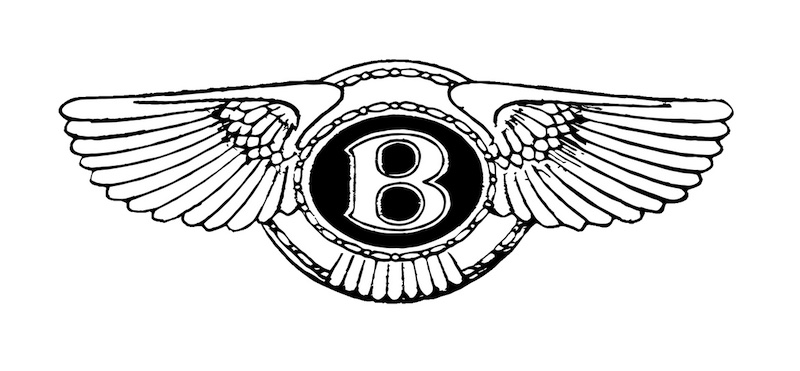
In 1919, when W.O. Bentley decided to build “a fast car, a good car, the best in its class”, he knew that any great car company needed a logo that would capture people’s attention and represent what the brand stood for. W.O. asked his friend Frederick Gordon Crosby, the most famous motoring artist of the pre-war years, to design the Bentley motors logo.
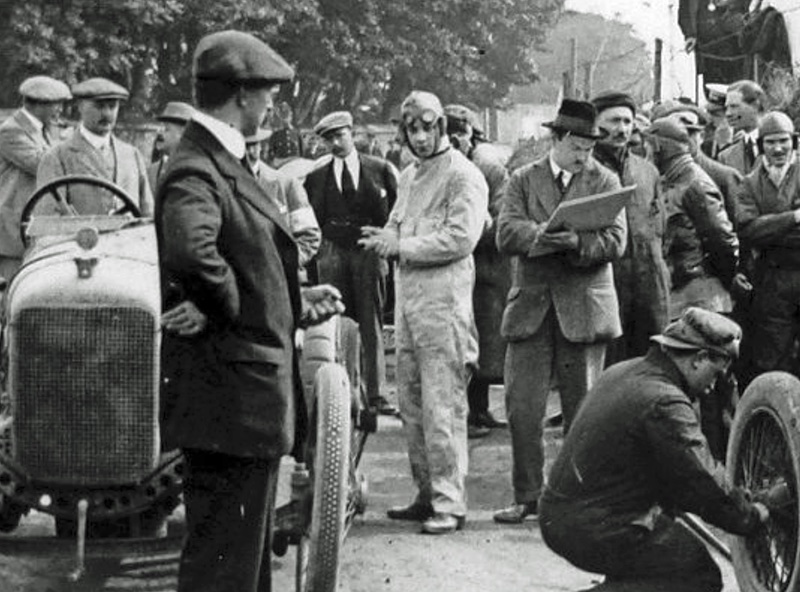
F. Gordon Crosby was someone who brought distant motor races and continental tours to life for readers of The Autocar magazine. He wasn’t just an artist – Crosby was someone who lived and breathed the automotive world. He understood what made cars beautiful, what made them fast, and what made people’s hearts race when they saw gorgeous machines in action.
Until his death in 1943, Crosby produced thousands of drawings, caricatures, cartoons and paintings for the magazine, as well as private commissions and secondment to The Royal Flying Corps during the Great War, for whom he completed technical drawings of crashed German aircraft. Some serious historians also credited him with the design of the first Bentley 3 Litre body, and a drawing made well before the first Bentley took to the road clearly presaged the radiator shape and style.
Crosby created the original “Winged B” – with the ‘B’ of Bentley inside a pair of wings chosen to represent the exhilaration of motion, speed, freedom and W.O.’s quest to push the boundaries of performance – the kind of performance that could make ordinary driving feel like flying. The pair of wings was also a reference to W.O.’s background as a designer of engines for British fighter planes in the First World War. In a stroke of brilliance, Crosby introduced asymmetry: the wings originally carried different numbers of feathers, a detail meant to make replication difficult and stave off forgery. Thus, the logo served both as a design icon and a safeguard – a testament to ingenuity in both branding and security.
1931 to 1991
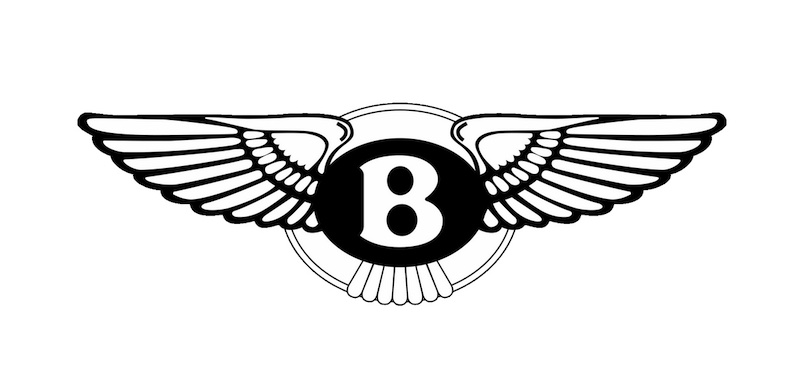
Following Bentley’s acquisition by Rolls-Royce in 1931, the logo underwent its first major redesign. The emblem’s asymmetry was replaced with symmetry: each wing was straightened and balanced, each carrying ten feathers. This change conveyed a measured, restrained elegance befitting corporate stewardship.
The “B” remained central, but the overall aesthetic shifted from expressive to refined, aligning with the more conservative elegance of the era. This version would endure for decades, becoming a familiar and trusted symbol of prestige.
1991 to 2002
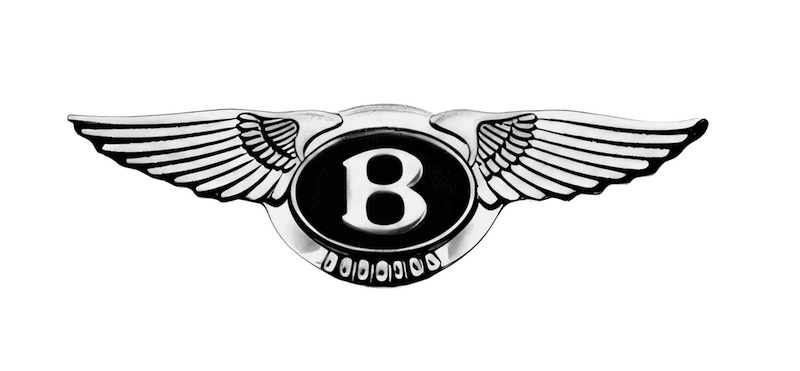
The 1990s brought renewed interest in Bentley’s sporting lineage and forged a visual revival. Asymmetry returned to the wings, a nod to the original design and to the dynamic heritage of the marque.
The head-on “B” was also subtly restyled to echo earlier versions, reintroducing expressive character without sacrificing elegance. This era, closely preceding Volkswagen Group’s acquisition, represented a delicate balancing act between tradition and renewed vitality.
In 1998, Bentley reemerged under the ownership of the Volkswagen Group, powered by substantial investment and reenergized design ambition.
2002 to 2025
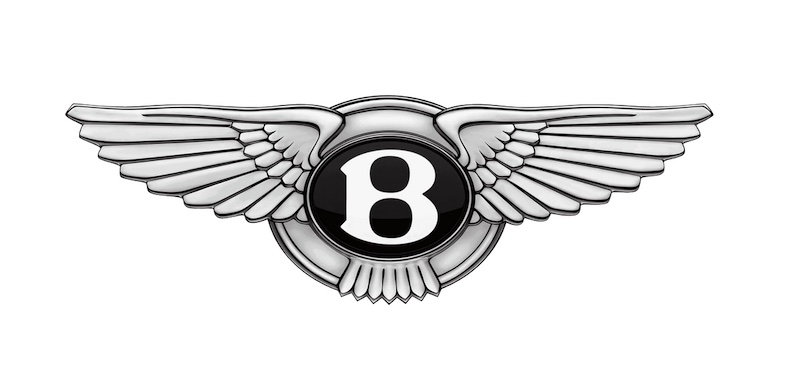
In 2002, in anticipation of the Continental GT, Bentley introduced a major emblem update: wings sharpened toward their tips, textured details enriched the metallic sheen, and a larger circular surround emphasized the central “B”.
Designers re-echoed aspects of Crosby’s original while embracing precision and contemporary sensibilities. The wings bore eleven feathers on one side and ten on the other, reintroducing subtle asymmetry in tribute to heritage.
Since 2025
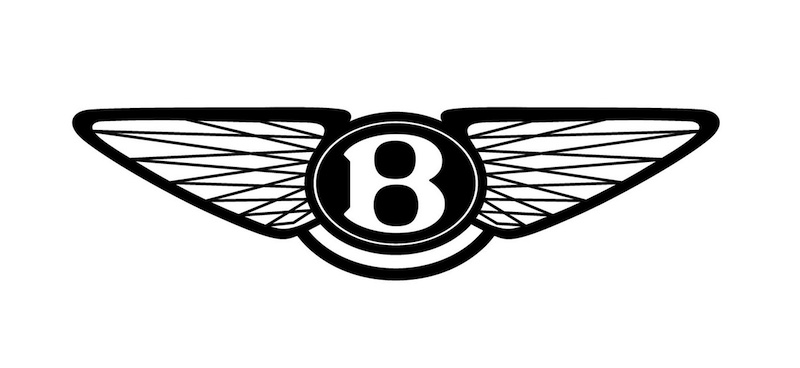
In July 2025, Bentley introduced a bold new interpretation of its iconic emblem, marking a significant milestone in the brand’s visual identity. The unveiling coincided with two major events: the debut of the futuristic Bentley EXP 15 concept and the grand opening of the company’s state-of-the-art Design Studio in Crewe, England. Crafted by Bentley’s in-house design team, the emblem was the result of an internal competition, with the winning concept created by designer Young Nam. The refreshed logo made its first appearance on July 1, followed by its official global debut on July 8 at the prestigious Goodwood Festival of Speed.
This latest redesign presents a dramatic shift in character, moving away from the traditional rounded wings toward a sharper, more dynamic aesthetic. Inspired by the wings of a peregrine falcon, the new emblem features aggressive, angular contours that convey speed, precision, and modernity. The intricate feather details of past versions have been replaced by a sophisticated diamond-pattern structure, symbolizing advanced technology and aerodynamic excellence. In pursuit of a cleaner, more contemporary appearance, the lower set of feathers beneath the central section has been completely removed, allowing the design to breathe with minimalism and clarity.
Materials may have changed, from early painted badges to today’s crisp alloys, yet the meaning remains: Bentley builds cars that combine performance with grace. Wherever it appears, the symbol invites you to expect refinement and the quiet thrill of speed.
Over a century later, it still carries the same message W.O. Bentley wanted: this isn’t just a car. It’s a Bentley. And it always will be.