
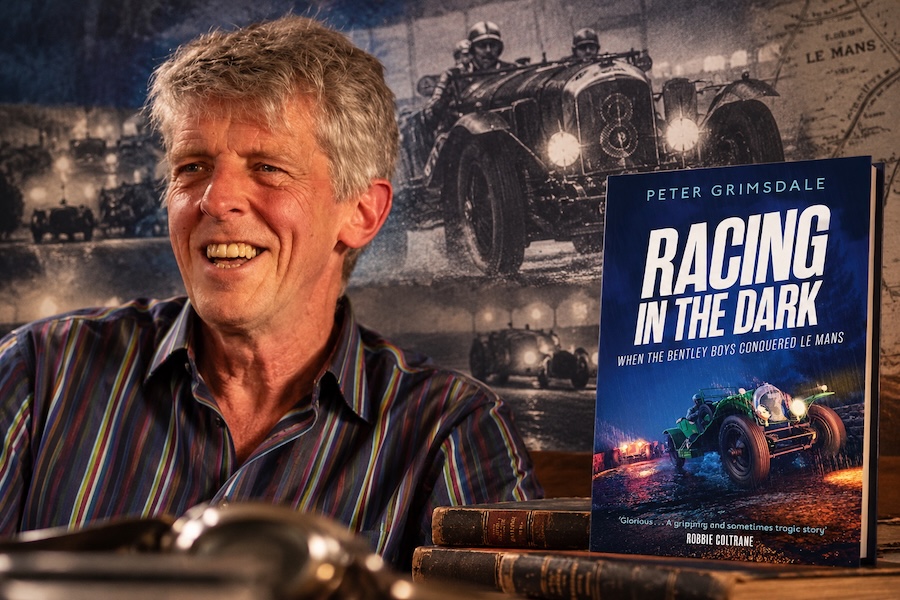
Peter Grimsdale, you are a novelist, screenwriter, non-fiction author and television producer. You have been behind many major documentaries, and your work has received numerous awards.
You have written three outstanding books for those with a passion for motoring history.
The first, published in 2020, is entitled High Performance: When Britain Ruled the Roads. It tells the story of the pioneering engineers and entrepreneurs who helped establish Britain as a world leader in road and racing cars after the Second World War.
The second, published in 2022 and well known to enthusiasts of Vintage Bentleys, is entitled Racing in the Dark – How the Bentley Boys Conquered Le Mans. In it, you explore how W.O. Bentley and the Bentley Boys pursued engineering excellence and glory at the Le Mans 24 Hours in the aftermath of the First World War. You weave together the human stories and technical ambitions behind Bentley’s legendary successes.
Your third and most recent book, published in 2025, is entitled Superveloce – How Italian Cars Conquered the World. It tells the story of how Italy rose from the ashes of the Second World War to become the birthplace of some of the most extraordinary cars ever built, through prestigious sporting marques such as Ferrari, Lamborghini, Lancia and many others.
Where does your passion for motoring history, its manufacturers and the men and women who shaped it come from?
My passion for cars starts with my first Dinky Toy before I was two. I can remember opening its yellow box, in the back of my Dad’s Rover 75, and inside was an exact model of the same car. From then I was hooked. Then came the 1958 edition of the Observer’s Book of Automobiles – I think I learned to read on it.
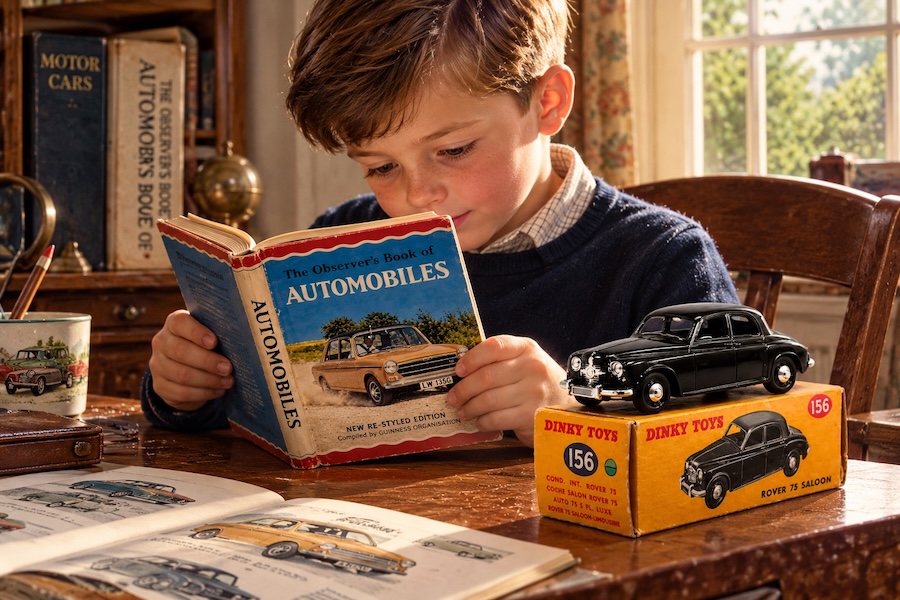
My interest just developed from there, going back into history, the origins and the originators culminating in W.O. Bentley’s My Life and My Cars for my tenth birthday. That was a game changer. I wrote a school essay on Old No 7 and the 1927 Le Mans and got quite good mark.
In my television life I did a lot of social history documentaries. Lots of interviews with people of all kinds with stories to tell. I worked on a big history of British industry which had an episode about the car industry and I interviewed everyone from Donald Stokes to shop stewards which gave me a real insight into how cars are actually made. And later produced a film about the rise of the Japanese car industry. Just fascinating. Really I’ve led a charmed life!
My book writing actually stared with fiction and thrillers, but my best childhood friend who shared my lifelong interest urged me to write about cars. I worried that there were people who had been doing this all their lives, but then I thought the best way was to combine my interest in cars and people and that became High Performance.
Turning to your second book, Racing in the Dark: How the Bentley Boys Conquered Le Mans, would you describe it as a novel, or rather as a work of historical non-fiction in which you have sought to be as accurate as possible, drawing on verifiable facts and reliable accounts?
Racing in the Dark came about by complete chance. I was speaking at a literary festival nothing to do with cars, but there was a 3 litre Bentley someone had brought along and I told my fellow panellists – none of whom were remotely into cars – the story of “Old No. 7”. They were gripped! And I realised that this was one of those automotive tales that had a reach way beyond hardcore enthusiasts. In fact, the book started out called “Old No. 7”.
It’s very much a work of non-fiction. The BBC gave me a great training in journalism, and I’ve always been strict about the division between non-fiction and fiction. Accuracy is everything. But I’ve always believed in telling a good story, teasing out the drama and the adventure.
There are wonderful books out there that tell the ‘definitive’ stories, of every race, every car; my priority is to take the best bits and weave them into a compelling narrative, that is accessible to people who are not necessarily enthusiasts. In my most recent book, Superveloce, I tell the story of the Italian car industry and it’s impossible to do that without saying an awful lot about Italy itself, because the industry is so central to the nation’s development in the twentieth century.
What does the preparation for a book like this involve? Do you become something of a Sherlock Holmes? How did you assemble your research material, and what weight did you give to personal accounts, the company’s archives and the contemporary press?
Researching what became Racing in the Dark was a challenge because it coincided with Covid. So I bought lots of material online and also dug very deeply into what I could find on the internet. By the end I had acquired the best library of Bentley books, but I had to sell them – I didn’t have the room for them all. Some I couldn’t bare to part with, like Birkin’s Full Throttle and best of all, Nagle’s The Other Bentley Boys.
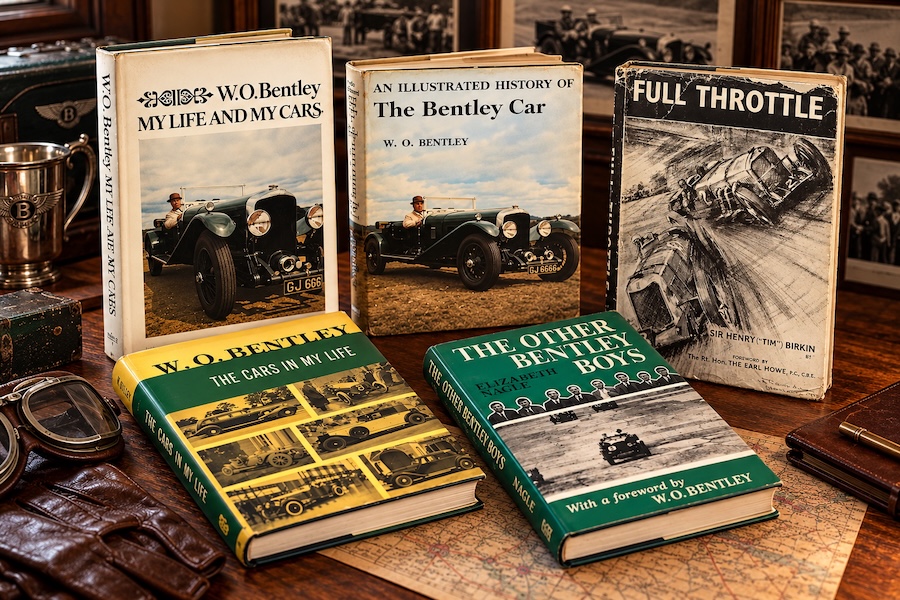
There was also a lot of reading ‘around’ the subject, understanding the world in which these gentlemen grew up, the Edwardian era, the First World War, the state of the British economy, the challenges of motoring abroad in the 1920s, how cars were sold then and who bought them, knowing about the politics of the day and events like the General Strike and the Wall Street Crash. It was quite a ride.
How important is the First World War to your understanding of this generation, its attitude towards danger and its desire to live life to the full?
The defining moment for this generation was without doubt The Great War, both personally and professionally. Imagine these men, many of them affluent, surfing the crest of the British Empire at its highest point in Edwardian England and then suddenly they are cast into this furnace of industrial war on a scale never seen before. It scarred all of them deeply and differently according to their personalities. And then on top of that, Spanish Flu, which killed W.O.s first wife and which Dudley Benjafield had been treating from a mobile medical lab in Alexandria.
One of my best discoveries was his writeup of his work in a 1919 edition of the British Medical Journal, which was still being cited in other medical studies as recently as 2003. It turned out that he was one of the first to develop a treatment for alleviating the symptoms.
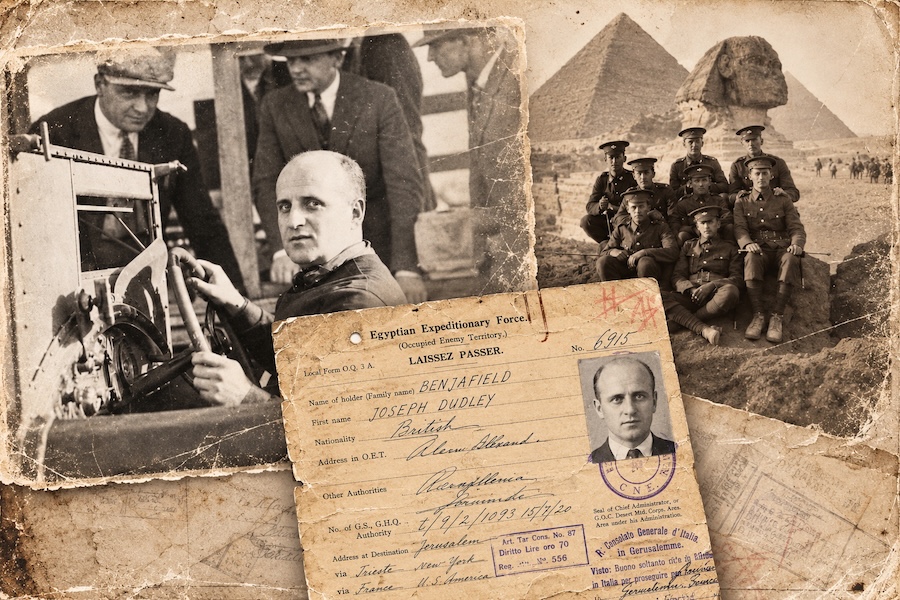
Benjy’s contribution, which was significant, was something for which he took no credit, and that’s very typical of that generation of Brits who did remarkable things but did not make a great song and dance about it, especially as regards their war work. For many it was the making of them as well as nearly their breaking. Sammy Davis clearly had some kind of breakdown after Ypres but glosses right over it. W.O. witnessing first hand aircraft falling out of the sky – not being shot down but from mechanical failure – left him with an absolute obsession with reliability, in my view.
What left the deepest impression on you while writing this book?
Post war, some of the survivors became determined thrill seekers. Birkin and Barnato in particular. Others, like W.O. I would say their war experience made them more dogged, more determined to make a difference. Mallory, trying to climb Everest after the war, believed there was some redemptive power to be derived from endurance – and this applies very much to Le Mans, I think. Unlike that last French Grand Prix in the summer of 1914, which was like a nationalistic joust, Le Mans was much more about endurance. Just surviving the full twenty-four hours was a source of collective celebration.
For example, when Old No 7 crossed the line in 1927, one of the first to congratulate Sammy and Benjy was Jean Chassagne, who they’d just beaten. Everybody shared in their achievement, and they all knew that this was what would put Le Mans on the map. There was method after all in the madness of racing in the dark. This is probably what left me with the deepest impression – of how Le Mans was made by Bentley and Bentley was made by Le Mans.
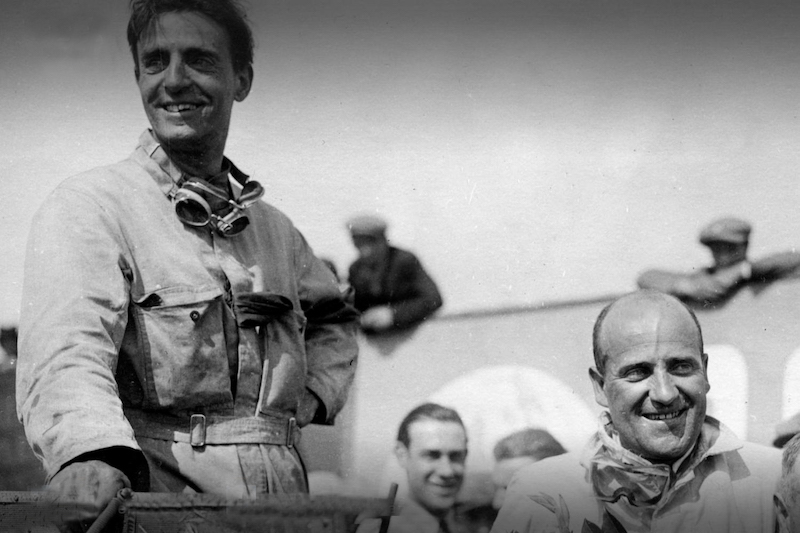
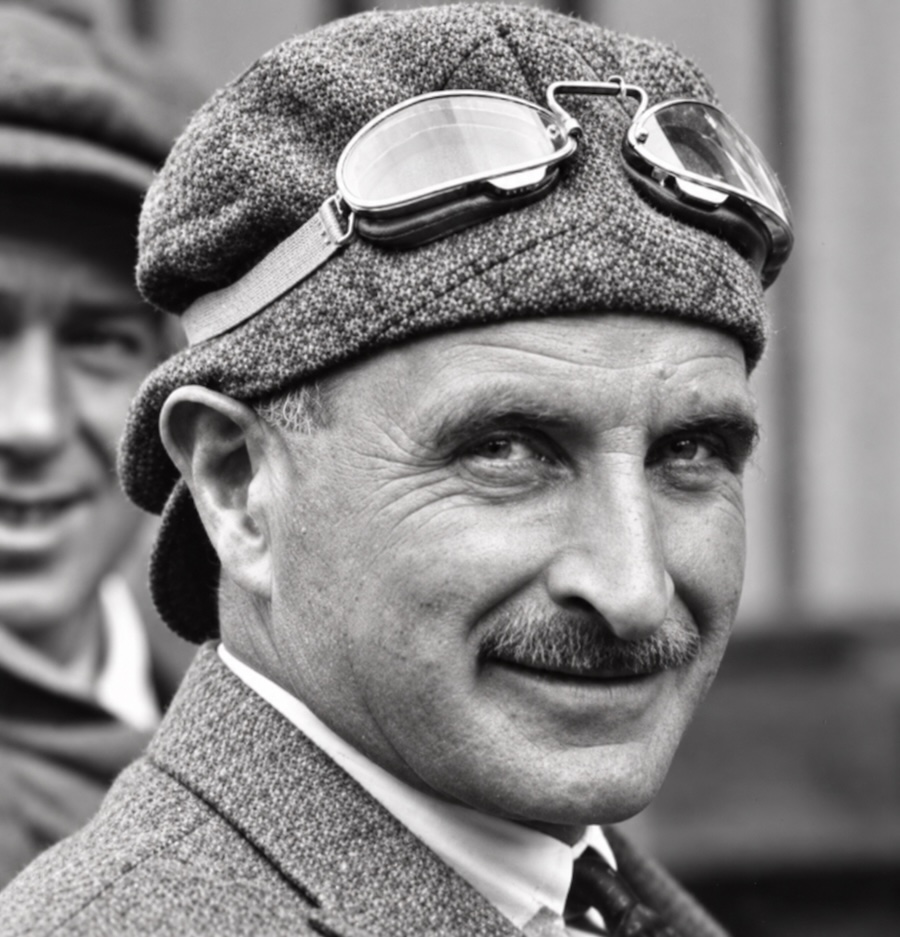
Did you uncover any events or facts that had never, or only rarely, been explored in accounts of Bentley and British motor racing between 1922 and 1931?
What I did discover which doesn’t get much attention is just how W.O. Bentley and his brother Horace Milner (H.M.) Bentley, for all their passion were just not businessmen. Theirs is the story of so many other enthusiasts who get in to building cars. Actually, building the business is as much a creative thing as the designing and engineering, but that side just didn’t interest them. Therefore, they were doomed, there’s no other way of putting it. It’s only thanks to Barnato that Bentley Motors survived as long as it did.
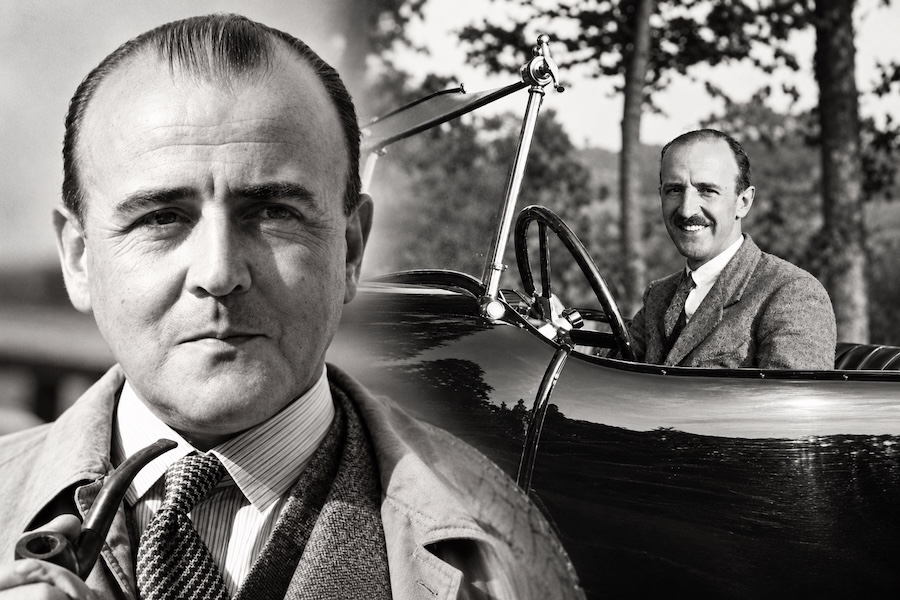
Who were the Bentley Boys really? Between W.O. Bentley’s portrayal of them in his memoirs, their actual achievements, the forgotten names of men who raced at Le Mans even just once, and accounts that have sometimes been softened over the years, what do you feel we can say with confidence about them? How did your own view of them change as you wrote the book?
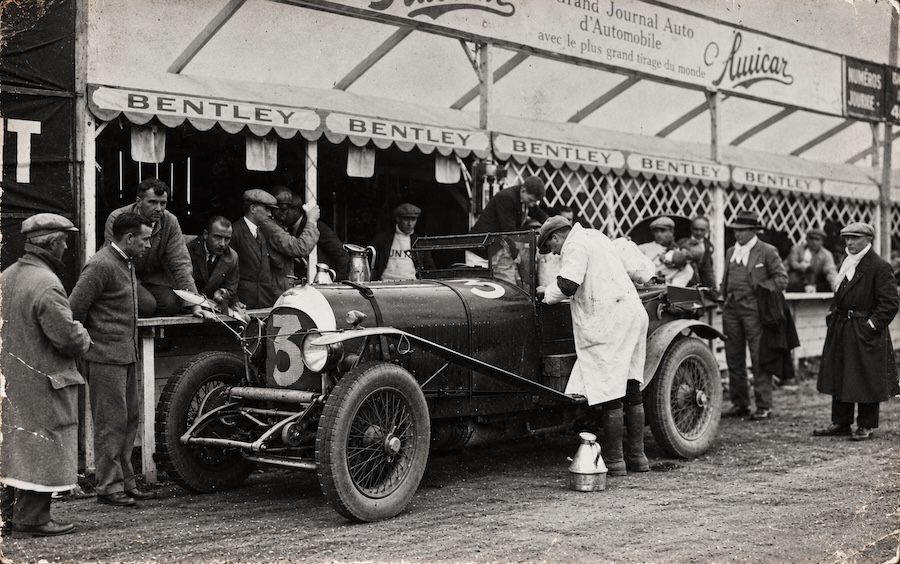
When speaking of the legendary Bentley Boys, we should remember that the story extends far beyond the celebrated gentlemen who raced the cars. Behind every victory stood an equally remarkable group of mechanics, engineers and craftsmen whose dedication, ingenuity and sheer determination were essential to Bentley’s success. Working tirelessly in the Cricklewood workshops and often through the night in the pits at Le Mans, these largely unsung heroes kept the cars running under the most demanding conditions. Their ability to diagnose problems, carry out repairs and overcome seemingly impossible mechanical challenges was every bit as important as the courage and skill of the men behind the wheel. Without these extraordinary men, there would have been no Bentley legend. They, too, deserve to be remembered as true Bentley Boys.
This being said, I came away with so much respect for the Bentley boys. I know from Benjy’s grandson who I met several times, how complicated that generation could be. Beyond ‘shell shock’ – and that was not much of a diagnosis – there was no understanding of battlefield stress or PTSD (Post-Traumatic Stress Disorder) and in any case, for that lot it didn’t do at all to air their demons. What I loved in them was their camaraderie and although there were the ‘haves and the ‘have nots’ among them (the so called ‘other’ Bentley boys) I was very struck by how Leslie Pennal and particularly Wally Hassan were made and mentored by their time at Bentley. To think that Hassan, teenager straight out of school, by the end of his long life he had been part of the design of three of the most significant racing engines of the century, the XK, the Coventry-Climax and the Jaguar V12. Astonishing.
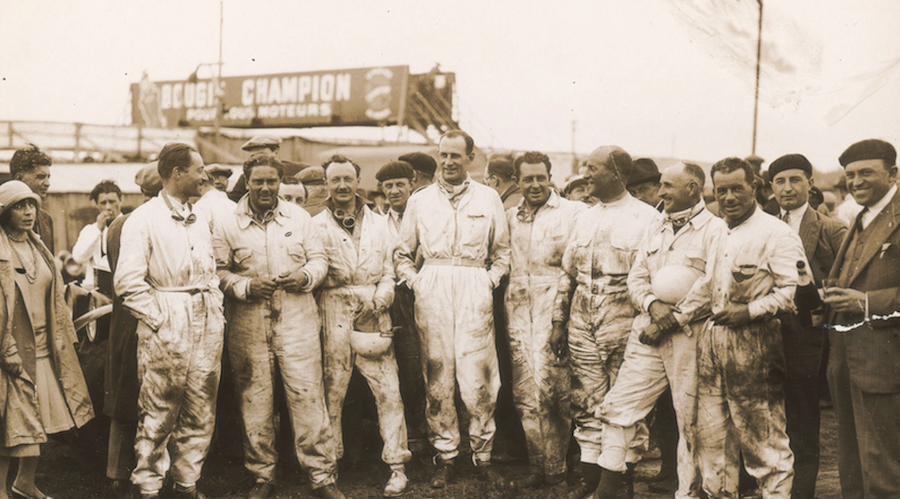
The person who my view of changed the most during the research and writing was Barnato. I’d got him down as the Gatsbyesque playboy who swept in, bankrolled them and then pulled the plug. What I realised was how much more there was to him. W.O. didn’t particularly want him racing at Le Mans, but Barnato, despite being the ‘money’, when it came to the race, followed W.O.’s orders to the absolute letter and in doing so not only won the event, but won three times in a row, a feat not repeated until the 1960s by Olivier Gendebien.
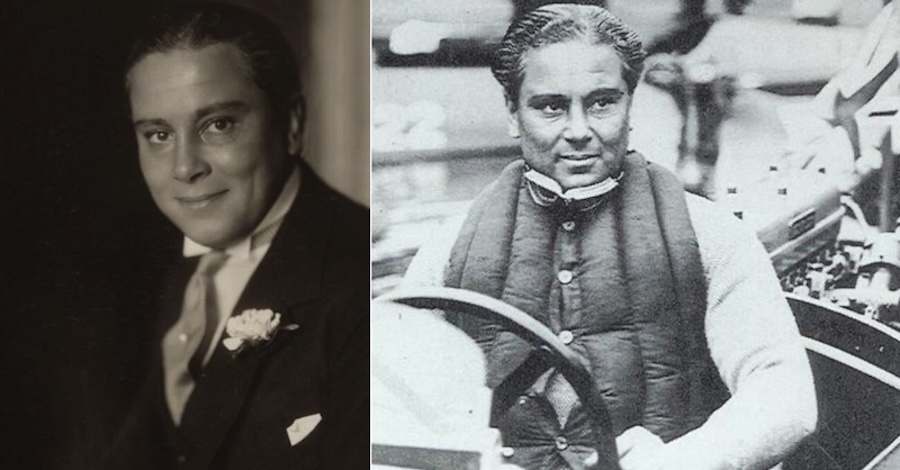
The way Barnato nursed the car home in the 1928 Le Mans, a real nail-biter – stopping out on the circuit on the last lap – to let the engine cool a bit when the Weymann Stutz was so close… Birkin would never have been so disciplined; the car would have died under him. There’s also a wonderful story that Diana Barnato tells about her father. At a big party, aged eight, in front of all the guests, she refused to kiss goodnight his latest girlfriend, ran upstairs and hid, convinced she was in terrible trouble. But when Babe found her he told her she had done the right thing and to always follow her instincts. What wonderful parental advice. No wonder she went on to break the sound barrier!
Which of the Bentley Boys did you find most moving or intriguing, and why?
Most moving of all the stories I felt was that of Leslie Pennal as he’s sweeping up in the Bentley and Bentley showroom under the photograph of W.O. at the T.T. in his DFP. And by 1922, just a few years later, he’s actually there in the Isle of Man as W.O.s riding mechanic. Talk about a dream come true.
Of the racing episodes you recount, which do you feel best reveals the character of the Bentley Boys?
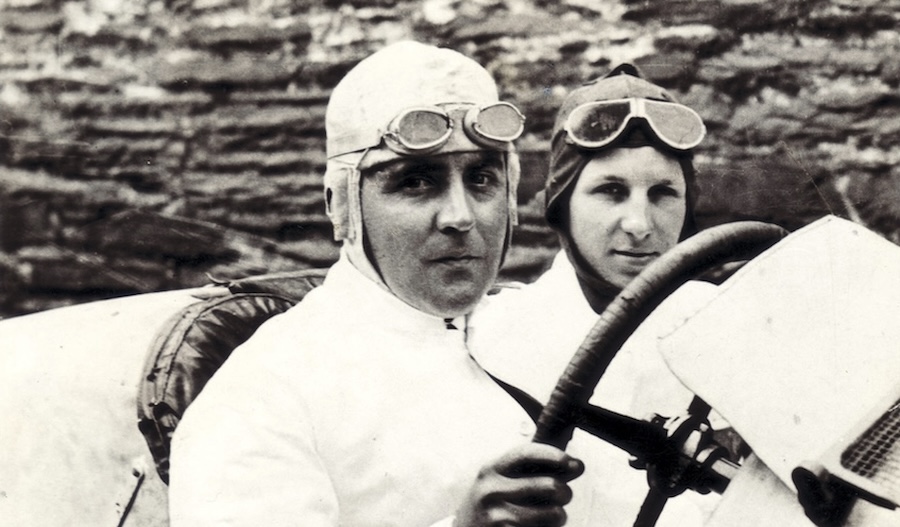
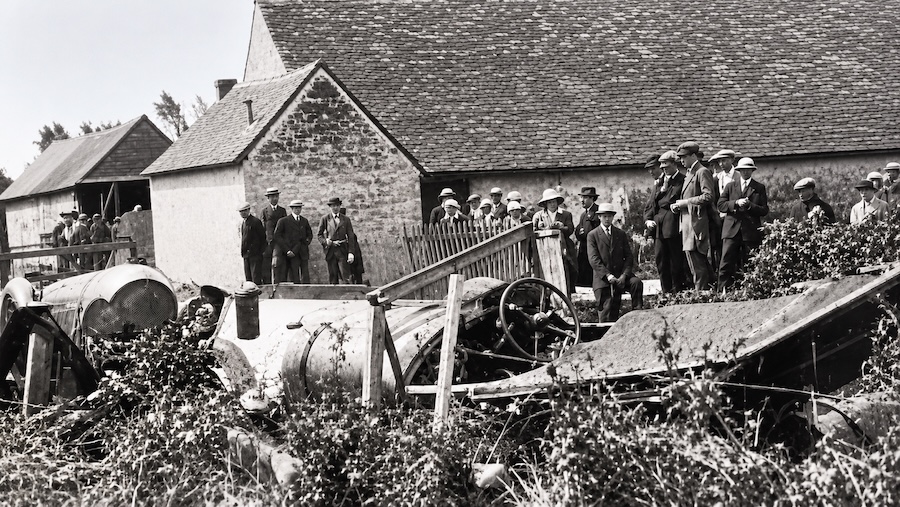
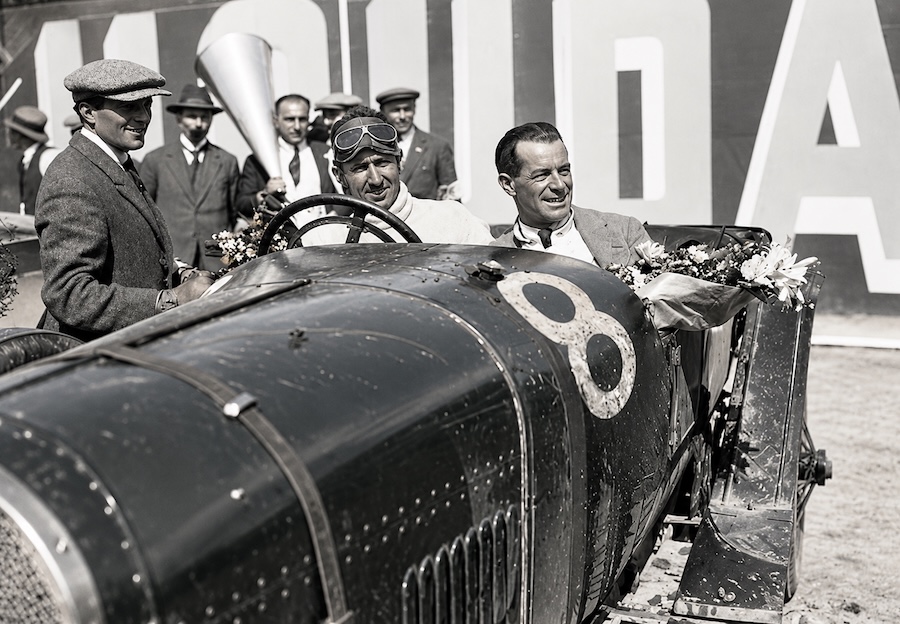
There are so many wonderful racing stories – too many for one book- but if I could only pick one favourite, it has to be Old No 7 surviving the White House (“Maison Blanche”) crash and going on to win in 1927. That absolute determination of Sammy Davis and Benjy – against W.O.s better judgement, not telling the boss that the front axle was almost certainly bent. It’s the Bentley creation myth.
The term ‘Bentley Boys’ suggests a close-knit group. How different were their personalities, backgrounds and motivations?
It is easy to get dewy eyed about the Bentley boys. They did come from all walks of life and that was a time when don’t forget the Brooklands motto was ‘the right crowd and no crowding,’ the days when Earl Howe stopped for lunch en route to Le Mans and his mechanic stayed outside. I didn’t love that they all piled in to help break the General Strike, but it made a good story and was very telling about the times. But clearly what bound this band of brothers together was W.O. himself.
They all of them so respected his purpose, and he respected all of them. He went out of his way to treat them equally. When Pennall’s wife was ill, W.O. offered to lend him his own car so he could get to the hospital.
Why did Le Mans become so central to Bentley’s identity? Would the marque have acquired the same reputation without it?
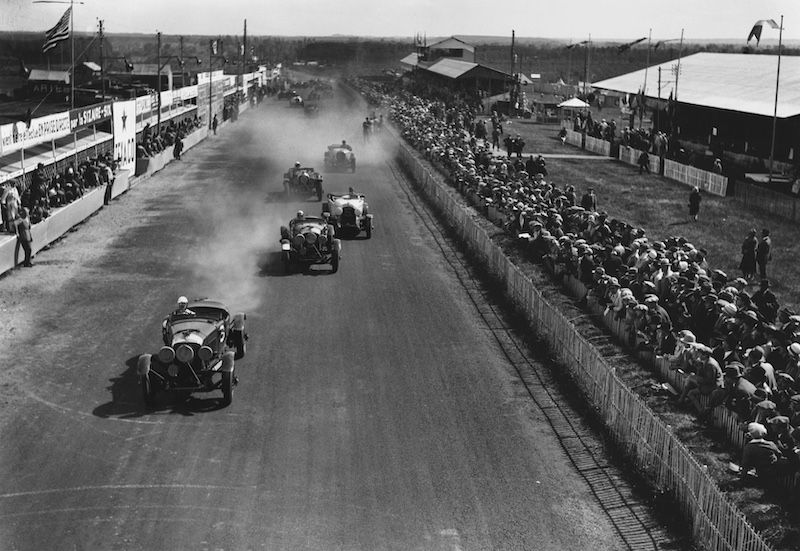
Le Mans definitely made the Bentley marque. In motor racing going fast is all very well; getting to the finish was another matter and over twenty-four hours that is an incredible feat for any car of that era, especially when you consider how rough the track was back then. Bentley wanted to build a car that would cruise all day – even when such a thing was barely possible on British roads and he more than achieved it. Le Mans combined that exotic mix of gallant endurance and continental style that said so much about Bentley and still does.
While writing Racing in the Dark – How the Bentley Boys Conquered Le Mans, did you discover, or rediscover, the real W.O. Bentley? How would you describe him as a person?
W.O. is possibly the most interesting person in the book. Complicated, reserved, opaque, faintly tragic having been widowed and then unhappily remarried at the time (later much happier). He had great difficulty celebrating success and probably could have been a bit of a downer when everyone was busy enjoying themselves.
However, he was a wonderful man to work for because he was fair, he listened, he could collaborate, and he shared his success. You couldn’t say that about Ettore Bugatti or Enzo Ferrari. He never claimed to be more than he was, but he had a quite singular vision for what would become known as a Grand Tourer.
How do you approach the differences in engineering philosophy and racing strategy within this story, particularly surrounding the ‘Blower Bentley’ project as envisaged by Tim Birkin?
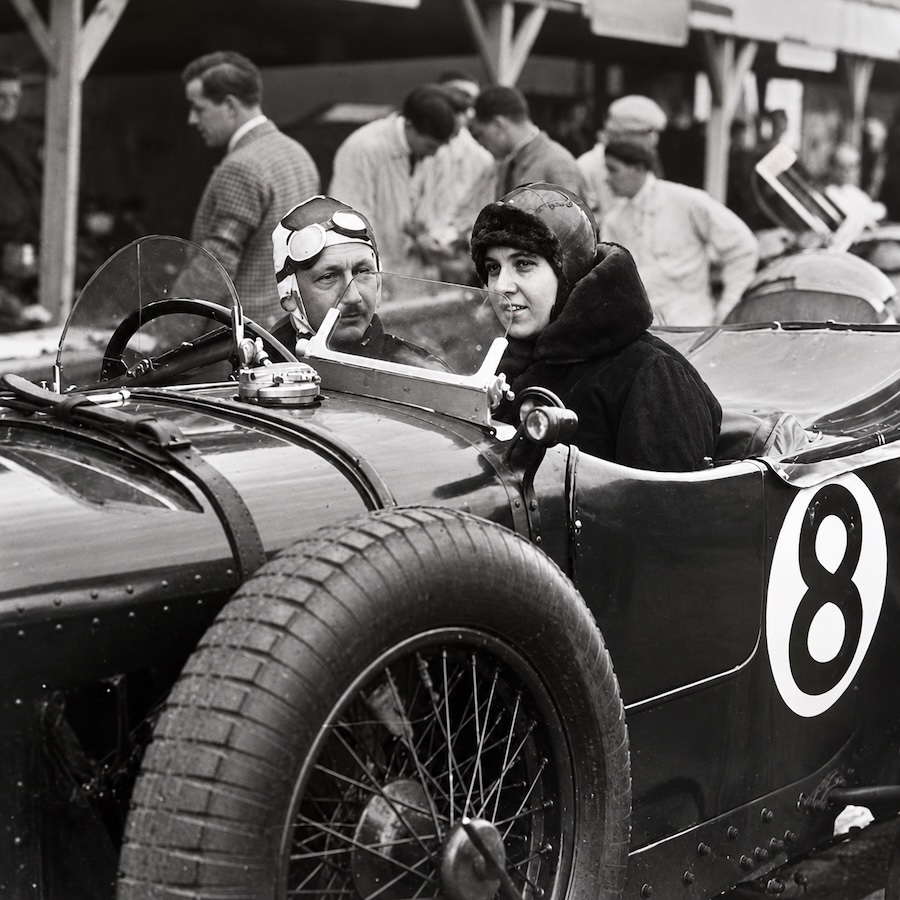
Birkin’s ‘blower’ project tells us so much about W.O. Birkin was obsessed with speed: being the fastest was his priority, which is great if you’re trying to break the Brooklands lap record. Arguably, in the right hands, one of his Paget-bankrolled Blowers might just have come home first at Le Mans, but Birkin it seems was just incapable of doing anything under the limit. No wonder he called his memoir Full Throttle!
W.O. was all about conservation, looking after the machinery so it would reward you by finishing. But at Le Mans in 1930, it all came together, using Birkin as the hare to wear out the Mercedes. That was W.O. at his strategic best.
Racing success appears to have been a powerful selling point for Bentley, so how do you account for the persistent financial difficulties faced by W.O. Bentley and, later, the shareholders associated with Woolf Barnato? How could a marque capable of such sporting achievements find itself in such serious trouble by 1931? Which factors do you consider decisive?
1931 was a terrible year not only for Bentley. Rolls-Royce’s sales absolutely tanked that year. Firms which were diversified survived – like Rolls and Napier with their aero-engines and Daimler being part of the BSA combine. No one saw the Wall Street Crash coming and no one knew how severe it would be. In my opinion, Barnato had no choice but to pull the plug, but he could have done it with more finesse, engineering the marriage to Napier.
And I understand why relations between W.O. and Barnato were awkward after. But also, W.O. had to take some of the blame. He was very much not a businessman and nor was his brother so there was no one to care about the business side. He never had or went looking for a Claude Johnson. People like William Morris (who W.O. did try and sell to) or Henry Ford, they were more interested in building their businesses than the cars they built. But firms like Bentley and Aston Martin and Lagonda and many other wonderful British marques, they were always going to be in some kind of financial trouble. William Lyons is the only one who could build stylish performance cars and build a business that made real money.
Bentley Motors was so undercapitalised it had to expensively outsource so much key work. It’s tragic that W.O. only got a half-decent machine shop so late in the day, but those early investors, they were only in it to make a quick buck, they weren’t interested in growing the company. If only Barnato had been there at the beginning…
Beyond the famous drivers, which mechanics, engineers or other members of the team deserve a more prominent place in the telling of this story?
Frank Clement undoubtedly deserves a more prominent place in the Bentley story. He was such a support to W.O., so consistent and multi-skilled. W.O. might well have been lost without him.
Which passage in the book was the most difficult to write because you had to balance historical accuracy, technical complexity and the pace of the narrative?
In many ways the hardest part to write was the Old No 7 story, because it’s the best known and the most told. I was determined to find my own take on it, and I was massively helped by the discovery of Neville Minchin’s eyewitness account of what happened at Maison Blanche, which transformed my version. The other hard part was dealing with the whole Rolls takeover.
It was so revealing – and not in a good way – of Henry Royce when he greets W.O. with the words “I believe you are a commercial man.” Astonishing disrespectful condescension! Of course, Royce knew W.O.’s reputation. He had been the only competition. It was hard to write without feeling deeply angry on W.O.s part. But it’s my job to tell the story; it’s the reader’s job to react.
Did you have to leave out a particularly appealing anecdote because there was insufficient evidence to support it? How far should an author be prepared to disappoint those who cherish the legends in order to remain faithful to the historical record?
When there is an anecdote that is hard to verify, the get-out is to preface it by saying ‘folklore has it…’ so the reader knows it may not be true even though its perhaps well-known or too good to leave out. Writing this book, I was acutely conscious that there are people out there who have written about Bentley and know far more about the marque than I ever will and that if I got something wrong, they would come for me – and so they should. So far so good… I never claim to be an authority on anything, just a storyteller.
If you could recover one document that is now lost or inaccessible, which would you choose, and what unanswered question would you hope it might resolve?
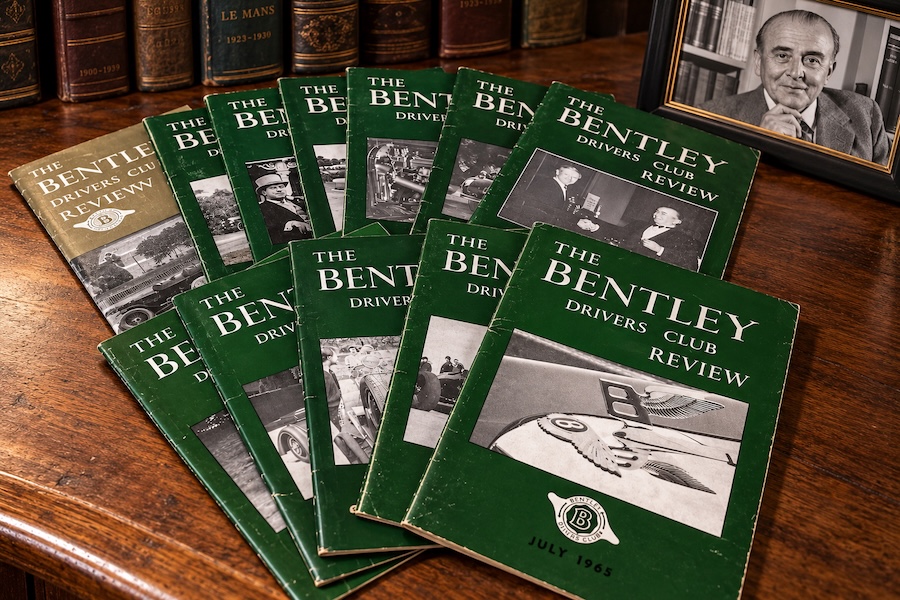
Because of Covid, there’s a lot I never saw. I would love to have read through every Bentley Drivers’ Club magazine. I have a sneaking suspicion that buried in there are rich seams I never reached.
Since the book was published, have readers, descendants or Bentley owners brought you new material that would make you want to expand, or perhaps qualify, your account?
I always hope to hear from people connected to the story with new information. In a sense one never gives up even though I’ve moved on to other topics. So far nothing has come up and I have to say I’ve been very touched by how positive so many serious Bentley people have been about the book. But I am always ready to hear criticisms. One or two people hinted that they thought I was a bit dismissive of the Derby Bentleys.
Having spent so much time in the company of these characters while writing, what question would you most like to ask W.O. Bentley if you could sit down beside him today?
Although W.O. was famously sphinx-like, his memoir, My Life and My Cars, brilliantly brought to life with the help of Richard Hough, is actually surprisingly intimate. It is therefore difficult to know what more one might wish to ask him. Yet today, there is not just one question I would like to put to W.O., but many!
The first would concern the events of 1931. I would dearly love to know what he really thought of Henry Royce. History suggests that Rolls-Royce acquired Bentley Motors partly to neutralise a formidable competitor. W.O. was probably too much of a diplomat to speak his mind openly.
My second question would be particularly important to me: “Looking back on those extraordinary twelve years, is there one decision – technical, commercial or personal – that you would make differently if you had the opportunity to live them again?”
I believe W.O. and H.M. shared a very British, public-school sort of snobbery towards business and money. They had a wonderful, highly desirable product and, with greater determination, could have gone out and courted the investors and benefactors they needed to expand production and invest in proper manufacturing equipment. But that would have required genuine effort and commitment, and I do not think H.M. Bentley had it in him. That was their fatal flaw. They lacked sound financial guidance.
Another question frequently crossed my mind while I was writing the book. I would ask W.O.: “Was there a car, an engine or an engineering concept that you desperately wanted to develop at Cricklewood but never had the opportunity or the financial resources to bring to life?”
It is difficult to imagine how he could have surpassed the magnificent 8 Litre. Few motor car designers ever have the satisfaction of seeing their ultimate dream reach production. Yet the Napier-Bentley, whose design was already well under way before the shock sale to Rolls-Royce, might have proved an even greater expression of his engineering genius.
And last but certainly not least, I would ask W.O.: “Mr Bentley, if you could leave just one message for the people who still own, drive and care for your Cricklewood Bentleys today, what would you want to tell them?”. I suspect he would reply calmly, but with considerable conviction: “Drive them! Drive them from coast to coast!”
Thank you so much, Peter, for your time and for sharing such fascinating insights with us. I would wholeheartedly encourage every enthusiast of the Bentley marque to immerse themselves in “Racing in the Dark – How the Bentley Boys Conquered Le Mans”. And for those who prefer listening to reading, the book is also available as an audiobook!
Peter, do you have another project in mind?
I was recently asked whether Racing in the Dark might provide the basis for a feature film and, if so, which part of the story I would choose to focus on. I know exactly what I would do, and I have even written a treatment for it. It would be a ‘Chariots of Fire on wheels.’ The relationship between Bentley and Barnato, the introvert engineer and the extrovert playboy, polar opposites who, when they came together achieved what neither of them could have done on their own.
It is one of the great partnerships, even though its not often seen that way. But three Le Mans victories speak for themselves. Each of them brought out the best in each other – for that short time they were together.
I’ve nearly finished the story of John Cooper, the man who, from his father’s garage in Surbiton, Surrey, took on Enzo Ferrari, changed the shape of Formula One and then came up with the Mini-Cooper.