
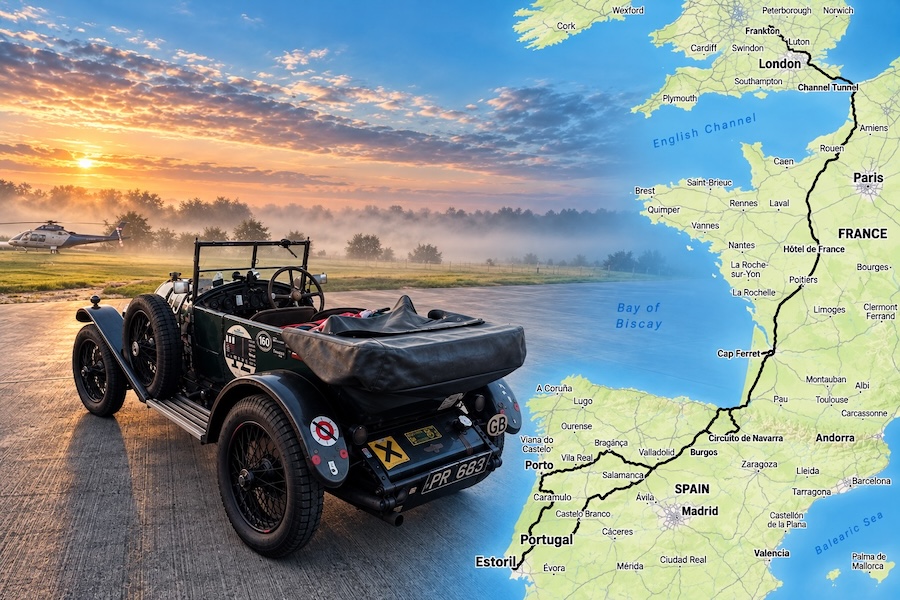
There are several perfectly sensible ways of getting a 1924 vintage Bentley from Britain to Portugal – and back again – in order to compete in a historic motor race at the Estoril circuit. A transporter is comfortable, a trailer is practical, and a modern tow vehicle makes light work of the distance.
But where is the adventure in that?
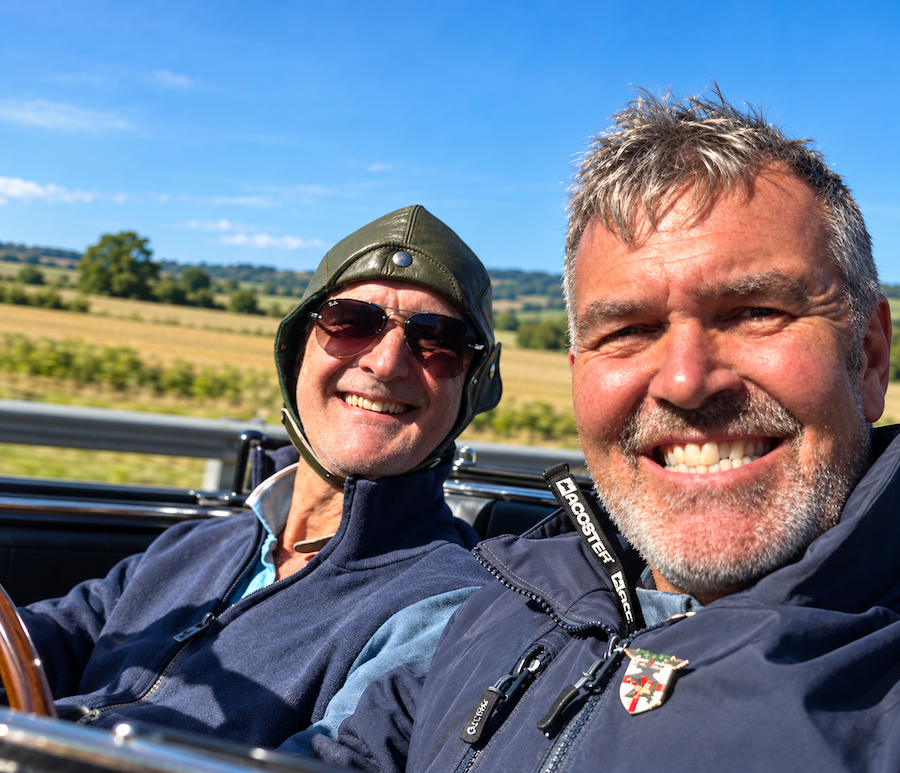
For my friends Shaun Harborne and Ryck Turner, both British passionate motor enthusiasts and proud owners of vintage Bentleys, the prospect of competing in the Benjafield’s 500 at the “Circuito do Estoril” presented an irresistible opportunity to do something rather more adventurous: drive a century-old Bentley all the way from England to Portugal, race it for 500 miles, and then drive it all the way home again.
For Shaun and Ryck, the race would be the destination. But the 4,000-mile journey would become the story.
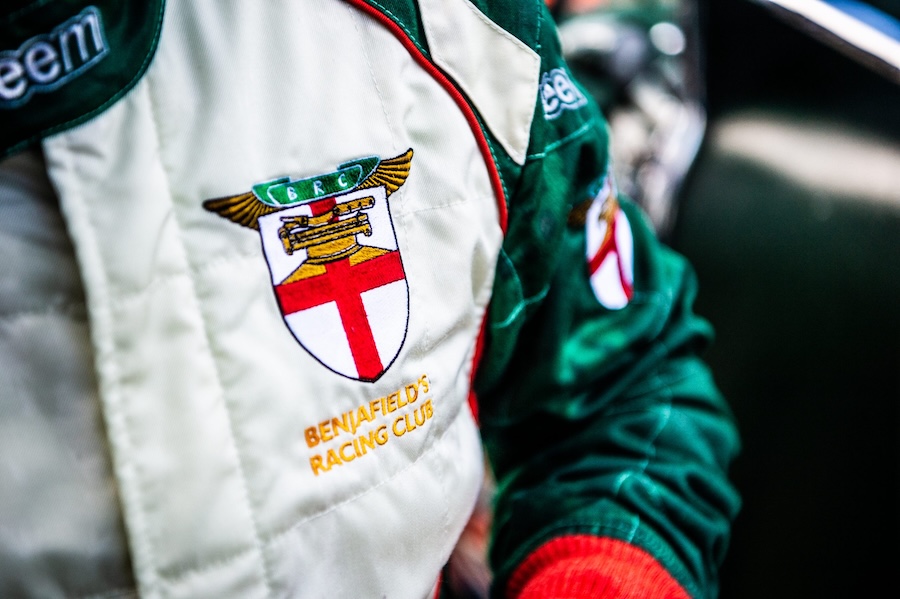
THE BENJAFIELDS RACING CLUB – TRULY ONE OF A KIND
To understand what inspired this rather ambitious undertaking, one must first understand the extraordinary little club behind the event.
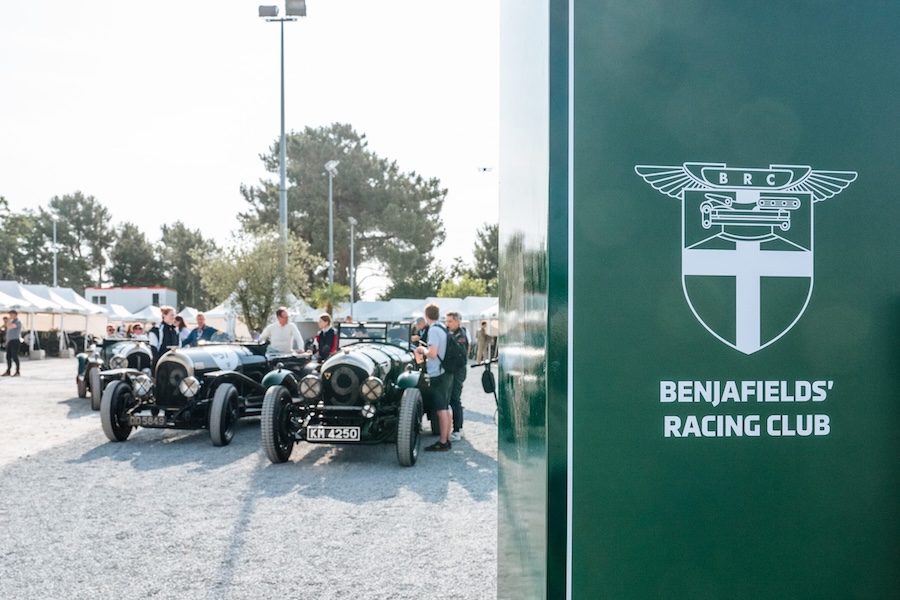
Founded in 1990 through the enthusiasm of former fighter pilot Vaughan Davis and a small circle of Vintage Bentley racing devotees, encouraged by the legendary Bentley specialist Stanley Mann, the Benjafield’s Racing Club was created to preserve something far more important than old racing cars: the spirit of friendship, adventure, sporting rivalry and occasional glorious eccentricity that characterised the original Bentley Boys.
Its name honours Dr Joseph Dudley Benjafield (1887–1957), the distinguished British bacteriologist who became one of W.O. Bentley’s most celebrated racing drivers and one of the legendary ‘Bentley Boys’. Affectionately known as ‘Benjy’, he shared victory in the 1927 24 Hours of Le Mans with Sammy Davis and played an instrumental role in founding the British Racing Drivers’ Club (BRDC) in 1928.
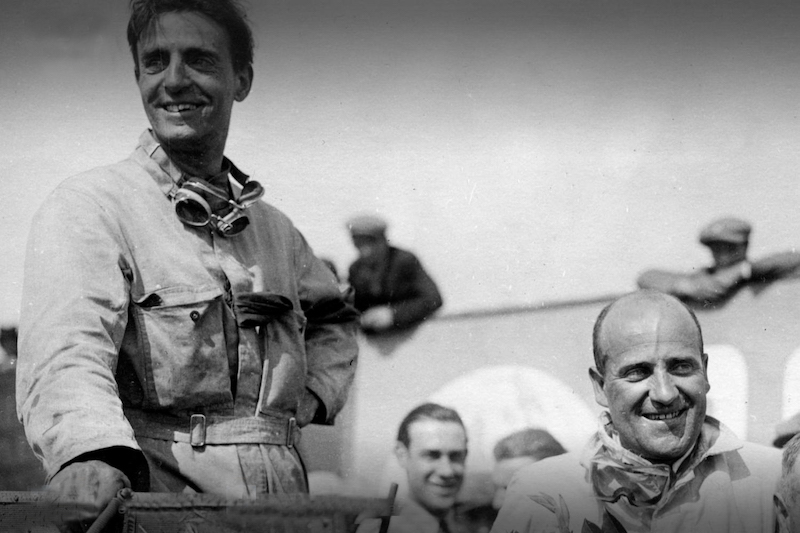
Yet perhaps one of the finest illustrations of Benjafield’s character came during the closing stages of that extraordinary 1927 Le Mans victory. Following the infamous accident at White House Corner, Sammy Davis had somehow managed to bring their badly damaged Bentley 3 Litre, subsequently immortalised as ‘Old Number 7’, back into contention. Against all expectations, the two men had fought their way into the lead.
With victory virtually assured and only a few laps remaining, Benjafield was at the wheel and could quite easily have driven the car across the finishing line himself. Instead, he unexpectedly pulled into the pits, climbed out and handed the wheel to his astonished team-mate. Sammy Davis, who had been quietly smoking his pipe, could scarcely believe what was happening. Benjafield simply told him: “You had all the trouble with the crash, you will finish the race.”
It was an entirely spontaneous gesture, neither required by the regulations nor dictated by team strategy. Benjy had chosen to relinquish the personal glory of taking the chequered flag so that his friend could enjoy the honour instead.
That small but magnificent act of generosity perhaps says more about the spirit of the original Bentley Boys than any number of racing victories. It embodied the camaraderie, loyalty and sportsmanship that remain at the very heart of Benjafield’s Racing Club nearly a century later.
Membership of Benjafield’s is limited and strictly by invitation. Although the club has no formal written rules, its ambitions have always been anything but modest. Over the years, it has organised a remarkable variety of events, including a 24-hour race for vintage cars at Portimão in Portugal, the Benjafield’s 100 at Silverstone, the Double Twelve at Goodwood, unusual sprint meetings, long-distance record attempts and recreations of historic Bentley celebrations. The club has also taken part in several editions of Le Mans Classic in France. What makes Benjafield’s particularly special is its determination not merely to display the racing pedigree of Bentleys in the past, but to bring it all back to life.
The cars are expected to be driven, sometimes very hard indeed. The competition is genuine, the machinery is precious, and the friendship between participants is considered every bit as important as the final classification.
The Benjafield’s 500 is a particularly appropriate expression of this philosophy.
Its inspiration comes from the famous BRDC 500-Mile races held at Brooklands between 1929 and 1937. The inaugural event, organised by the club that Dudley Benjafield had helped establish, was won by Frank Clement and Jack Barclay in a Bentley 4½ Litre.
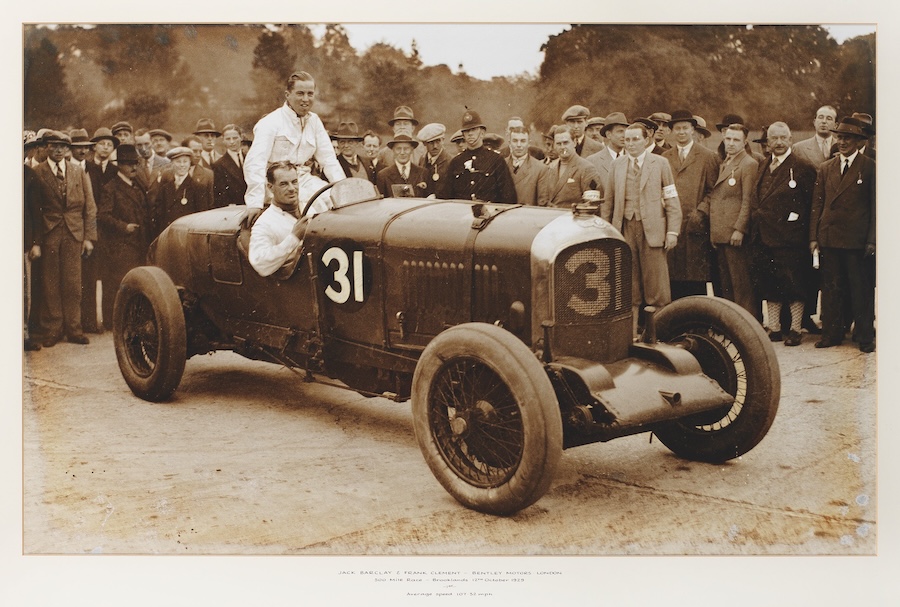
Those races were unusual because they employed a handicap system, allowing less powerful machinery to compete on meaningful terms with considerably faster cars. The result was an extraordinary combination of speed, endurance, mechanical sympathy and tactical uncertainty.
In 2017, the Benjafield’s Racing Club revived the concept at Spain’s spectacular Ascari circuit, bringing together 27 vintage racing cars for a modern interpretation of the original Brooklands contest.
For the Estoril edition, the club chose one of Portugal’s most celebrated motor-racing venues. Opened in 1972, the circuit is best remembered internationally for hosting the Portuguese Formula One Grand Prix between 1984 and 1996. Its demanding corners, elevation changes and long straight offered a suitable challenge for a field of W.O. Bentleys.
TWO MODERN BENTLEY BOYS
Shaun and Ryck had first met at the Vintage Bentleys Generation Day at Goodwood in 2024. Both were relatively recent arrivals in the world of W.O. Bentleys, although neither had wasted much time becoming thoroughly immersed in it.
Their shared enthusiasm quickly developed into friendship, strengthened by numerous motoring events and a mutual conviction that these magnificent machines were meant to be driven rather than merely admired.
As Ryck cheerfully puts it, they were the ‘new Bentley Boys on the block’.
When Shaun offered Ryck the opportunity to share his Bentley at Estoril, the partnership seemed entirely natural.
Shaun’s car, a 1924 Bentley originally built as a 3 Litre and subsequently converted to 4½ Litre specification, was already an experienced competitor. Having raced at Silverstone shortly before departure, the car was in excellent mechanical condition and ready for another challenge.
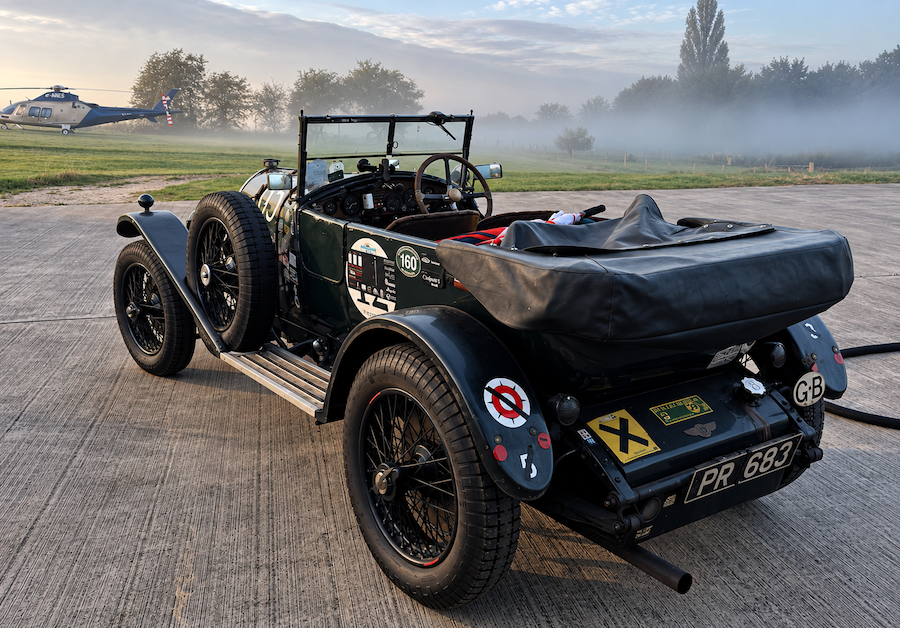
Ryck, meanwhile, was no stranger to ambitious journeys. His own 4½ Litre, affectionately named AFLICA – Another Flaming Luxury I Can’t Afford – had already proved itself in a 24-hour race and on a journey to St Moritz for “The I.C.E”.
A recently acquired Bentley 3 Litre was also set to feature in his future motoring adventures.
Neither regarded a journey across Europe as an unreasonable demand to place upon a properly maintained W.O. Bentley’s car.
Ryck was rather more anxious about driving somebody else’s Bentley, particularly with its owner sitting beside him, than he was about the prospect of crossing Europe in a century-old racing car. And so the plan took shape.
They would leave England, cross the Channel, travel through France and Spain, “explore” Portugal, compete in the Benjafield’s 500 and then drive all the way home. No transporter. No trailer. Just two friends, their luggage, a comprehensive collection of tools and spares, and a remarkable old motor car.
It was exactly the sort of adventure the Benjafield’s Racing Club had been created to encourage. And, in many respects, exactly the sort of adventure the original Bentley Boys would have understood. Almost a hundred years later, Shaun and Ryck were about to rediscover that world for themselves.
TWO MEN, ONE BENTLEY AND RATHER A LOT OF LUGGAGE
The adventure began on a Tuesday morning at Shaun’s farm in Warwickshire.
Ryck was expected at 8 o’clock. He arrived a quarter of an hour late, but made up for his tardiness in magnificent style.
Instead of the Range Rover Shaun had anticipated, he appeared in his own 1925 Bentley 3 Litre, a car with unusual brass brightwork which Ryck says W.O. Bentley himself nicknamed The Golden Bentley.
Shaun heard him approaching through the village long before he arrived. It was an appropriately theatrical beginning.
Ryck had brought presents, champagne and an assortment of useful items. He had also brought rather more clothing than their limited luggage space might reasonably accommodate. There were coats for different temperatures, racing equipment, evening clothes and the inevitable collection of personal belongings. Everything had to be squeezed into the Bentley’s available space.
Ryck had at least settled one important question of travelling attire. Having recently lost two baseball caps to the wind, he had decided to wear a green leather flying helmet. That, at least, was unlikely to disappear over the back of the car.
Shaun had spent the preceding days checking tyre pressures, oil levels and the car’s general mechanical condition. Tools and spare parts had been carefully assembled and loaded, with the intention of making the Bentley as self-sufficient as possible.
The car remained in essentially the same configuration in which it had raced at Silverstone. There was no elaborate transformation into a grand touring machine. It was a racing Bentley with luggage. After photographs and farewells to the family, the two friends finally departed at about 8:30 The long way to Estoril had begun.
ENGLAND AND FRANCE – FINDING THE RHYTHM
The first miles took them south through England, along the motorways towards the Channel Tunnel. As so often happens when driving a Vintage Bentley, they were never entirely alone.
Other motorists waved, sounded their horns, filmed the car through their windows and attempted conversations while travelling at motorway speeds. At petrol stations and during the Channel crossing, the questions were remarkably consistent.
“Where are you going? How old is the car? Have you really driven it there?”
And when they explained that they were heading for Portugal to compete in a 500-mile race before driving home, disbelief usually gave way to admiration.
Shaun was particularly amused when they stopped at a service station near the Tunnel. On his previous journey to Portimão in 2024, the Bentley had suffered fuel starvation at precisely that location.
This time, fortunately, history did not repeat itself. The crossing passed uneventfully, and before long the Bentley was travelling south through France.
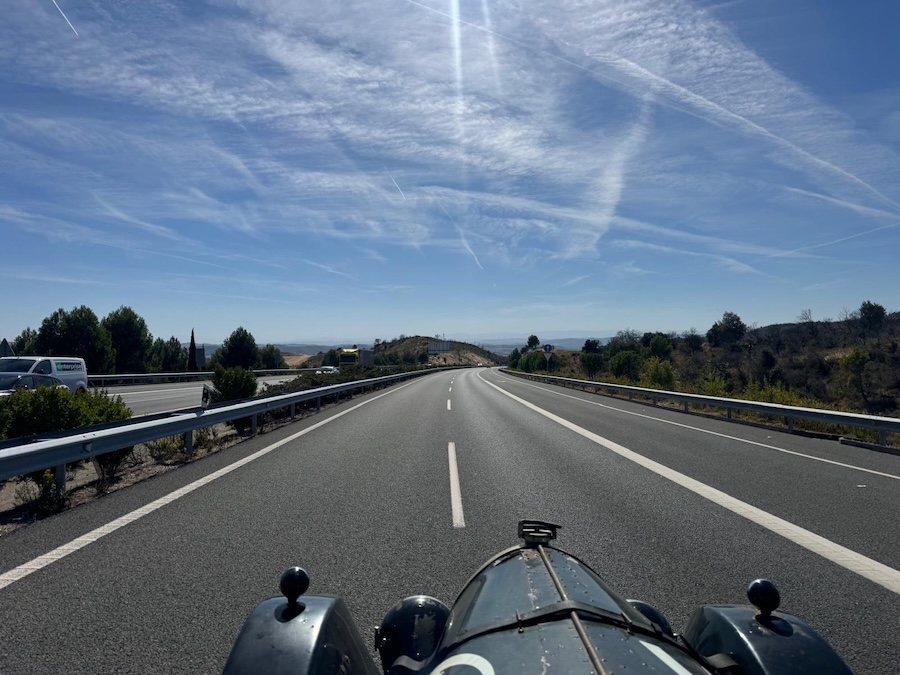
There is something fundamentally different about crossing a country in an open Vintage Bentley.
In a modern car, the landscape passes beyond the glass, insulated by climate control, soundproofing and sophisticated suspension. In a Bentley, the landscape becomes part of the journey. The temperature changes are immediate. The wind is a constant companion. Road surfaces, gradients, smells and weather all demand attention.
The car is not simply transporting its occupants through the countryside. It is involving them in every mile.
With the engine running beautifully and the weather remaining favourable, the two men settled into the rhythm of long-distance vintage motoring. Their first destination was La Chartre-sur-le-Loir.
And a rather special hotel.
THE HOTEL DE FRANCE – A PILGRIMAGE
Few hotels occupy such a distinctive place in British motor-racing history as the Hôtel de France. For decades, its name has been associated with the great racing teams that travelled to Le Mans, particularly the Aston Martin and later Ford operations associated with John Wyer.
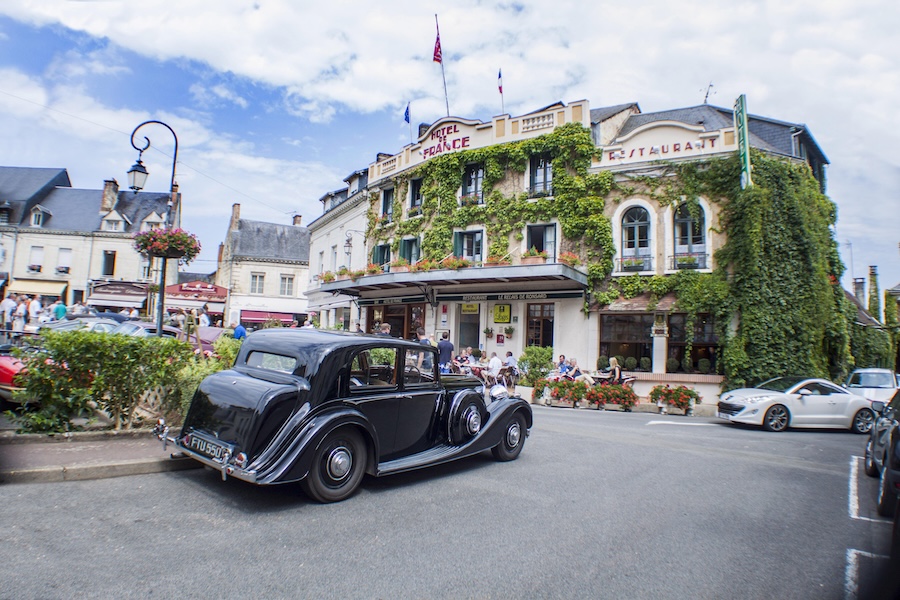
The hotel represents an era when competition cars were driven on public roads, when drivers and mechanics shared meals, and when racing was inseparable from the journey that brought everyone together.
Shaun and Ryck arrived at about seven in the evening.
As the Bentley pulled up outside, people enjoying an early evening drink greeted its arrival with applause and cheers. It was a wonderfully appropriate reception. The car was parked outside for photographs, and a welcome beer followed.
Dinner was simple and excellent: steak, red wine and the pleasure of good company.
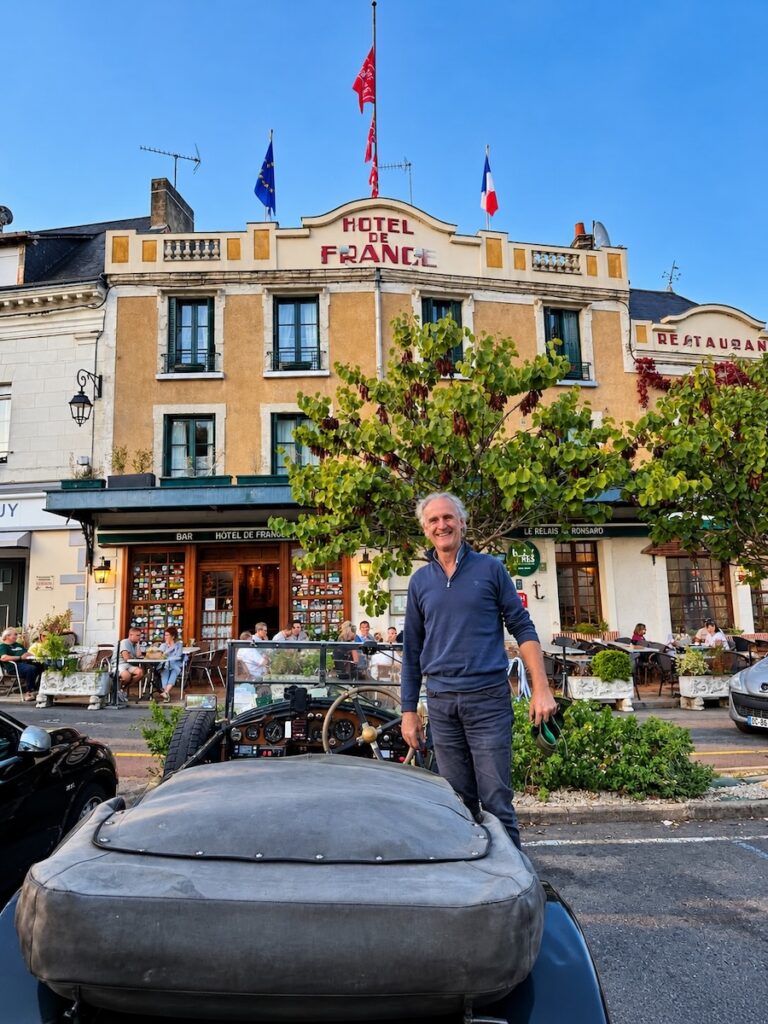
For Ryck, the surroundings prompted thoughts of the original Bentley Boys, particularly John Duff, whose achievement in winning Le Mans with Frank Clement in 1924 deserves far greater recognition than it sometimes receives.
The hotel also provided a quieter opportunity for the two friends to reflect on their adventure. Although they had known one another for some time, this was their first experience of spending so many consecutive hours together.
They had talked throughout the journey, exchanged stories and begun discovering the small habits and eccentricities that only become apparent when two people share a confined space for hundreds of miles.
So far, the partnership was working splendidly. And perhaps there was something rather special about the scene outside. For once, they were not simply admiring old photographs of men who had driven racing cars across Europe. They were doing it themselves.
SOUTH THROUGH SPAIN – MOUNTAINS, A LAP RECORD AND A FLYING SPOTLIGHT
The following morning brought an early departure and another long day’s motoring. Concerns about fuel availability in France encouraged them to stop approximately every 150 miles, usually combining refuelling with a change of driver.
As they approached Spain, the scenery became more dramatic and the gradients more demanding. Long mountain climbs required careful judgement.
Was it better to allow the engine to work at around 1,800 rpm in fourth gear, or select third and maintain approximately 2,300 rpm? Which approach would impose the least strain and generate the least heat?
These are questions that become very real when one is responsible for a nearly century-old engine, particularly with hundreds of miles still to travel. The Bentley nevertheless continued to perform admirably.
Their next destination was the Circuito de Navarra, where Shaun had arranged a short visit with the assistance of circuit manager Inma Lezana.
The circuit was familiar territory. In 2024, when the Bentley was still in 3 Litre configuration, Shaun had established a pre-war lap record there. Now, with its larger engine, he was keen to improve upon it.
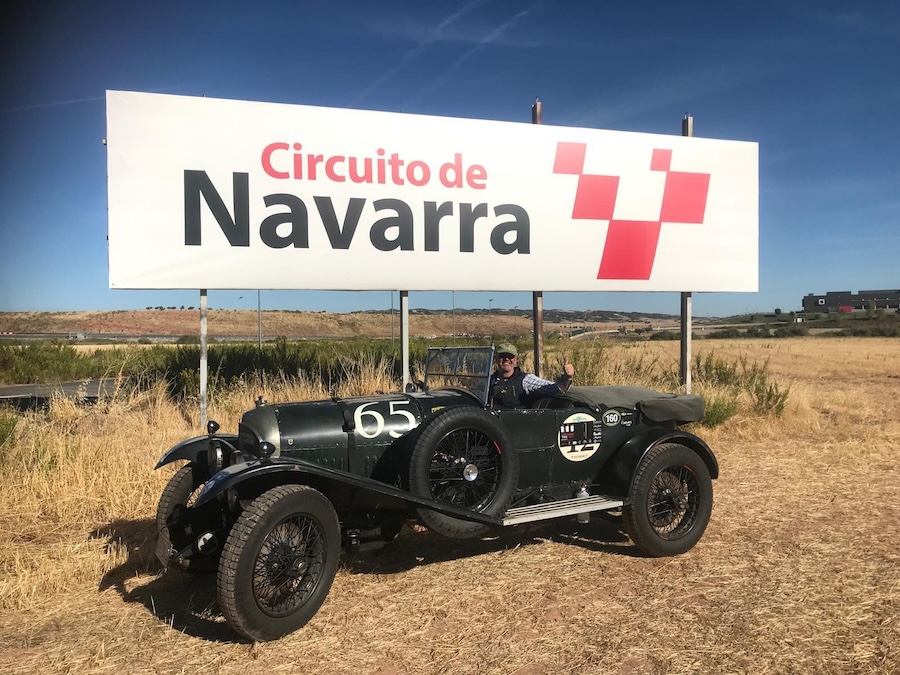
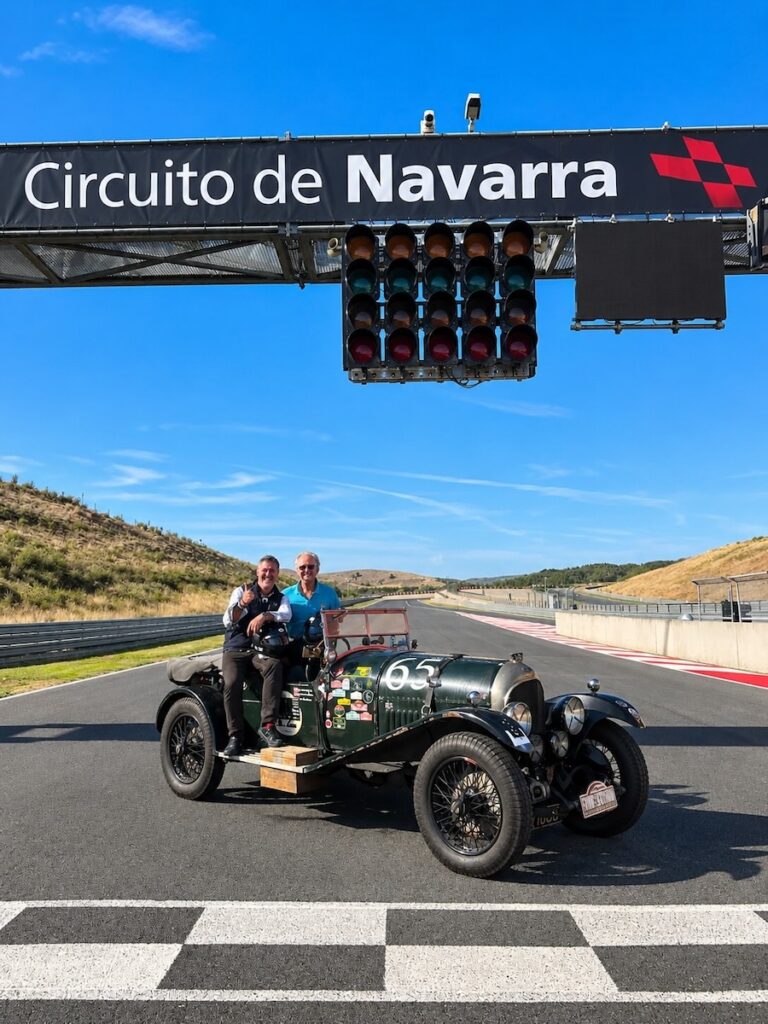
Despite arriving with their luggage still aboard and with little preparation beyond putting on their helmets, both men enjoyed several laps.
Ryck had his opportunity first, before Shaun took the wheel and lowered his previous record by approximately 30 seconds.
The new lap time was 3 minutes 1.018 seconds. Not bad for a racing car which had just driven across much of France.
That evening they continued to Burgos, where the magnificent Hotel Landa provided a memorable overnight stop.
The following day, however, the Bentley reminded its occupants that even the finest machinery has a sense of humour.
While travelling towards Portugal, one of the front Cibié spotlights worked loose and fell onto the road with an alarming crash. Shaun stopped sharply, and Ryck hurried back to retrieve the errant component, watched by passing lorry drivers who must have wondered what on earth was happening.
Amazingly, the lamp and its chrome surround had survived almost unscathed. It was carefully stowed in the car to be refitted later.
Near Porto, a brief misfire provided another reminder of the Bentley’s age. The culprit was the loose top of a carburettor float chamber, quickly identified and corrected. Neither incident seriously interrupted the journey.
PORTO – WHEN THE ROAD BECOMES A FRIENDSHIP
Porto provided one of the most delightful surprises of the entire adventure.
A local enthusiast also custodian of an original 3 Litre, Pedro Filipe, had invited competitors travelling towards Estoril to join a gathering of the Portuguese classic-car community.
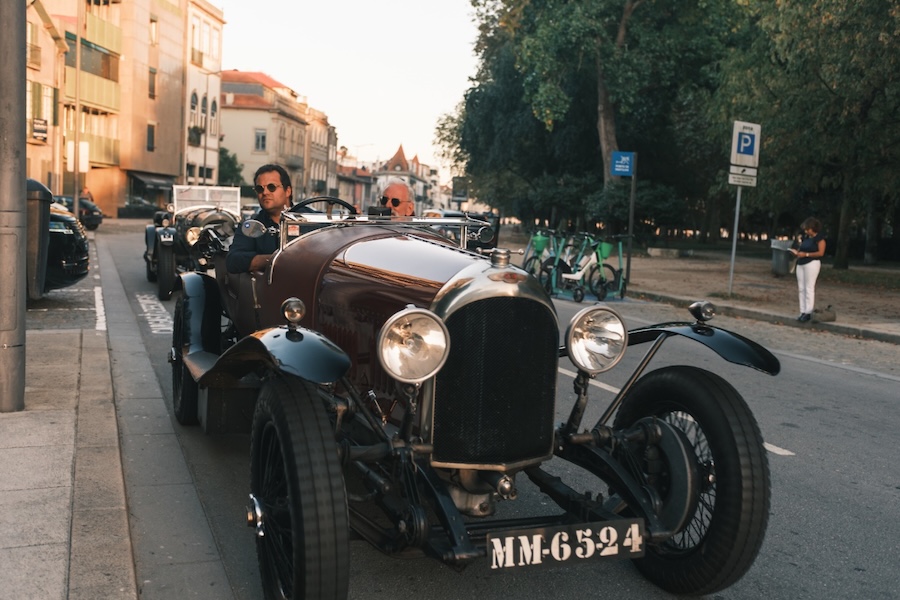
Shaun and Ryck accepted. After checking into their seaside hotel, they made their way into the city, where they were welcomed by Pedro, the famous Walter Heale and a wonderfully varied collection of enthusiasts.
Dinner consisted of steak sandwiches, chips and beer, followed by an evening drive through Porto with approximately 50 other historic cars!
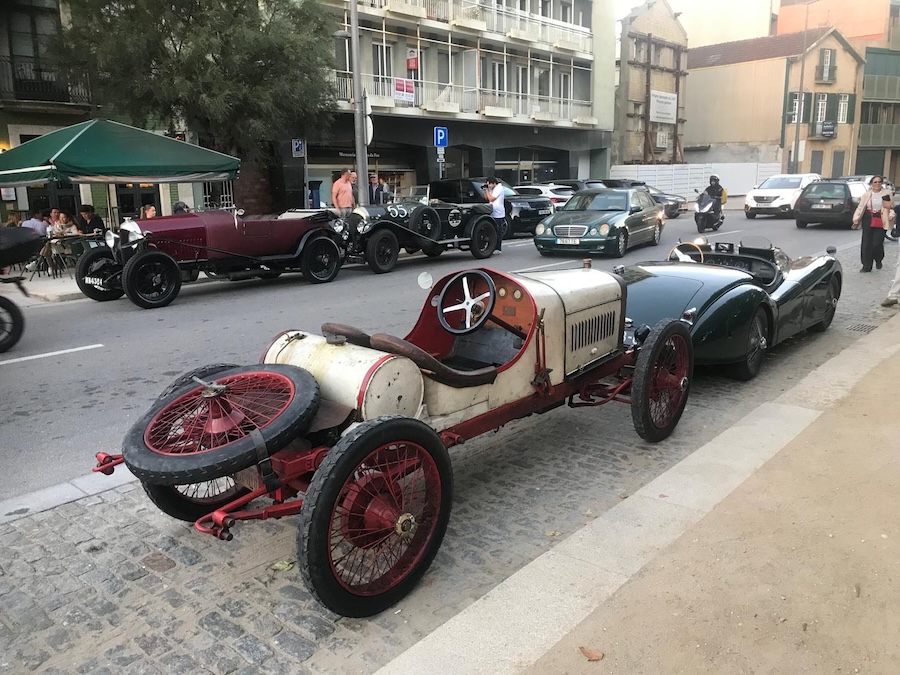
The streets and tunnels echoed to the sounds of engines from different eras. Walter Heale (see photograph of the culprit hereafter), driving a particularly vocal Jaguar XK120, seemed especially determined to make the most of the city’s acoustics.
Once again, the English visitors found themselves explaining their improbable itinerary. Yes, they had driven from Britain. Yes, they intended to race the Bentley for 500 miles. And yes, they were going to drive it home afterwards. Their hosts were delighted.
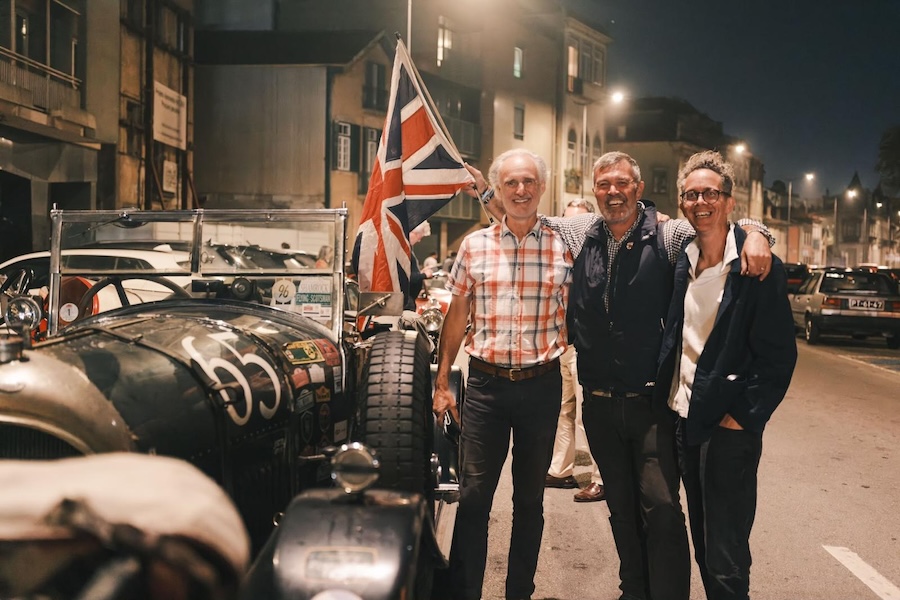
The evening continued with photographs, conversations and new friendships, proving once again that the universal language of motoring requires very little translation.
The following morning brought another unexpected pleasure: a visit to the Museu do Caramulo, high in the Portuguese mountains. The museum’s remarkable collections, including Formula One machinery, historic cars, motorcycles and works of art, were impressive enough.
Their hosts also showed them the engineering and maintenance facilities, where the two visitors were able to offer some advice concerning a Bentley undergoing attention.
It was the sort of spontaneous encounter that no carefully planned itinerary could ever guarantee. Eventually, however, time was running short. Estoril was waiting.
ESTORIL – THE ROAD ENDS, THE RACING BEGINS
After several days on the road, the arrival at Estoril was a milestone. The Bentley had crossed Britain, France, Spain and Portugal under its own power.
It had climbed mountains, established a circuit record, lost a spotlight, developed a minor carburettor problem and introduced its occupants to countless people.
Now it was about to become a racing car again. There was one final navigational mishap.
Approaching the circuit, Shaun and Ryck mistakenly drove into a vehicle-testing station, much to the amusement of its manager. Eventually, they found the correct entrance.
The Benjafield’s paddock was already taking shape, with mechanics, support vehicles and competing Bentleys arriving for the weekend.
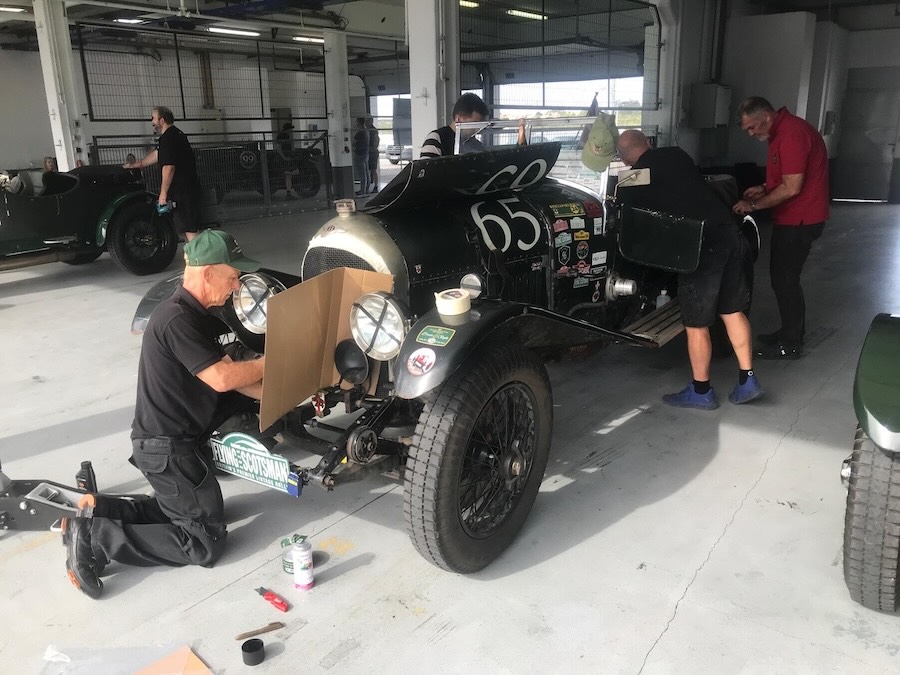
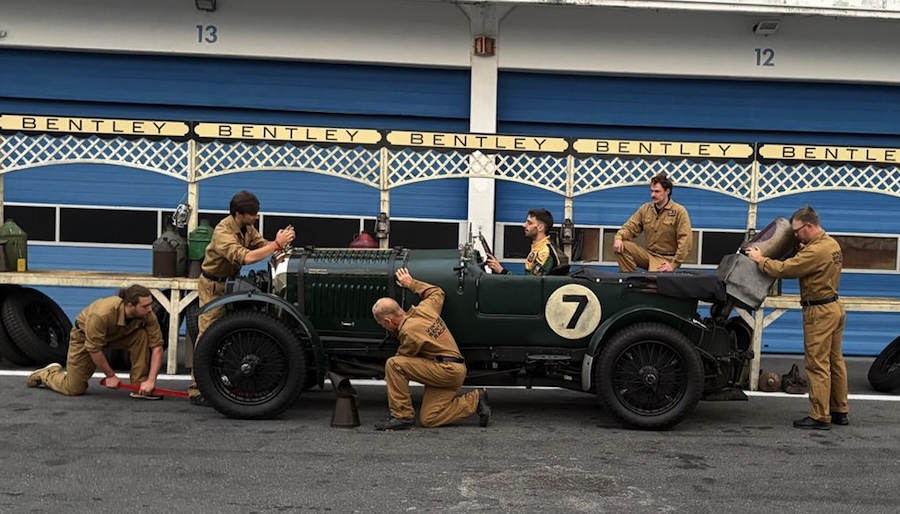
The team from 96 Engineering began checking the car, removing the wheels, greasing the hubs, inspecting the oil levels and refitting the rescued spotlight. The spare wheel, luggage, tools and touring equipment were removed. The Bentley was being returned to racing trim.
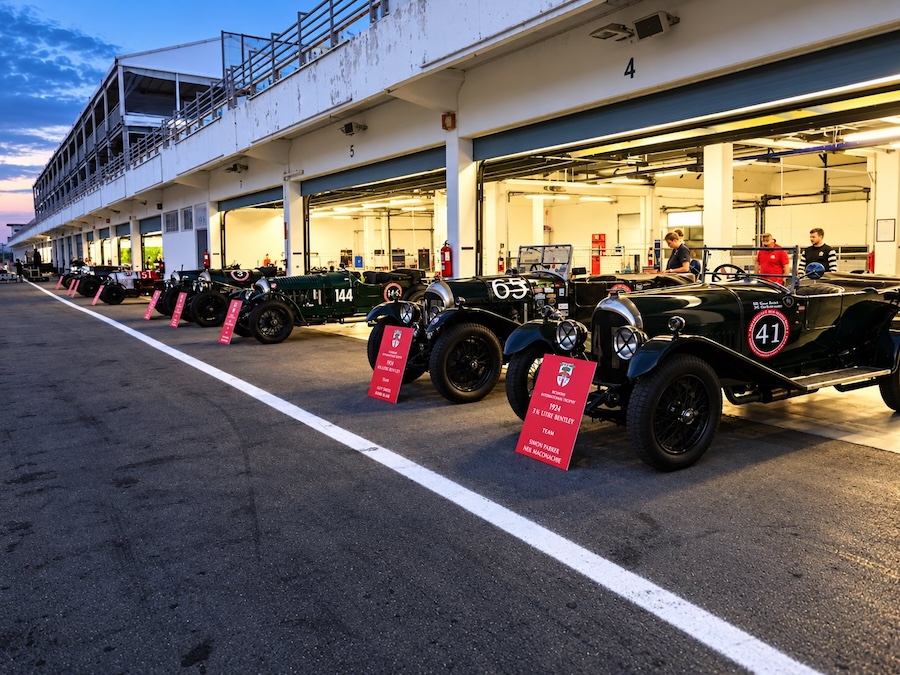
Sharing the garage were Simon Parker and Vicky with their Bentley 3/4½ Litre. Simon, another relatively recent enthusiast in the W.O. world, was hoping to complete his first race in the car.
There was a tremendous sense of camaraderie. Competitors exchanged advice, mechanics shared their knowledge, and familiar faces renewed friendships formed at previous events.
The seaside hotel became the social centre of the weekend, with drinks on the terrace, dinners and the familiar atmosphere of a Benjafield’s gathering.
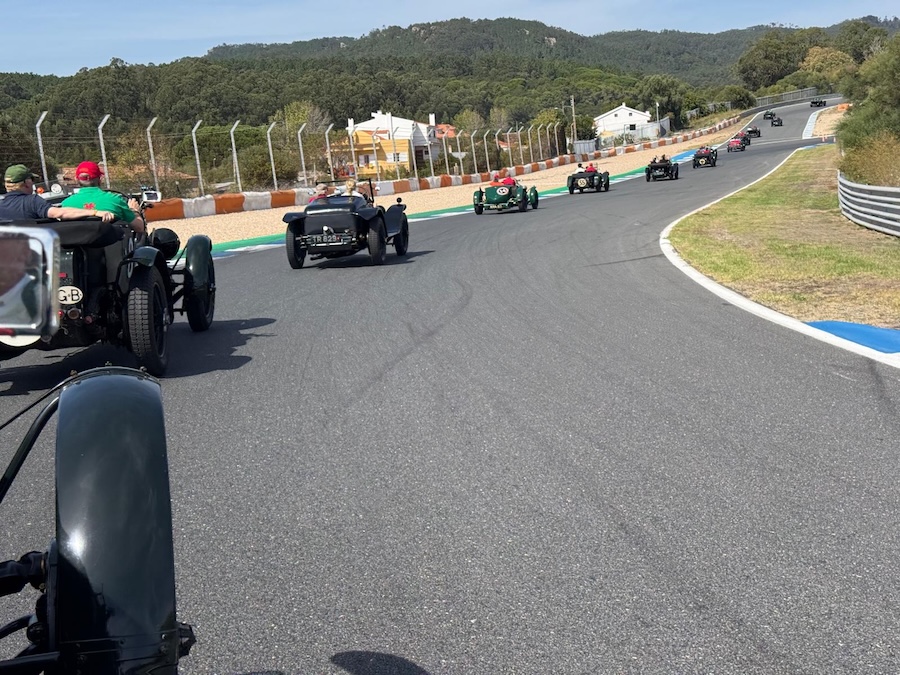
Saturday brought practice, qualifying and a wonderful parade of 27 W.O. Bentleys carrying friends and family around the circuit. It was a rare spectacle.
For Shaun and Ryck, qualifying introduced an unusual tactical problem.
The race would be decided using a handicap system, but its details remained something of a mystery. Should they drive quickly and risk setting an ambitious target, or deliberately hold back?
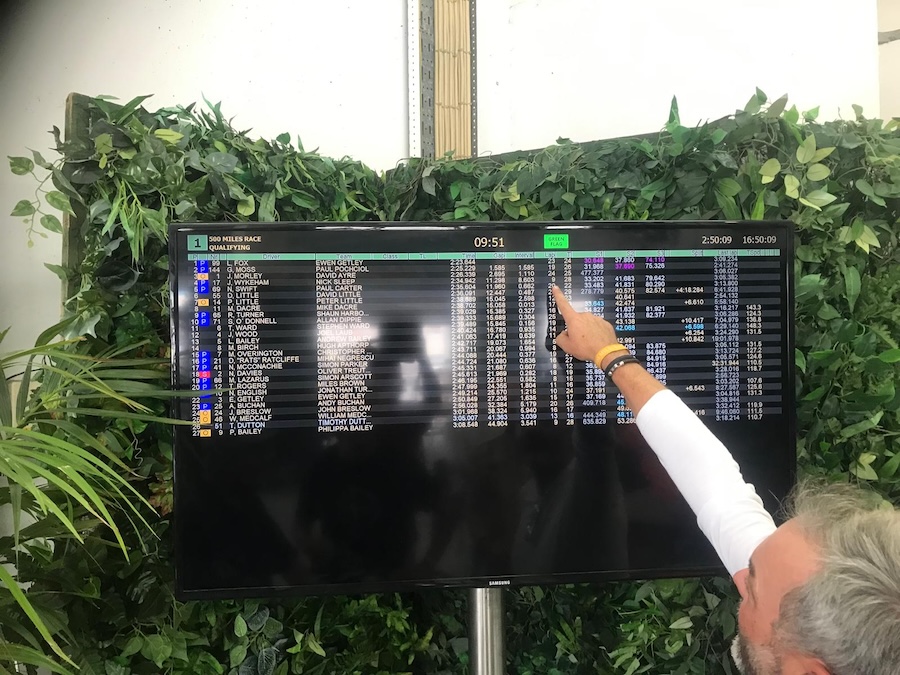
In the end, both completed several reasonably brisk laps, setting a qualifying time of approximately 2 minutes 48 seconds.
It placed them tenth on the grid. Whether that was a wise strategy remained to be seen.
500 MILES – THE MODERN BENTLEY BOYS & GIRLS GO RACING
Sunday morning arrived with anticipation, excitement and a little apprehension.
The 27 Bentleys assembled on the grid, surrounded by drivers, mechanics, friends, partners and photographers.
The starter dressed in period style sent the cars away in pairs, row by row, by pointing at them with a Union Jack.
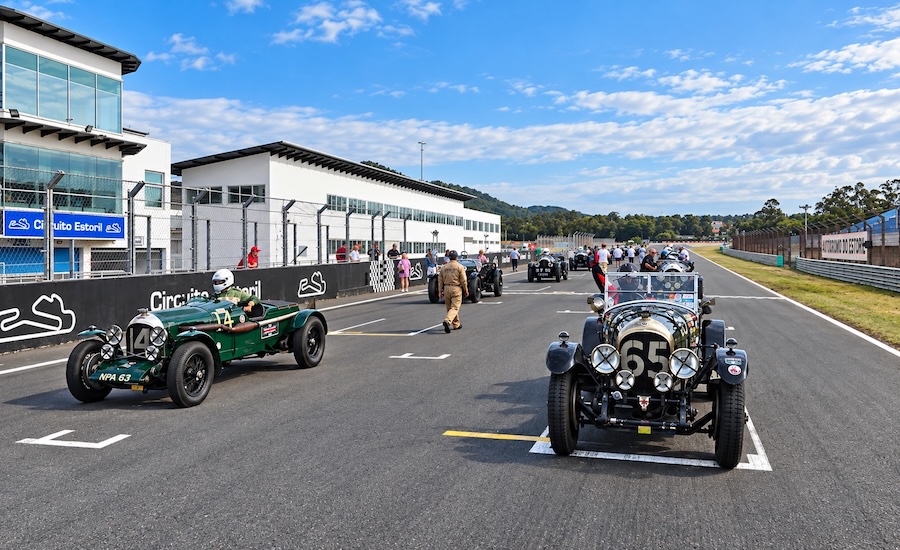
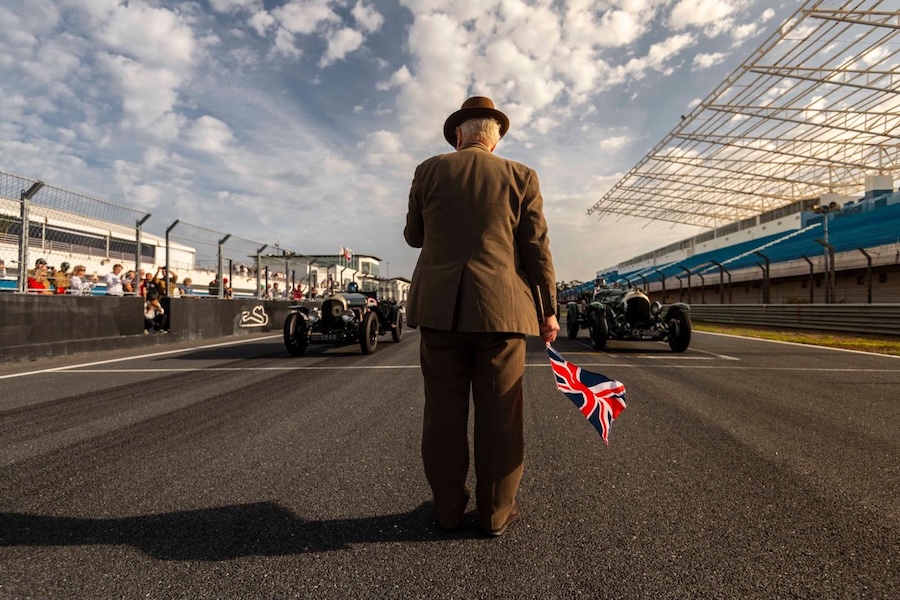
Then came the unforgettable sound of 27 W.O. Bentley engines accelerating towards the first corner.
Shaun took the opening stint, concentrating on consistency, tyre preservation and keeping the car within sensible mechanical limits.
After the first refuelling stop, Ryck took over. For Ryck, the experience demanded a different approach from simply driving as fast as possible.
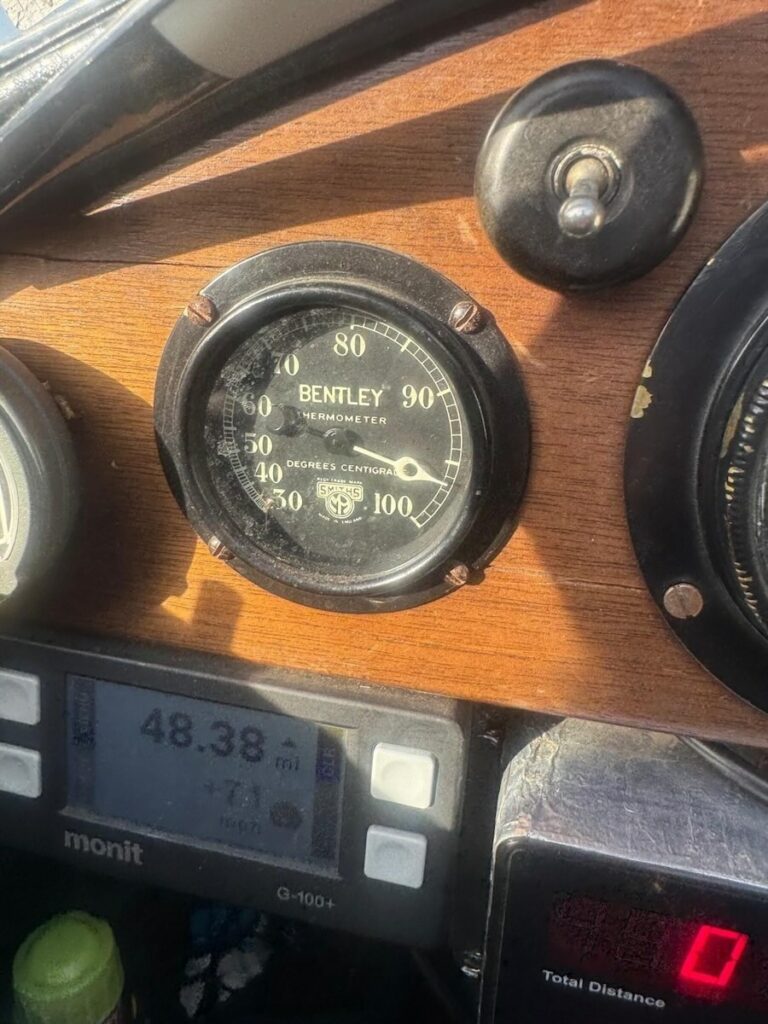
The Bentley was happiest when allowed to maintain momentum, using principally third and fourth gears and avoiding unnecessary punishment. Temperature management was particularly important. Push too hard, and the needle climbed alarmingly towards the end of the gauge.
Ease back slightly, preserve momentum through the corners and the temperature would settle around 90-95 deg.C.
It was a delicate balancing act between speed and mechanical sympathy. Around them, the racing was competitive but respectful.
Faster cars found their way past, slower cars were overtaken, and drivers acknowledged one another with gestures indicating when and where passing was safe. This was historic racing at its best: spirited competition between people who understood the value of the machinery around them.
The Bentley performed strongly for much of the day.
From tenth on the grid, Shaun and Ryck worked their way up to sixth place.
Elsewhere, competitors were dealing with oil leaks, misfires, electrical problems and other mechanical difficulties. Then, towards the end of the race, their own problems began. A misfire suggested fuel starvation, requiring a change from the electric fuel pump to the Autovac system.
More seriously, the water pump developed a leak. The engine began running hot, forcing repeated stops to replenish the cooling system. Every additional visit to the pits cost valuable time.
Sixth place gradually slipped away. But the car continued. And that was what mattered.
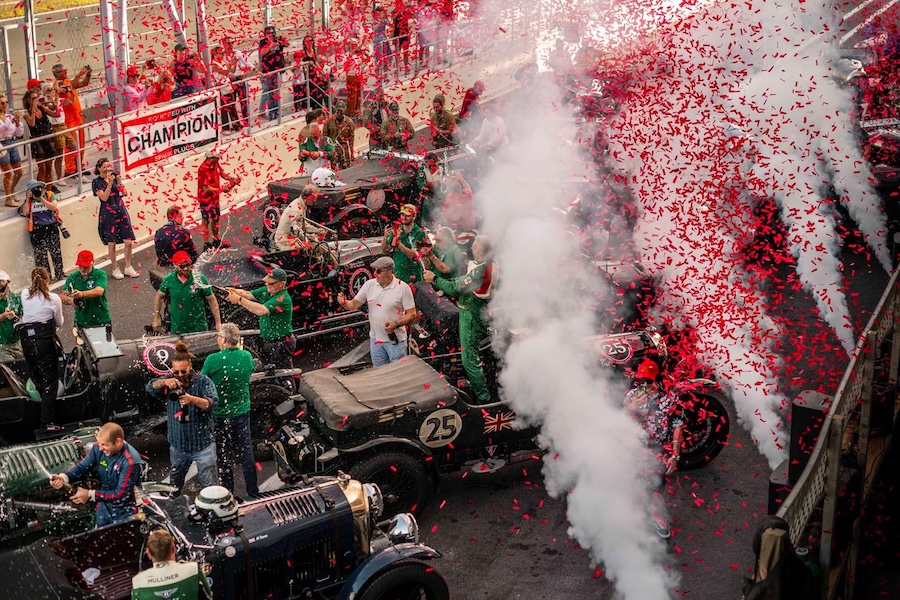
The finish of the race was a serious spectacle, all the cars finished the race and nobody was sure who had won. The handicap system still wasn’t clear but nobody cared. These 100 year old machines had raced for nearly 9 hours and covered the best part of 500 miles – remarkable. The pit lane had cars strewn all over it, the fire works went off and the dry ice and the confetti canons were on full bore covering the area over the cars in a red shimmering glow. Champagne corks flew in all directions as drivers, co-drivers and mechanics were sprayed and drenched in the bubbling fizz!
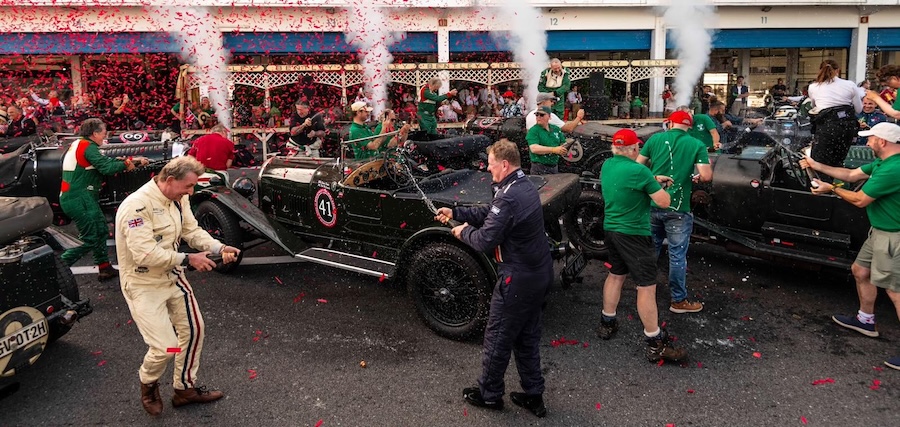
Shaun and Ryck’s Bentley crossed the finish line in eleventh place. The engine still sounded strong. The gearbox had performed well. The tyres had survived. And, most importantly, the car had finished.
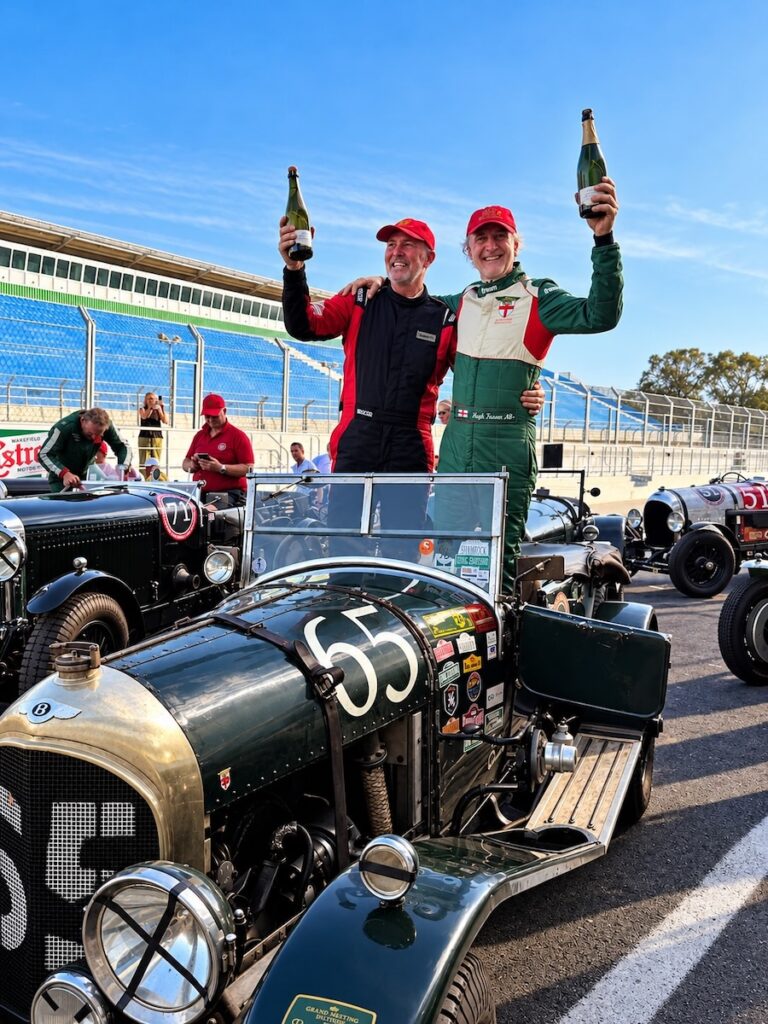
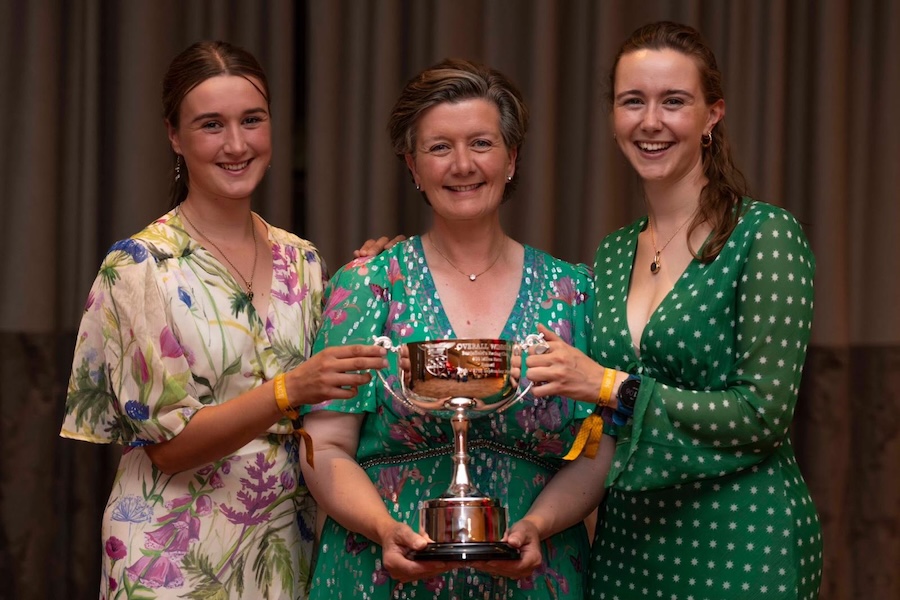
A huge celebration ensured with all the drivers embracing and congratulating each other. Then the winners were announced. An all female team from Ireland had won the race in their true 3 litre. The Bentley girls had triumphed and beaten the entire field of Benji boys!
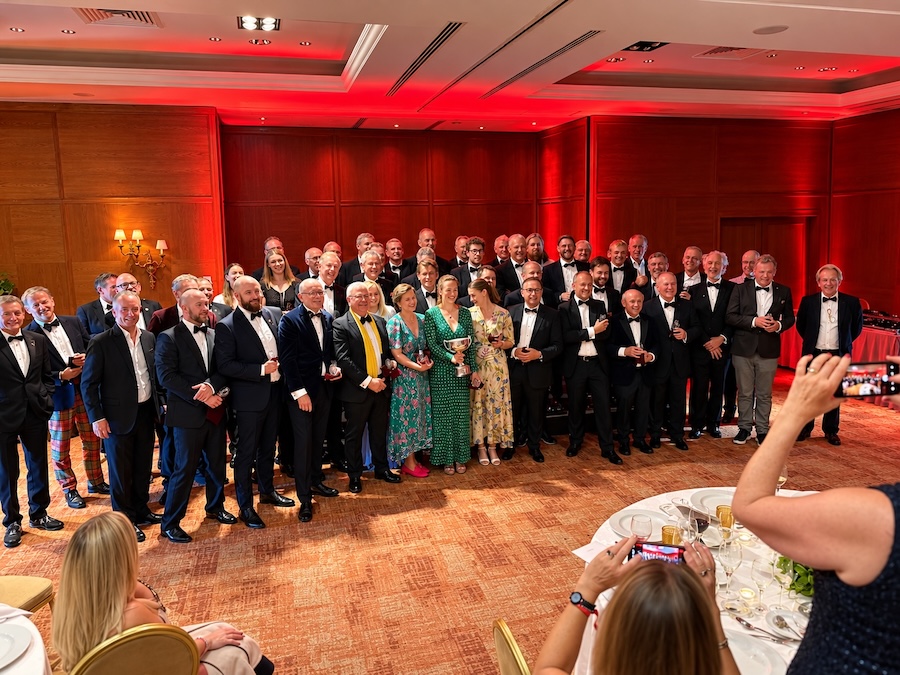
Once the champagne had been consumed it was time to put the cars away and head back to the hotel to change into black ties and party frocks for the gala dinner.
Shaun and Ryck washed the car to prevent the champagne corroding the car, packed everything away as best they could and drove their amazing racing car back to the hotel.
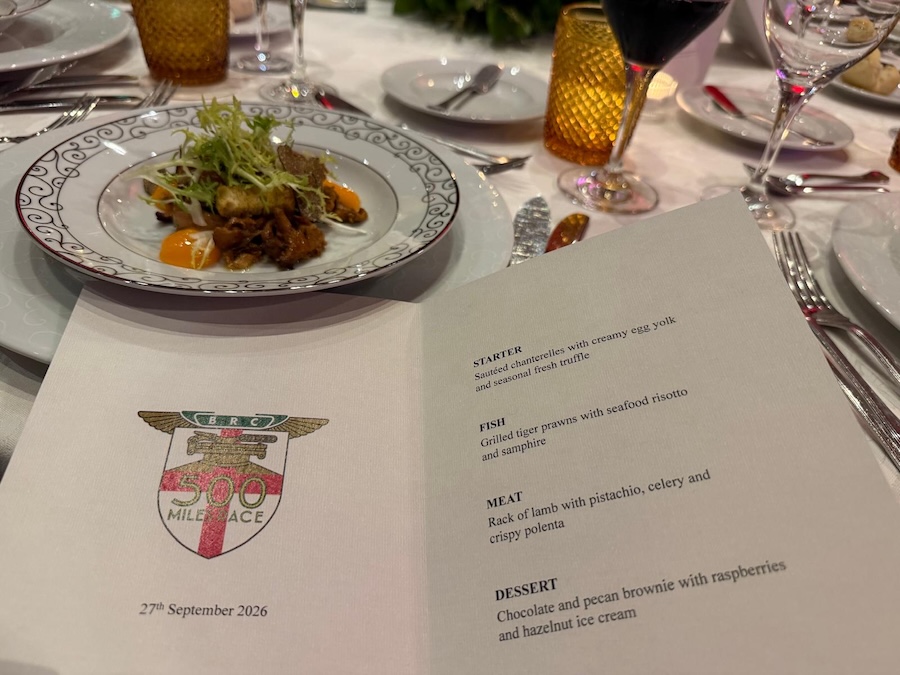
After a wonderful meal came the presentations and “thank yous”: Anna Wilkinson and William Medcalf from Vintage Bentley, and all the other members of the Benjafield Racing clubs team who had all delivered in quite a serious way. The winners were presented with their trophy and all the drivers were presented with a commemorative glass goblet appropriately engraved with the details of the event. What a day!
THE MORNING AFTER – NOW WE HAVE TO DRIVE HOME
Most racing drivers, having completed a 500-mile endurance event, can look forward to seeing their car loaded onto a transporter.
Shaun and Ryck had a rather different arrangement. Their Bentley had to become a touring car once more. The spare wheel was refitted. Tools and spare parts were reloaded. Luggage found its way back into every available space and the two friends said goodbye to their partners and fellow competitors.
Then, at about 11 o’clock, they set off north. Portugal, Spain, France and the Channel still lay ahead.
The same car that had brought them to Estoril, and had just endured 500 miles of competitive driving, was now expected to carry them safely back to Warwickshire.
The outward journey had been accompanied by the excitement of anticipation. The return was different. They now knew what the Bentley could do.
They had raced it, pushed it, repaired it and brought it to the finish. There was satisfaction in that knowledge, but also the awareness that the adventure was far from over.
The water pump still needed attention. And Britain remained a very long way away.
THE LONG ROAD HOME
The first day of the return journey took them north through Portugal and Spain towards the French border. It was a long drive, and by the time they reached their hotel, finding somewhere to eat had become unexpectedly difficult.
Several restaurants were closed. Eventually, just across the border in Spain, they found a bar preparing to shut for the night.
The staff kindly agreed to provide drinks and some tapas to eat. Outside, rain fell on the Bentley as curious passers-by gathered around it. It was another of those unplanned moments that would remain in their memories long after the journey had ended.
The following day brought a diversion to Cap Ferret, on France’s Atlantic coast. An unfortunate encounter with the GPS initially directed them towards a passenger ferry across the Bassin d’Arcachon!
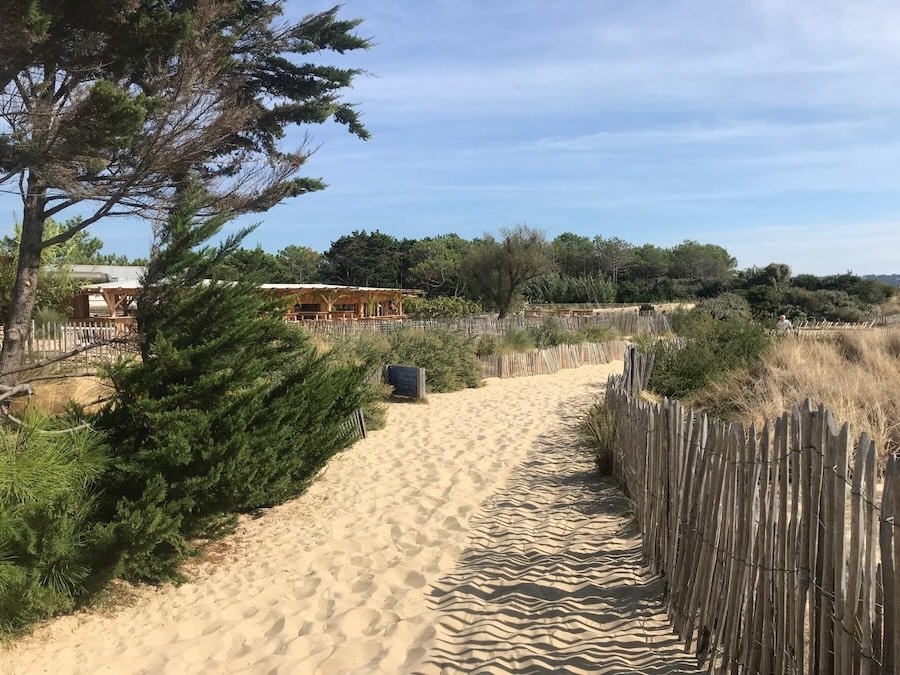
Since that was of little use to two men travelling in a Bentley, they had to drive around the bay instead. It cost them another hour and a half.
But the detour was worth it. The landscape was beautiful, although the surrounding forests bore the scars of recent wildfires.
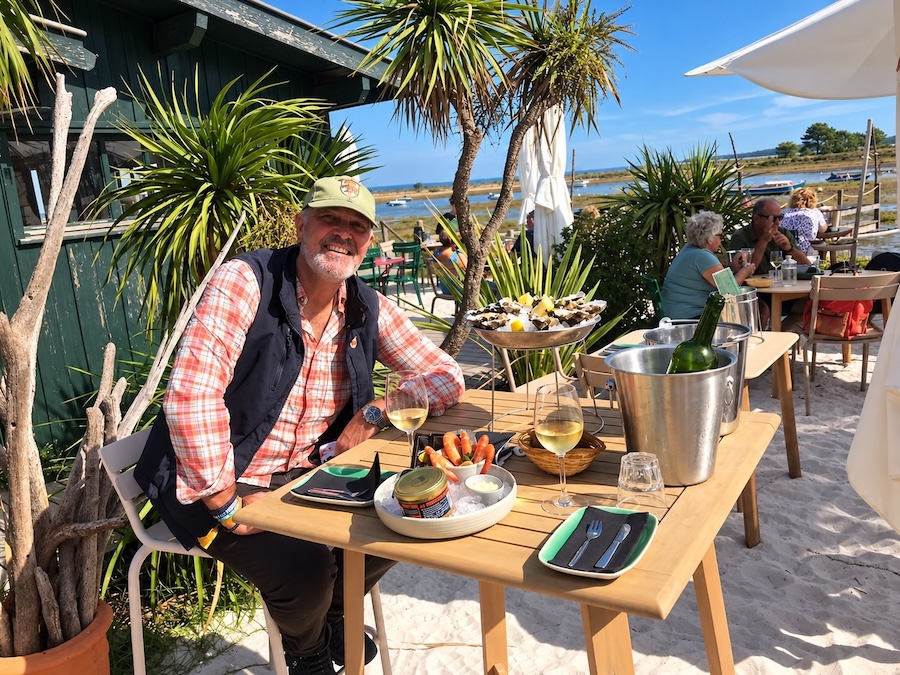
They drove to the end of the peninsula, took photographs on the sand and eventually found a delightful oyster bar.
The Bentley was parked outside while its occupants enjoyed oysters, prawns, pâté and wine. For Shaun and Ryck, it became one of the highlights of the entire trip. There are moments when a journey ceases to be about reaching a destination. Sitting beside the Atlantic, with a Vintage Bentley parked outside and a good friend across the table, was surely one of them.
From Cap Ferret, they headed north towards Le Mans.
The water pump was still troublesome, requiring regular stops to replenish the cooling system.
They arrived after dark and drove the most part of the famous circuit, including the Mulsanne Straight, before stopping for photographs near the grandstands.
For Ryck, who had never previously visited Le Mans, it was a particularly memorable occasion. It made him cast his mind back to John Duff and Frank Clement driving their 3 litre Bentley in the first 1923 race with W.O. Bentley watching on. Gradually, W.O. began to devise strategies and grow increasingly enthusiastic about the spectacle unfolding before his eyes. He was captivated. Duff and Clement finished the race in sixth place, paving the way for the remarkable saga of the Bentley Boys that was to follow. Without Duff and Clement, it is entirely possible that this extraordinary legacy, which vintage Bentley enthusiasts and custodians cherish to this day, might never have come into existence.
The contrast between the glamour of historic motor racing and the realities of life on the road was illustrated by their evening meal. After the elegance of the Hotel de France and the restaurants of Portugal, they found themselves enjoying kebabs and pizza in a modest establishment near the circuit.
It was perfectly satisfactory. Later that night, they arrived at a beautifully illuminated château north of Le Mans, where the concierge had waited to welcome them.
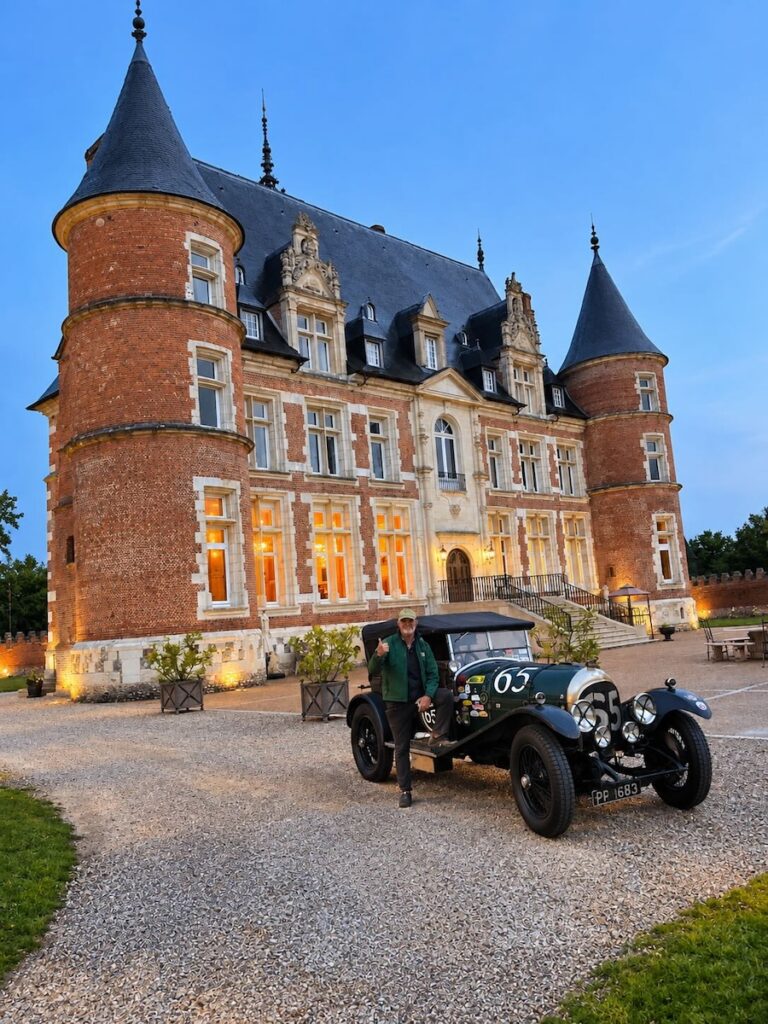
A final drink at the bar provided an opportunity to reflect on another long and memorable day.
The following morning, the weather changed dramatically. For the first time on the entire journey, they raised the Bentley’s hood. Heavy rain accompanied them north towards the Channel Tunnel.
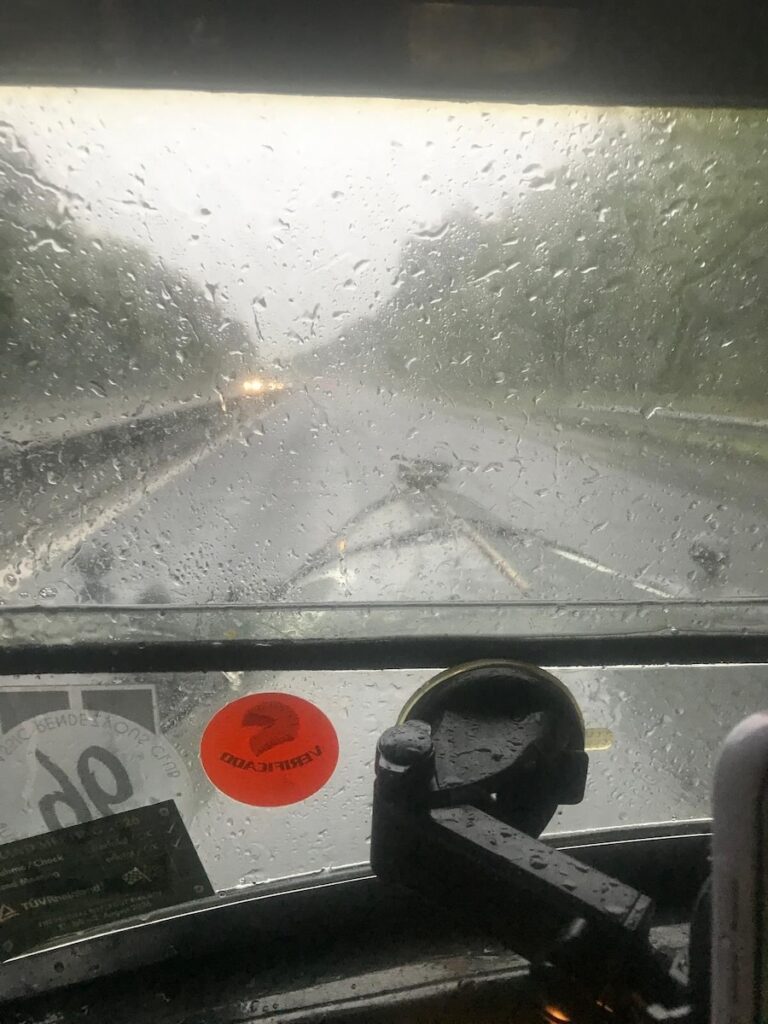
They reached the terminal in good time, boarded an earlier train and were soon back in England.
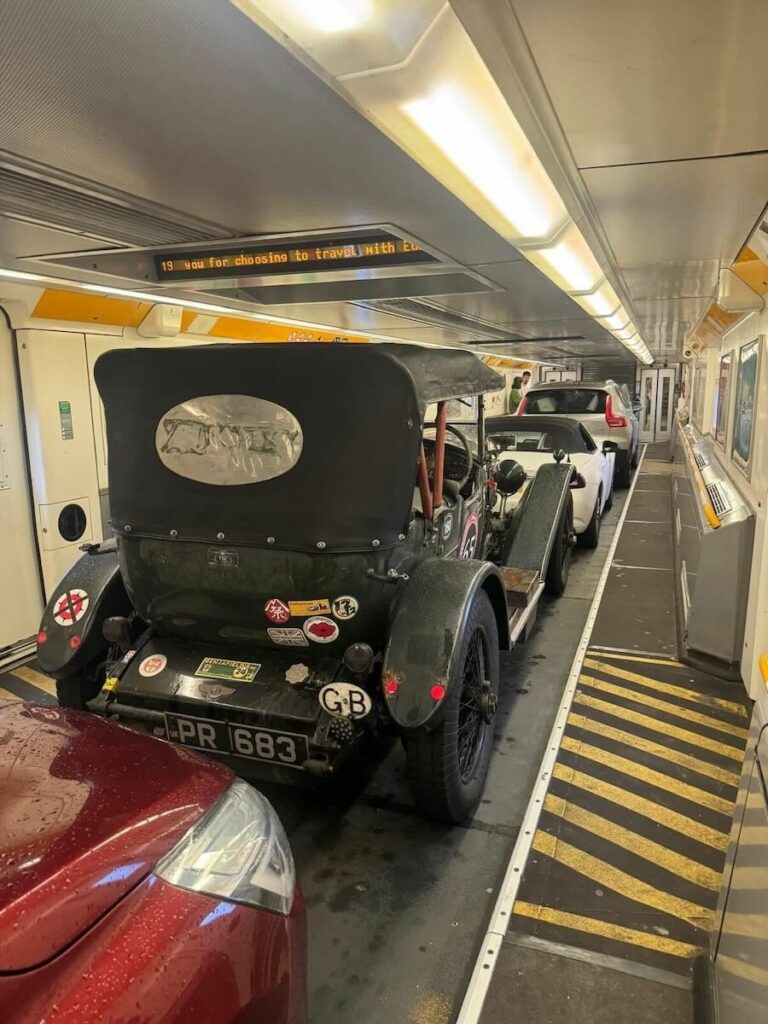
But the adventure was not quite finished.
They called first on fellow Bentley enthusiast Andrew Sutton, who had offered them water-pump grease and generously provided both assistance and hospitality. Then came a visit to Tim Cresswell and the team at VBE Restrorations, where the car received a brief inspection.
Richard, one of the VBE team who regularly looked after Shaun’s Bentley, was impressed by how well it had survived nearly 4,000 miles of travelling and racing. Apart from the troublesome water pump, the car had emerged in remarkably good condition.
Finally, at approximately 16:30 on Wednesday afternoon, Shaun and Ryck arrived home.
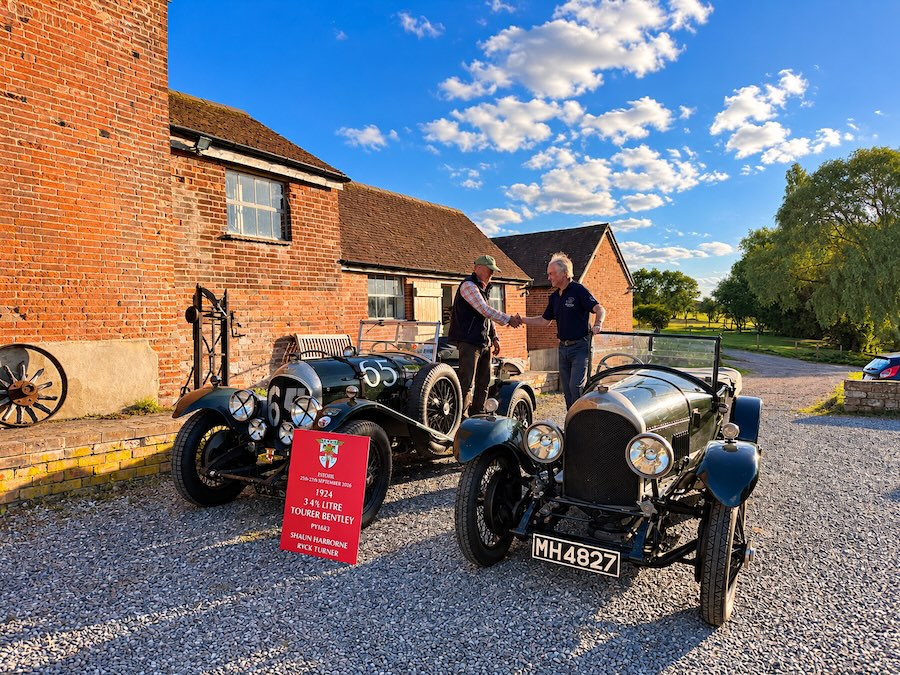
The engine was switched off. After days of wind, noise, exhaust fumes, mountain roads, racing circuits and motorway miles, there was silence.
The long way to (and back from) Estoril was over. Both gentlemen didn’t want the journey to end. They realised that they could have driven to the next country and experienced the next adventure!
EPILOGUE – THE MODERN BENTLEY BOYS
Looking back, Shaun and Ryck divided the adventure into three equally memorable experiences: the journey to Portugal, the race weekend itself and the long road home. Each was rewarding in a different way.
The Bentley had proved itself not merely as a racing car but as a genuinely capable long-distance touring machine. It had carried two men and their luggage across Europe, established a lap record at Navarra, completed a demanding 500-mile race and brought them safely home.
There were a few mechanical problems which had been dealt with through practical knowledge, preparation and the assistance of fellow enthusiasts. But perhaps the greatest achievement had little to do with machinery: Shaun and Ryck had spent the best part of 9 days together, sharing thousands of miles, meals, conversations, mechanical challenges and moments of extraordinary good fortune.
They had not exchanged a cross word. They had met generous strangers, renewed old friendships and made new ones in several countries. They had discovered that the real pleasure of historic motoring lies not simply in owning an exceptional machine, but in using it for the purpose for which it was created.
And perhaps, without consciously intending to, they had rediscovered something that the original Bentley Boys understood instinctively.
The racing was only part of the adventure.
The journeys, the companionship, the uncertainties, the evenings spent together and the stories told afterwards were every bit as important.
A century ago, a Bentley was a machine in which one could drive across Europe, compete in a motor race and return home.
Shaun and Ryck had demonstrated that, almost a hundred years later, it still was.
They went to Estoril to race a Bentley. Somewhere along the road, they rediscovered why the Bentley Boys enjoyed the journey just as much as the winning at the finishing line.