During the early decades of the twentieth century, racing cars were often regarded as far more than mere mechanical creations. To the drivers and mechanics who lived with them, these extraordinary machines possessed personalities of their own, and some acquired nicknames that would become almost as famous as their achievements on the track.
The practice was by no means confined to Bentley. In France, René Thomas‘s formidable 1923 V12 Delage became known as La Torpille (The Torpedo), a reference to its distinctive streamlined bodywork. The enormous Fiat driven by Ernest Eldridge, which established a world land-speed record near Paris in 1924, was famously known as Mefistofele (Mephistopheles), a name evocative of its almost infernal power and thunderous performance. Meanwhile, in Britain, the Sunbeam racing stable developed its own naming tradition, with Henry Segrave‘s record-breaking Ladybird, subsequently renamed Tiger, and its sister car, Tigress.
These names reflected the appearance, character or formidable performance of the machines concerned.
Yet at Bentley’s Cricklewood works, the tradition took on a rather different flavour. The Bentley Boys, drivers together with the mechanics, developed a particularly British mixture of affection, irreverence and humour. Names such as Old Mother Gun, Old Number One, Old Number Seven, Snitch, Bitch and Witch became part of the marque’s racing folklore. The boundaries between engineering, adventure, sporting camaraderie and eccentric humour were considerably less rigid than they are today.
Behind these sometimes curious, occasionally outrageous nicknames lie stories of remarkable cars, extraordinary drivers and some of the most memorable episodes in Bentley’s competition history. But where did these names originate, who first used them, and what do we really know about their history?
A century after W.O. Bentley’s racing cars first thundered down the Mulsanne Straight, their names remain almost as evocative as their achievements.
OLD MOTHER GUN (“SNITCH”) – THE INDESTRUCTIBLE 4½ LITRE
Of all the nicknames associated with the early Bentley racing cars, Old Mother Gun is perhaps the most affectionate and intriguing.
The first ever Bentley 4½-Litre off the Cricklewood production line, chassis number ST3001 was constructed in June 1927. It was completed with a Vanden Plas Le Mans-type body and and registered YH 3196 before delivered to Captain Woolf Barnato for use as a Bentley Motors team car. It was Woolf Barnato who gave ST3001 the nickname Old Mother Gun.
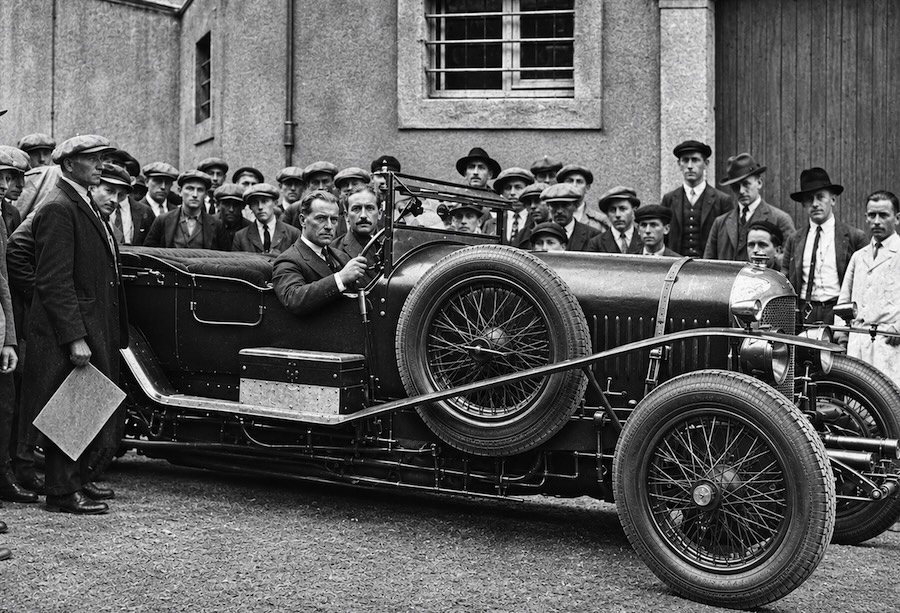
This attribution is more specific than the general references found in many histories, although the account does not reproduce a dated document recording the actual moment of naming. The word old did not necessarily indicate actual age. British speakers frequently used it affectionately, as in old girl, old chap or old fellow.
For a racing car, the Old Mother combination could therefore suggest a machine with a strong personality, treated almost as a member of the family. In the 1920s, the word gun primarily referred to a firearm or artillery piece. Figuratively, the word could evoke force, noise, authority and destructive power. But this is a linguistic interpretation, not proof that Woolf Barnato specifically intended an artillery metaphor.
The car certainly earned its name.
The practice of giving colourful nicknames to Bentley’s works racing cars appears to have gained prominence around the time of the 1927 24 Hours of Le Mans, for which Bentley entered three works cars: a new 4½ Litre and two 3 Litre Speed Models.
– The sole Bentley 4½ Litre entered was Old Mother Gun, whose characteristics are described above. Carrying race number 1, she was driven by Frank Clement and Leslie Callingham.
At some point before the race, Old Mother Gun, along with the other two works Bentleys, was given a nickname. Whether these nicknames were coined by the drivers, the mechanics or perhaps both remains unknown. They were painted in white on the rear of the cars and became visible only when the hoods were raised.
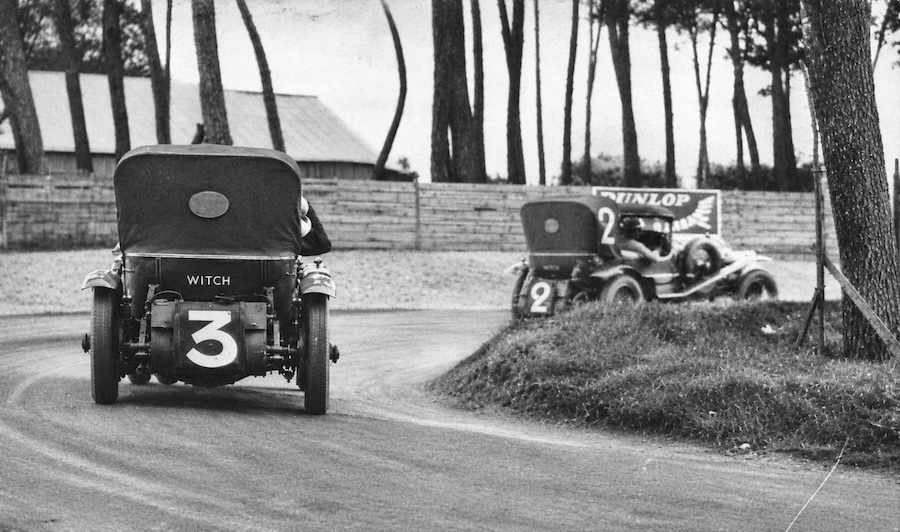
It is worth recalling that the requirement to erect the hoods, introduced in 1924, was intended to demonstrate the practicality and durability of touring car equipment. From 1925 onwards, drivers were required to erect their own hoods at the start of the race and keep them raised for the first twenty laps.
Although this requirement was abolished in 1928, the famous ‘Le Mans start’, introduced in 1925, remained a distinctive feature of the race until 1969.
It was under these circumstances that Old Mother Gun acquired the nickname Snitch.
In British English, snitch is a colloquial term for an informer or someone who betrays a confidence. However, no documentary evidence has yet established a connection between this meaning and the behaviour or mechanical characteristics of chassis ST3001. One possible explanation is that Snitch was chosen simply because it rhymed with Bitch and Witch (see below), the nicknames associated with Bentley’s other two works entries at Le Mans in 1927. This interpretation, however, remains speculative.
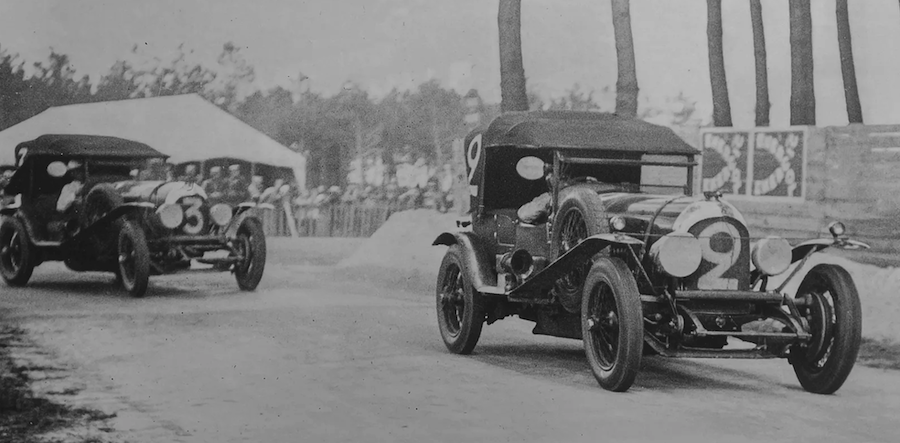
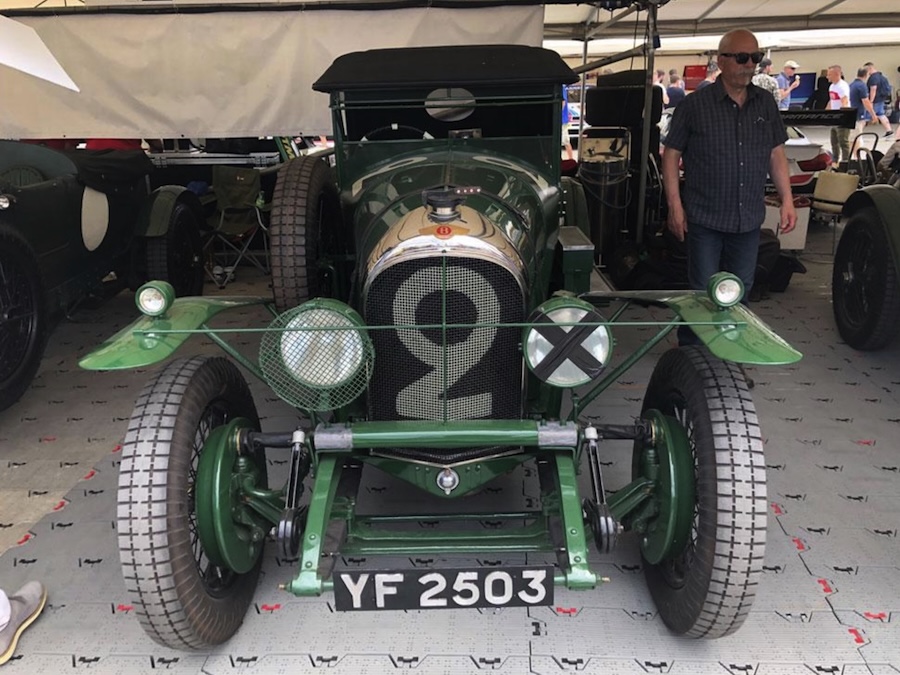
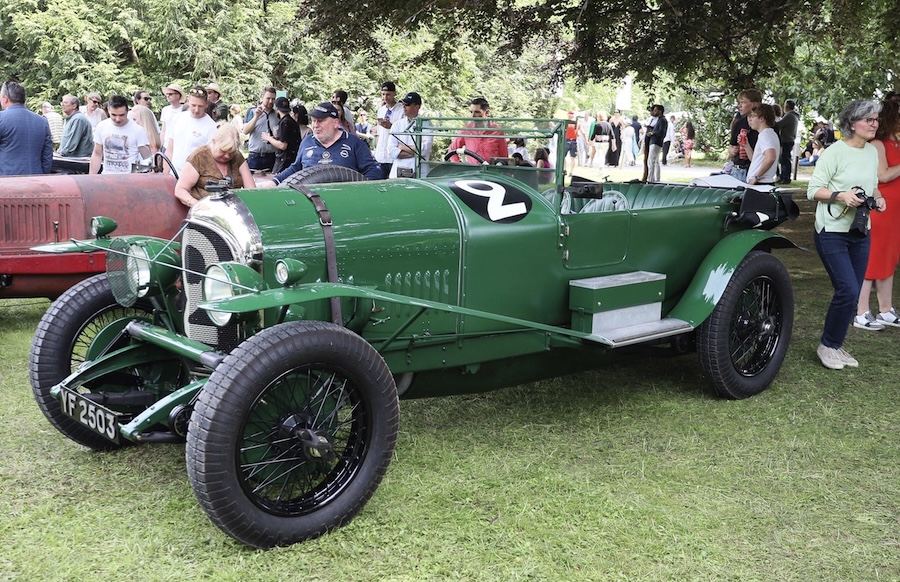
– The second works entry was a Bentley 3 Litre Speed Model, chassis ML1501, registered YF 2503 and carrying race number 2. Rather surprisingly, she was nicknamed Bitch! The car was driven by the French Baron André d’Erlanger and George Duller. According to a later account by the car’s former owner and restorer, Bob Moggridge, the nickname was bestowed upon her by Sammy Davis, one of Bentley’s most celebrated racing drivers.
Why Davis chose such an irreverent name remains uncertain. In British English of the period, bitch could be used disparagingly to describe a troublesome or ill-tempered creature. Its application to a racing car may therefore have reflected the affectionate but decidedly robust sense of humour characteristic of the Bentley racing fraternity. However, the precise reason behind the choice of nickname remains undocumented.
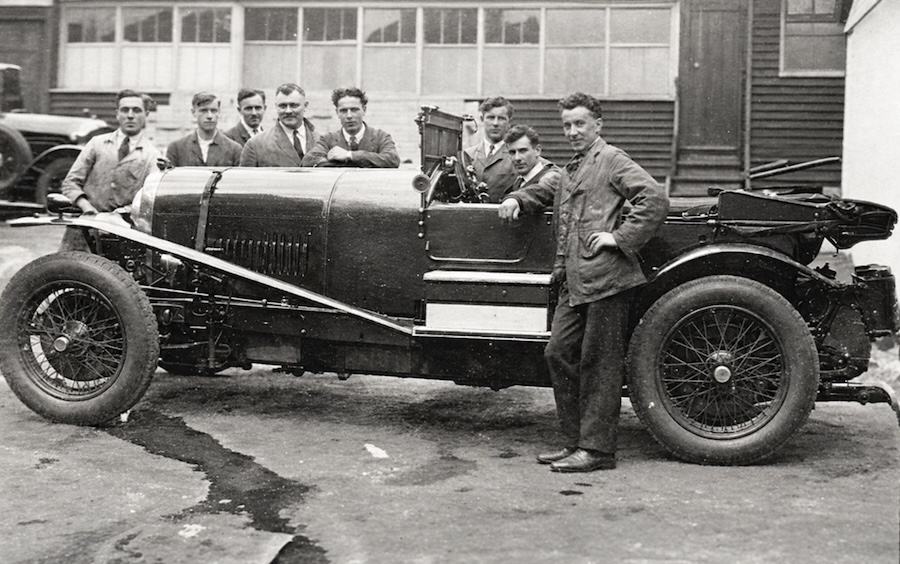
– The third works entry was another Bentley 3 Litre Speed Model, chassis LM1344, registered MK 5206. Although she carried race number 3 in these 1927 24 Hours of Le Mans, this Bentley was already known as Old Number Seven, a nickname dating back to her previous appearance at Le Mans in 1926. On that occasion, carrying race number 7 and driven by the very same pairing of Sammy Davis and Dudley Benjafield, she had been forced to retire following a dramatic accident at Mulsanne, barely 20 minutes before the finish.
The nickname endured when the same car returned to Le Mans in 1928, this time wearing number 3. Her remarkable victory in 1927, despite sustaining serious damage in the notorious White House crash – “Maison Blanche” in french (see below), ensured that Old Number Seven would become one of the most enduring names in Bentley’s racing history.
This did not, however, prevent the Bentley team from apparently bestowing another, rather mischievous nickname upon the car for the occasion. She was also known as Witch, completing the celebrated trio of Snitch, Bitch and Witch associated with Bentley’s three works entries in this 1927 24 hours of Le Mans race. In British English, witch traditionally refers to a woman believed to possess magical powers. Applied affectionately or humorously to a racing car, the term might have suggested a temperamental, unpredictable or exceptionally spirited machine.
Neither explanation, however, has been conclusively established by contemporary documentary evidence.
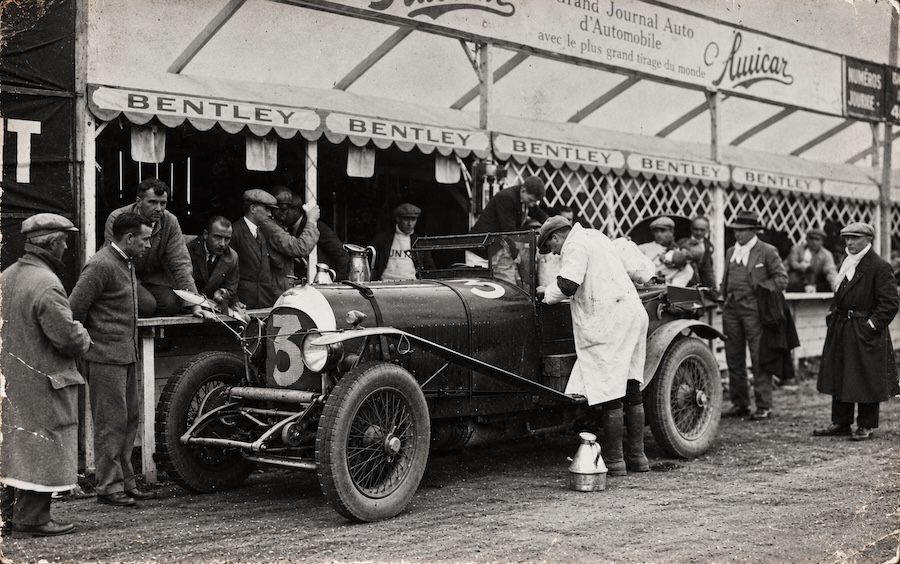
The precise origin of the three nicknames, with their unmistakable rhyme and irreverent character, remain uncertain, and contemporary documentary evidence establishing who coined them, and when, has yet to be firmly identified.Nevertheless, this is a plausible linguistic interpretation, not a documented explanation of why the name was chosen.
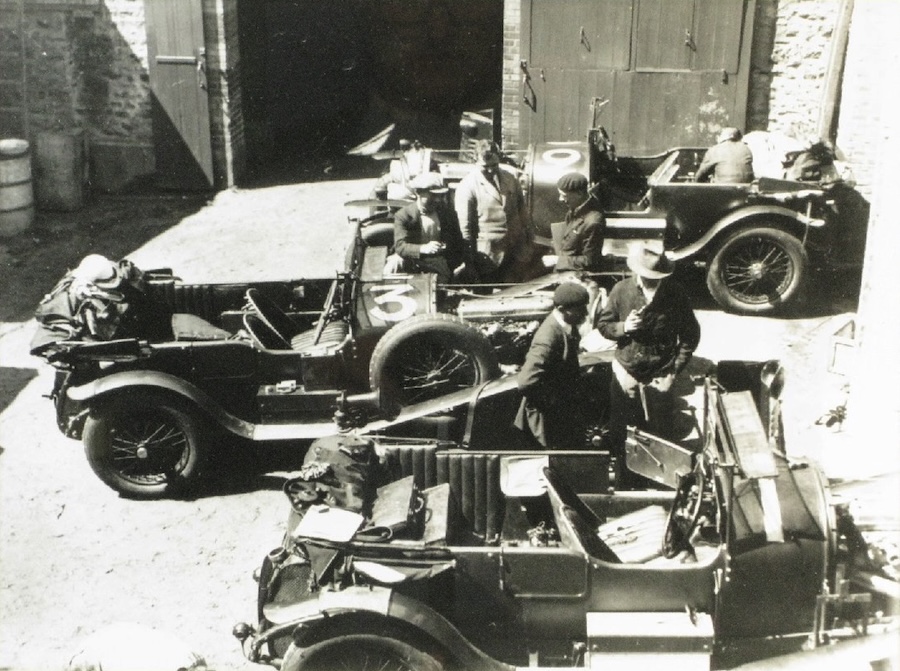
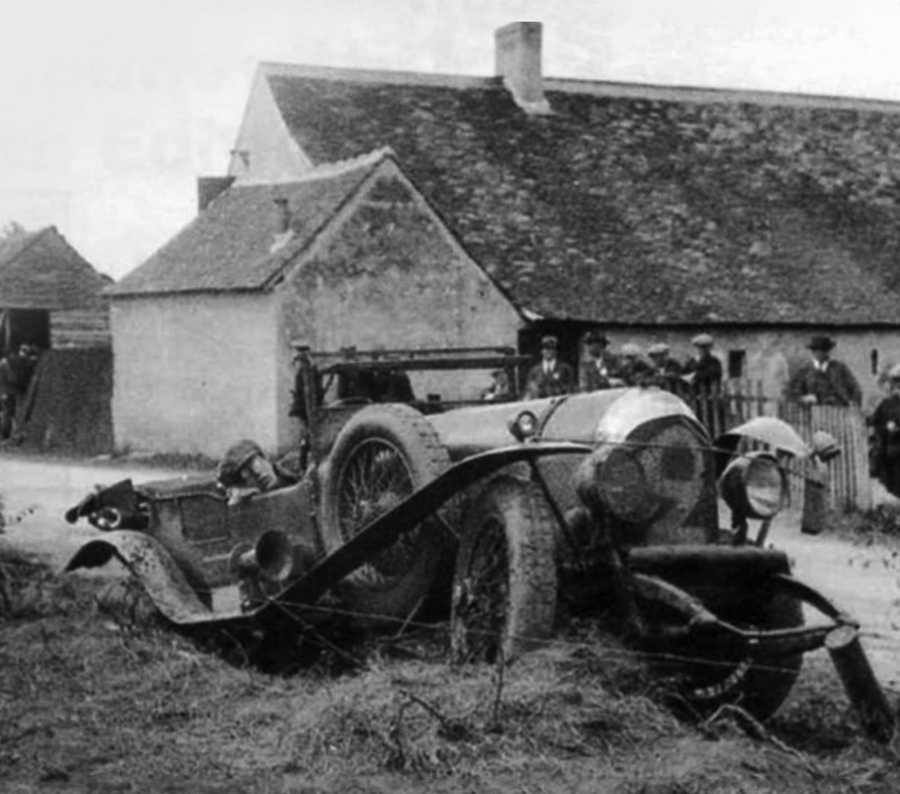
Driven by Frank Clement and Leslie Callingham, Old Mother Gun (“Snitch”) broke the circuit record in only the second lap of the race, still with the convertible hood up. Unfortunately, she retired from the race while leading, having become embroiled in the infamous White House Crash that entangled eight different car – and eliminated seven.
The crash occurred at approximately 9.40 pm, as darkness was falling over the Circuit de la Sarthe. It happened at the fast, narrow Maison Blanche (White House) S-curves, named after a prominent white farmhouse that obscured the exit of the corner. Pierre Tabourin, driving a Théophile Schneider, misjudged his speed while trying to make up time, spun out, and crashed. His car ended up broadside, completely blocking the dark, narrow track right past the blind corner.
Leslie Callingham, leading the race in the Old Mother Gun (“Snitch”) 4½-litre, rounded the corner, swerved to avoid Tabourin, and rolled into a ditch. George Duller, in the next Works 3-litre Bentley (“Bitch”), crashed blindly straight into the growing wreckage. Several other competitors piled into the darkness. In total, the massive accident eventuallyentangled eight different cars.
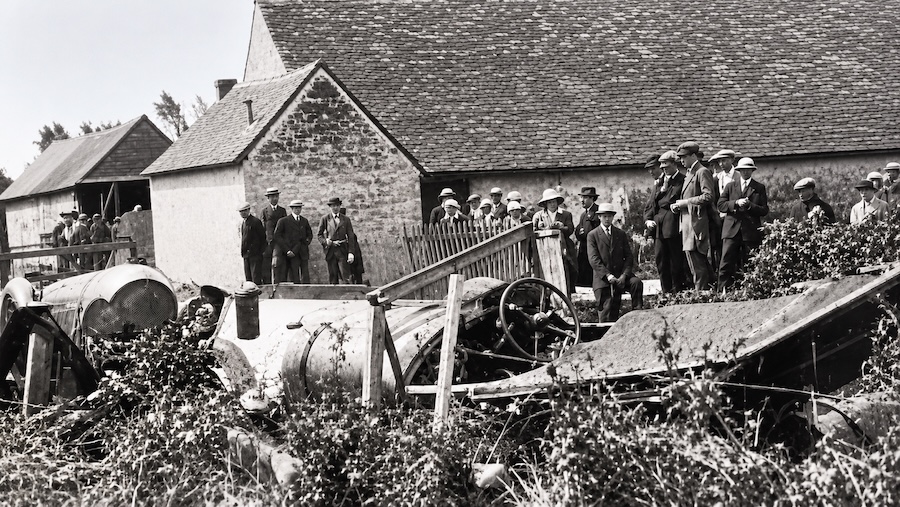
The third Works 3 Litre (Old Number 7 “Witch”), driven by Sammy Davis, was the next to arrive. Sensing danger from track debris, Davis slowed down just enough to deliberately slide his car sideways into the pile-up to absorb the force of the impact. Despite severe chassis and wheel alignment damage, Davis managed to untangle his car, limp it back to the pit lane, and hand it over to his co-driver, Dudley Benjafield. Working with flashlights, they patched up the bent vehicle. Showing incredible endurance through the night with broken headlights and poor handling, they remarkably fought their way back to take an epic overall victory for Bentley.
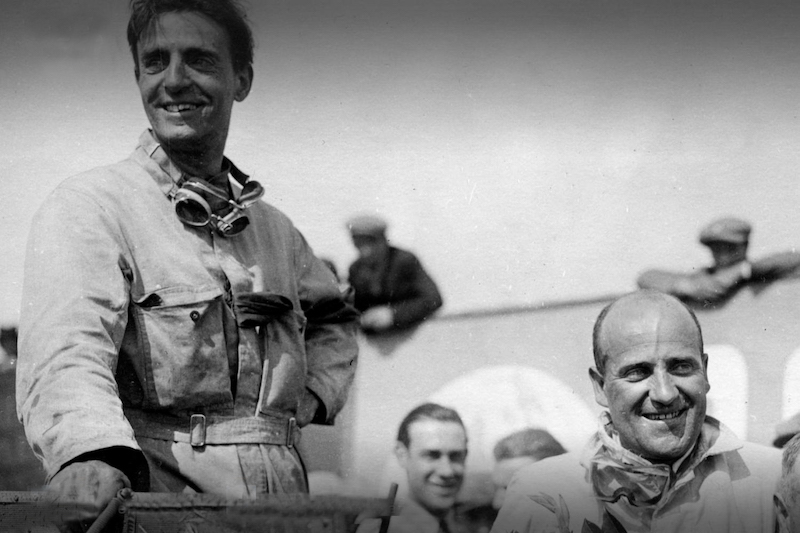
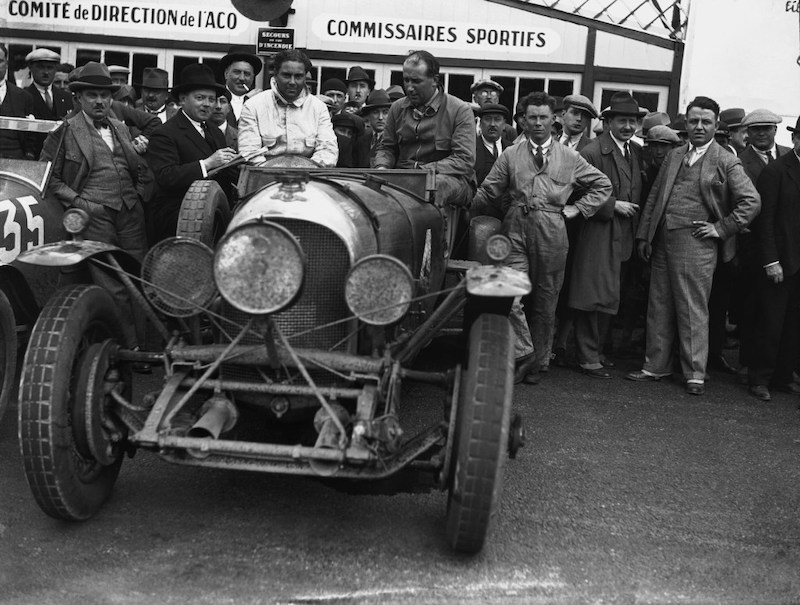
Following the Le Mans debacle in June 1927, there was a second 24-hour race held at the Circuit de Montlhery on August 15/16th that same year, the 24 hours of Paris. On this occasion Old Mother Gun (“Snitch”) was able to realise her full potential when, driven by Frank Clement and George Duller, she took the lead at the outset and held it unchallenged to the finish, finally winning by over 80 miles.
Old Mother Gun (“Snitch”) was back at Le Mans again for the 24 Hours Race in June 1928 as part of a three-car Bentley works team, all three entries being 4½ Litres. Old Mother Gun (“Snitch”) drivers were Woolf Barnato and Bernard Rubin. The Bentley team was no doubt hoping for a less dramatic outcome than they had experienced in 1927, but it was not to be. Dudley Benjafield and Frank Clement’s car was forced out when the chassis frame cracked, disconnecting a water hose and emptying the radiator, and all seemed lost when the frame of Old Mother Gun (“Snitch”), leading at the time, cracked in similar fashion with around 15 miles left to go. Despite having to slow down, Barnato hung on to take a famous victory, with the other 4½-Litre of Tim Birkin and Jean Chassagne in 5th place having been delayed by a lengthy wheel change.
Old Mother Gun (“Snitch”) then received a replacement chassis, which was removed over the winter of 1928/1929 when the car was rebuilt on a new heavy-pattern chassis frame. This second chassis was later used to rebuild the 4½-Litre ‘MF3157’.
In 1929, Old Mother Gun (“Snitch”) was campaigned once more at the 24 Hours of Le Mans. She was the only 4½-Litre entered that year, alongside the Bentley team’s two 6½-Litre Speed Six cars. Victory went to the Speed Six “Old Number One”, while Old Mother Gun (“Snitch”) finished in second place, driven by Jack Dunfee and Glen Kidston.
In 1929, only some four weeks after her last successful outing at Le Mans, Old Mother Gun (“Snitch”) was sold by Jack Barclay, and in October of the same year she raced at Brooklands 500 Miles Race for the first time. Old Mother Gun (“Snitch”) was driven by Jack Dunfee, who had raced her at Le Mans. She also entered the car in the 1929 Tourist Trophy at Ards in Northern Ireland where it was driven by Hayes/Field, failing to finish on account of a collapsed wheel.
In 1932, Richard Marker was looking for a car that he could race in Brooklands, and bought Old Mother Gun (“Snitch”) from H.M. Bentley – W.O.’s brother – who ran the Bentley workshop after the factory closed in 1932. She was still in her 1929 Le Mans guise at this time, and before Marker took her to Brooklands he had some fun competing at several rallies including the MCC London-Exeter Trial.
In 1932, Richard Marker decided to convert Old Mother Gun (“Snitch”) into a car more suited to the peculiar demands of the Brooklands track. He fitted a lightweight two-seater fabric racing body and fabricated an outside gear lever linkage. That body had previously been mounted on Tim Birkin’s (Dorothy Paget’s) 4½-Litre racing car, ‘YV 7263’, for the 500 Miles Race in 1931. With the exception of body and gear lever, Old Mother Gun (“Snitch”) was still much as raced by Bentley Motors at Le Mans in 1929. On her first race at Brooklands with Richard Marker, in 1932, she finished in 1st place in the Byfleet Lighting Long Handicap.
In 1934, Richard Marker obtained the 1½-seater streamlined body of the 1928 Woolf Barnato and Dudley Froy 3/4½-Litre race and record car, chassis number ‘1106’, and fitted that body to Old Mother Gun (“Snitch”), modifying it with some in-fill panels to fit the longer wheelbase. People started calling the car the “Marker Bentley” or the “Marker Special”.
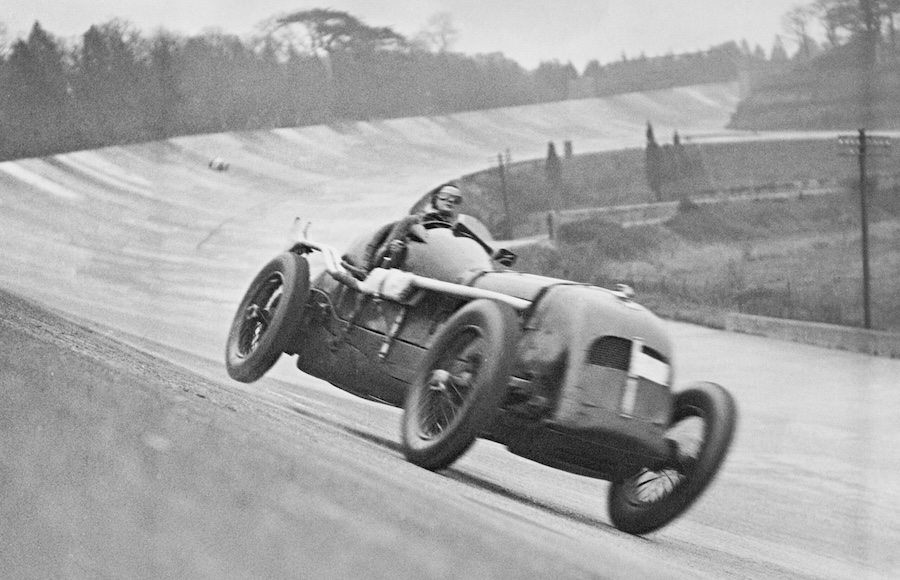
During the 1934 500 Miles Race at Brooklands on September 22nd, the flywheel sheared off the end of the crankshaft and the original 4½-litre engine was wrecked. It was replaced by a modified 6½-Litre Speed Six unit based on engine number ‘LB2345’ from chassis number ‘LB2338’, the ex-Prince George Imeretinsky Speed Six. At this occasion, Marker changed the exhaust system from a single pipe on the left side to a double pipe on the right side (the Bentley engine’s fixed-head cylinder block casting can be rotated 180°). In 1935 Old Mother Gun (“Snitch”) was photographed at Brooklands with all four wheels off the ground due to the track’s notoriously bumpy surface, now with the 6½-Litre engine and faster than ever.
Richard Marker was awarded the Brooklands 120mph badge by the BARC (Brooklands Automobile Racing Club which became lately the British Automobile Racing Club) in March 1935, while Christopher ‘Kit’ T Baker-Carr received the same award in October that year after both men had lapped Brooklands at over 120mph in Old Mother Gun (“Snitch”).
On 14th March 1936, Marker and Old Mother Gun (“Snitch”) lapped the Brooklands outer circuit at an average speed of over 130mph. Marker was awarded the very rare Brooklands 130mph badge.
In 1936 Marker began hiring his Bentley to Miss Margaret Allan, one of the relative handful of lady competitors at Brooklands. Allen too received the coveted 120mph award, having lapped the Broooklands banking at 122.37mph on 1st June 1936.
Building on the successes of Old Mother Gun (“Snitch”), Marker decided to finalise the transformation of his former Le Mans-winning car into a thoroughbred Brooklands racing machine. With this in mind, he commissioned Robin Jackson (R.R. Jackson) of Brooklands to construct a new chassis frame and a new single-seater body for Old Mother Gun (“Snitch”), specifying a longer wheelbase and a central seating position.
As racing at Brooklands gained in popularity, a community of racing specialists had grown up around the clubhouse and paddock. In 1931, Robin Jackson, one of motor racing’s leading engineers and tuners at the time, set up a workshop to build and maintain racing cars. It became famous as the ‘Robinry’ a place where drivers could have their cars serviced and tuned to the highest possible standards. Robin Jackson, himself a racing driver, became well known for building Brooklands ‘Specials’.
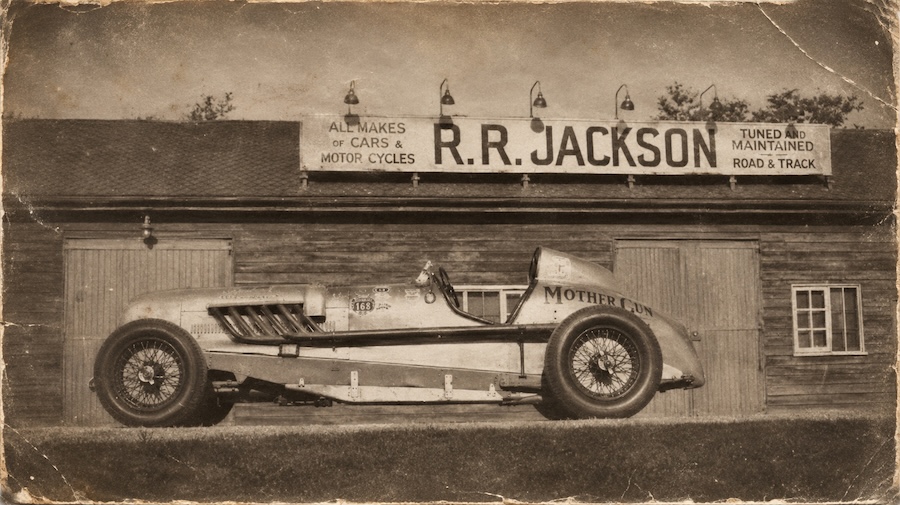
Bill Short competed at the Brighton Speed Trials in 1947 and 1948 but did not participate in any event with Old Mother Gun (“Snitch”) after 1948. In 1960 she was sold to Alan Vicat, who passed her on to Vaughan Davis in 1963. He was a Vintage Bentley enthusiast and specialist, who had seen the car racing in Brooklands in the 1930s. Encouraged by a small circle of Vintage Bentley racing devotees and the legendary Bentley specialist Stanley Mann, Vaughan Davis founded in 1990 the famous Benjafield’s Racing Club . Having purchased Old Mother Gun (“Snitch”), Vaughan dreamt of restoring her and seeing her again at 130mph, but this time from behind the wheel.
When Old Mother Gun (“Snitch”) came to Vaughan Davis, the axles and the body were missing. He started the restoration process, but after acquiring a pair of original Speed Six axles and restoring the chassis frame, he ran out of money. Following years of slowly progressing restoration at his workshop, Vaughan Davis made an agreement with Stanley Mann, who completed the car’s long lasting and painstaking restoration between 1988 and 1989. The original registration ‘YH 3196’ having been lost, Davies reregistered the Bentley as ‘DS 9092’.
After the restoration’s completion, Old Mother Gun (“Snitch”) was ready for her next challenge. On 28th May 1990, she set the British Class B 500 miles record; the British unlimited three-hour record; and the 200 miles record in Millbrook, all on the same day. The drivers were Vaughan Davis, Stanley Mann, Philip Greenwood, and John Guppy. In April 1992, HRH Prince Michael of Kent, Stanley Mann, Vaughan Davies, and Philip Greenwood used Old Mother Gun to set the British Class B 1,000-mile record in Millbrook. Brass plaques affixed to the car record its many achievements both before and after WW2.
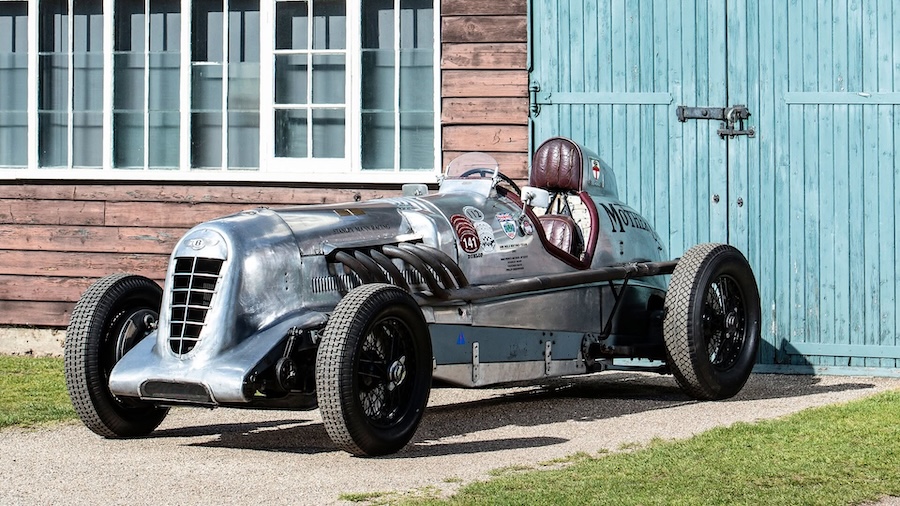
In 1999 it was decided to increase the engine capacity to 8 litres by swapping the 6½-Litre cylinder block/head for an 8-Litre component. The crankcase and engine number were not changed in any way.
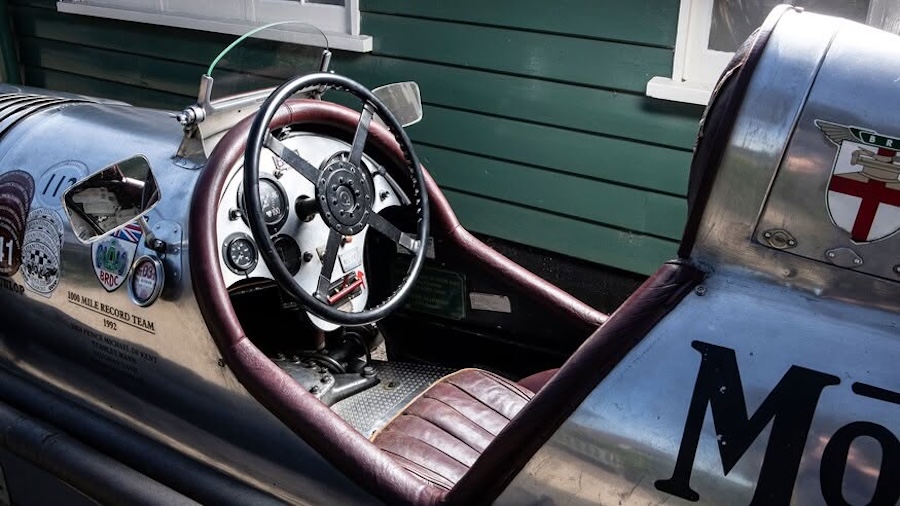
The original 6½-Litre block, which came with the car when Vaughan Davis acquired her and which most likely was part of the Speed Six engine that was fitted to Old Mother Gun (“Snitch”) by Richard Marker in 1934, is included in the sale.
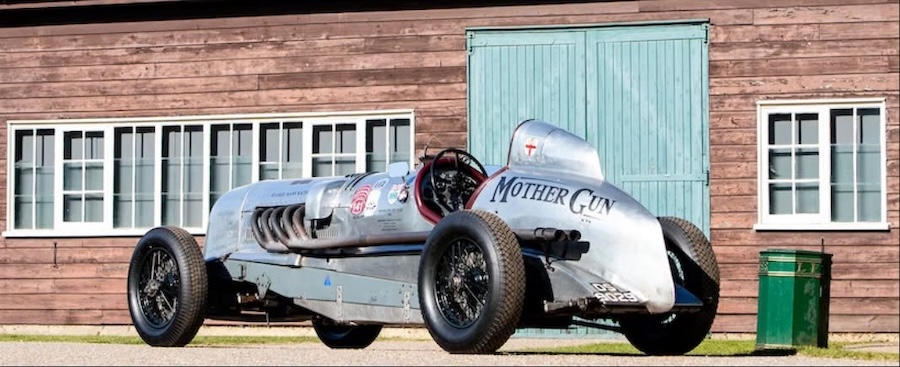
Immensely successful since her restoration in 1989, Old Mother Gun (“Snitch”) was actively campaigned by Stanley Mann Racing Ltd during more than two decades.
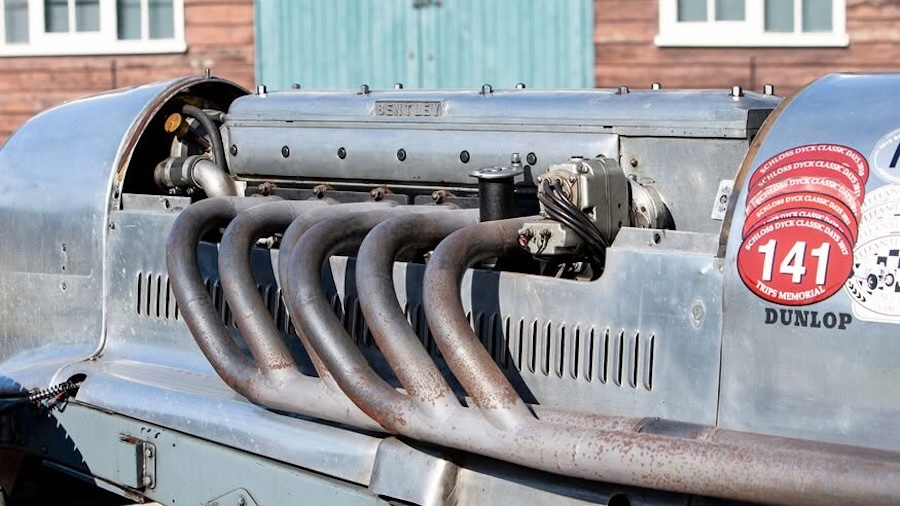
In addition to a very successful career as a racing car, she was and is a welcome guest at motor shows, exhibitions, and exclusive events – including the Goodwood Festival of Speed and Goodwood Revival.
BITCH – THE CAR THAT CAME BACK FROM OBLIVION
Of the three Bentleys, Bitch has one of the most remarkable documented preservation stories.
Following the White House crash during the 1927 24 Hours of Le Mans (described above), Bitch — chassis ML1501 — was repaired and passed through the hands of several owners. Among them was a member of the Kidston family, related to the celebrated Bentley racing driver Glen Kidston.

For decades, the car’s significance was largely overshadowed by the fame of the winning Old Mother Gun (“Snitch”) and the subsequent achievements of Old Number Seven (“Witch”).
That changed in 1997, when Bentley enthusiast Bob Moggridge acquired Bitch at auction.
What followed was an extraordinary historical investigation and restoration project lasting more than two decades. Moggridge searched for original photographs, racing programmes, correspondence and documentation relating to the car’s early life. He traced former owners and assembled evidence that would help establish its original specification.
Even the correct shade of its racing green paint became the subject of historical research.
The restoration culminated in the car’s appearance at the 2019 Pebble Beach Concours d’Elegance, during Bentley’s centenary celebrations. After 22 years of research and restoration, Bitch had returned to public view.
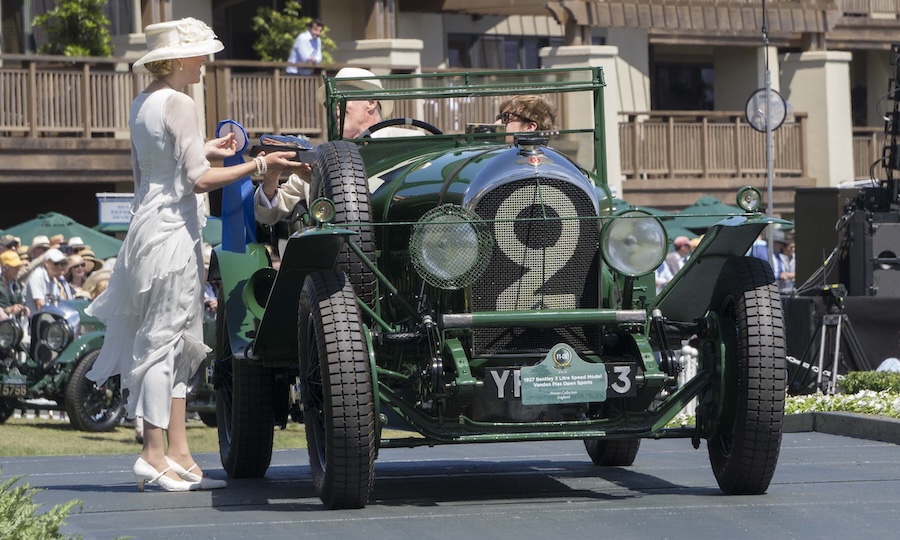
The car subsequently passed into the hands of Michael Dacre, who expressed his determination to preserve its history while continuing to use it.
Bitch has since participated in historic motoring events, including activities associated with the centenary of Le Mans in 2023.
Its story illustrates a particularly important aspect of vintage Bentley ownership: the responsibility of successive custodians not merely to preserve the machinery, but also to recover and protect the historical evidence surrounding it.
OLD NUMBER SEVEN (“WITCH”) – TRIUMPH, DISAPPEARANCE AND AFTERLIFE OF A BENTLEY LEGEND
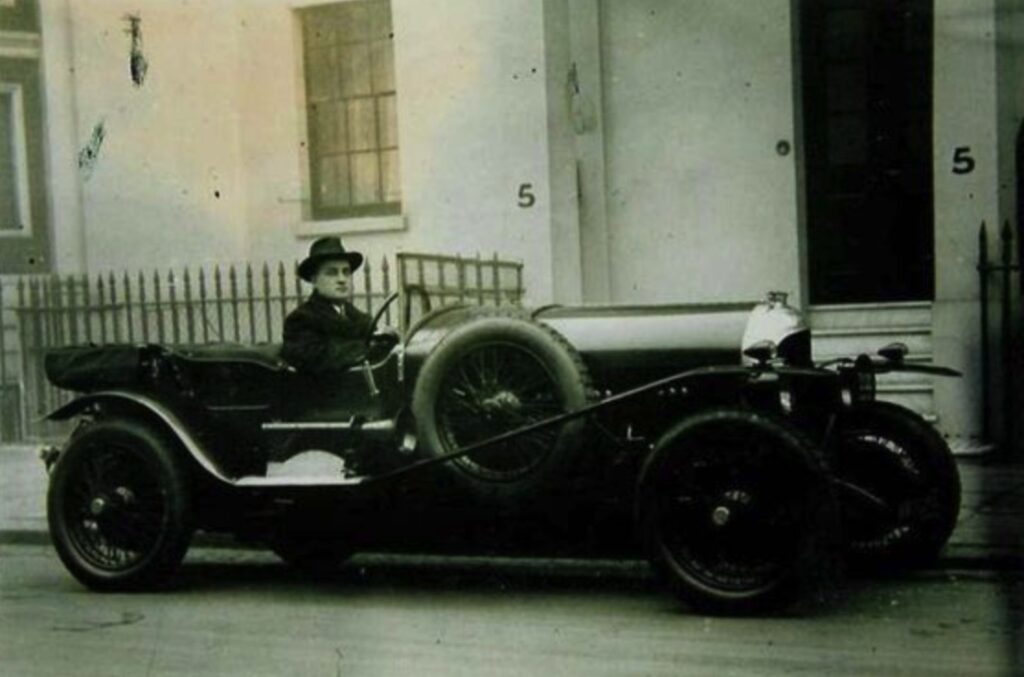
Few Bentleys earned their place in motor-racing history more dramatically than Old Number Seven (“Witch”). Dudley Benjafield bought the car from the factory in 1926 for personal use, and Bentley’s works team took it back into preparation for Le Mans in 1927, fitting a new racing engine, rear axle and improved brake-adjustment system.
As described earlier in this article, the same Bentley 3 Litre emerged from the White House crash still running, albeit badly battered, and ultimately carried Benjafield and Davis to victory in the 1927 24 Hours of Le Mans.
Yet the story did not end with a victorious return to England. Beyond the celebrations lies a less familiar history of changing ownership, replacement coachwork, a destructive accident and the separate survival of a name, a registration and, reportedly, an engine.
The most famous of the three cars would not enjoy the same preservation history.
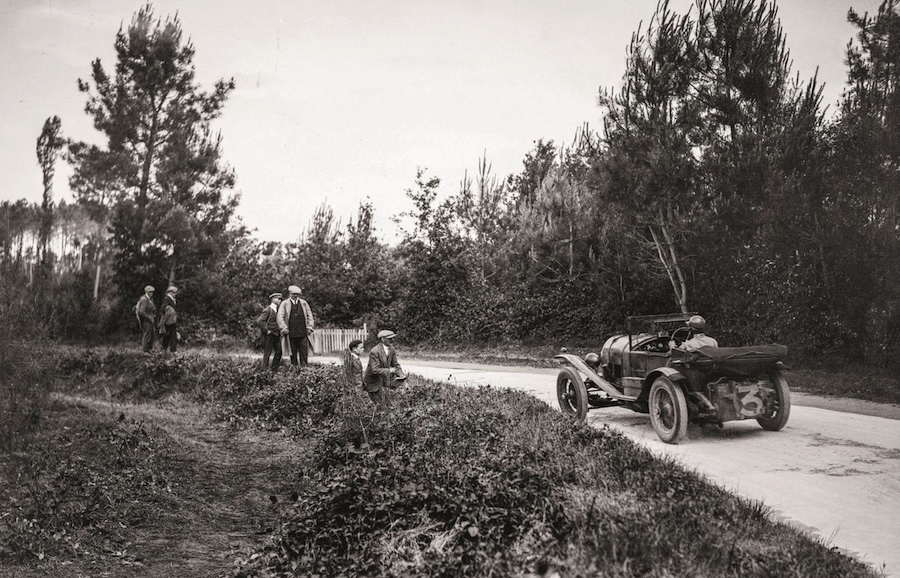
After the 1927 victory, Old Number Seven (“Witch”) became one of the most celebrated Bentleys in existence.
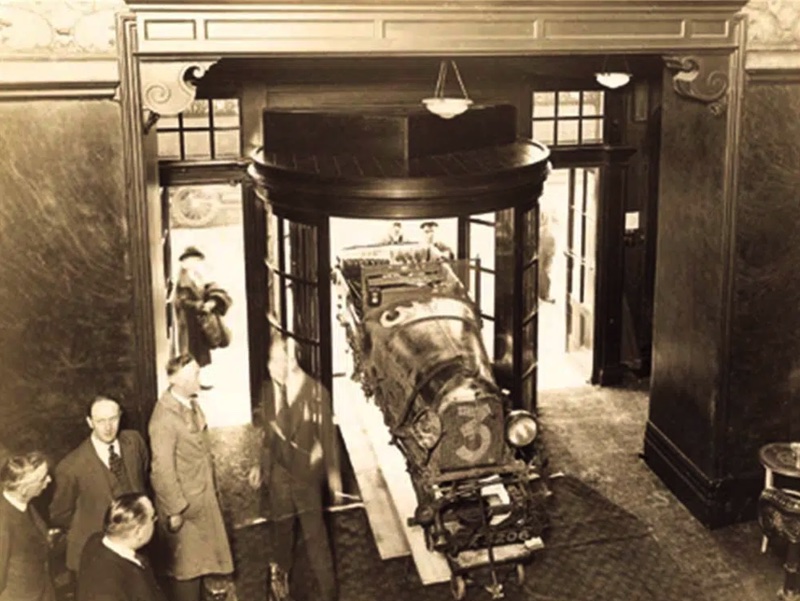
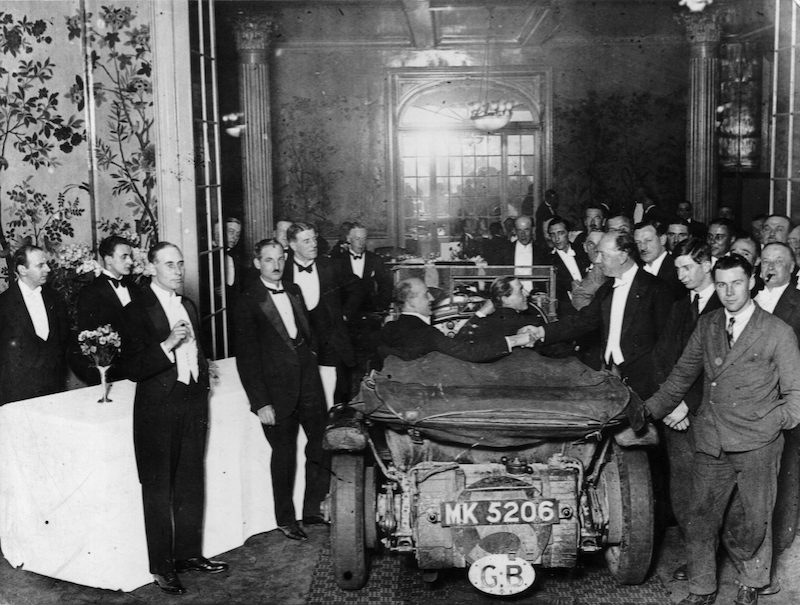
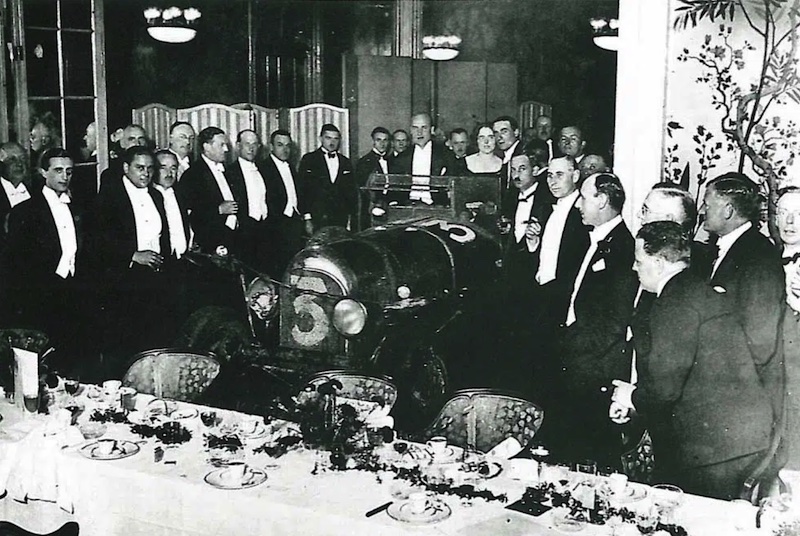
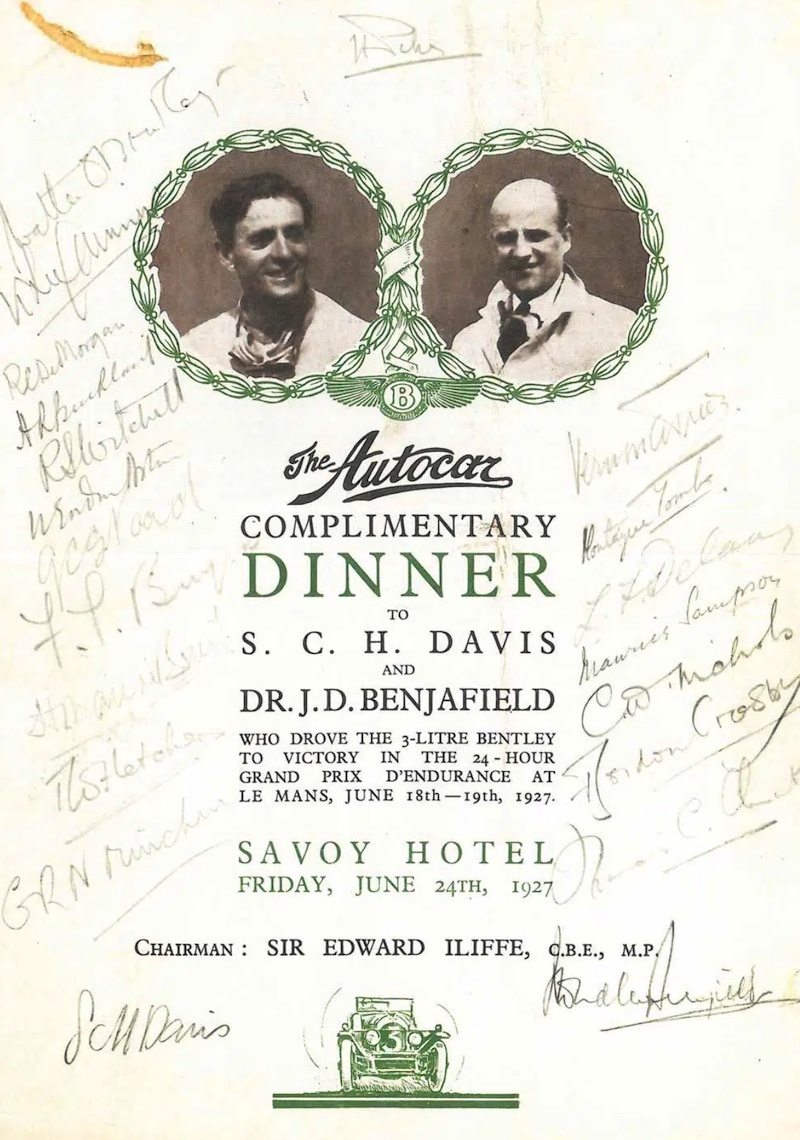
On their return to the UK the team and Old Number Seven (“Witch”) were greeted as national heroes. The Autocar magazine fuelled the Bentley team’s reputation by hosting a grand post-race party on 24 June 1927 at the Savoy in central London. Old Number Seven (“Witch”), which had come so close to victory in 1926 and still coated with mud and damaged from the victory this year, was guest of honour.
The menu was adapted for the occasion with dishes bearing appropriate names: Timbale de Sole à la Bentley, Asperges d’Argenteuil Divine à la Duller and Tortue à la Pontlieu! Among the drinks on offer was the famous Bentley cocktail (3cl Calvados and 3cl Saint Raphael red or Dubonnet red), as well as 1919 Veuve Cliquot Champagne and 1875 Courvoisier Cognac.
The evening was presided over by Sir Edward Iliffe, Member of Parliament and Commander of the British Empire. He began his speech with the words: ‘I think there is someone missing tonight whose presence I feel is essential.’ At that moment, Old Number Seven (“Witch”) made its entrance. The car, in poor condition, was pushed into the centre of the room and still bear the scars of the race. The assembly was then complete, and the party could begin. It would end late the next morning!
The car was subsequently acquired by Dr Dudley Benjafield, who continued to compete with it.
The original Vanden Plas coachwork was destroyed by fire and replaced with a yellow two-seater body. Her subsequent life on the road ended abruptly in 1936 when she struck a telegraph pole in New-York, USA, an accident that proved fatal to a chassis which had reportedly already suffered two fractures.
The car was declared beyond repair and eventually dismantled. According to Bentley historian Michael (Clare) Hay, her original engine found its way into another Bentley, chassis NR503, whilst the registration number MK 5206 was subsequently associated with chassis 997. Although some mechanical components may have survived in other cars, the original Le Mans-winning Bentley lost her identity as a complete motor car.
There is something particularly poignant about the fate of Old Number Seven (“Witch”). Having survived two consecutive editions of Le Mans, including the devastating White House accident of 1927, the Bentley that brought W.O. Bentley his second victory in the French endurance classic ultimately met her end not on a racing circuit, but on an ordinary road.
It is a reminder that, for many years, even the most historically important racing cars were regarded primarily as usable motor vehicles rather than irreplaceable artefacts.
The present-day significance of Bitch’s survival and restoration becomes all the greater when considered against the loss of its more famous sister car.
OLD NUMBER ONE — THE BENTLEY THAT WON LE MANS TWICE
Perhaps the most celebrated nickname in Bentley’s competition history belongs to Old Number One.
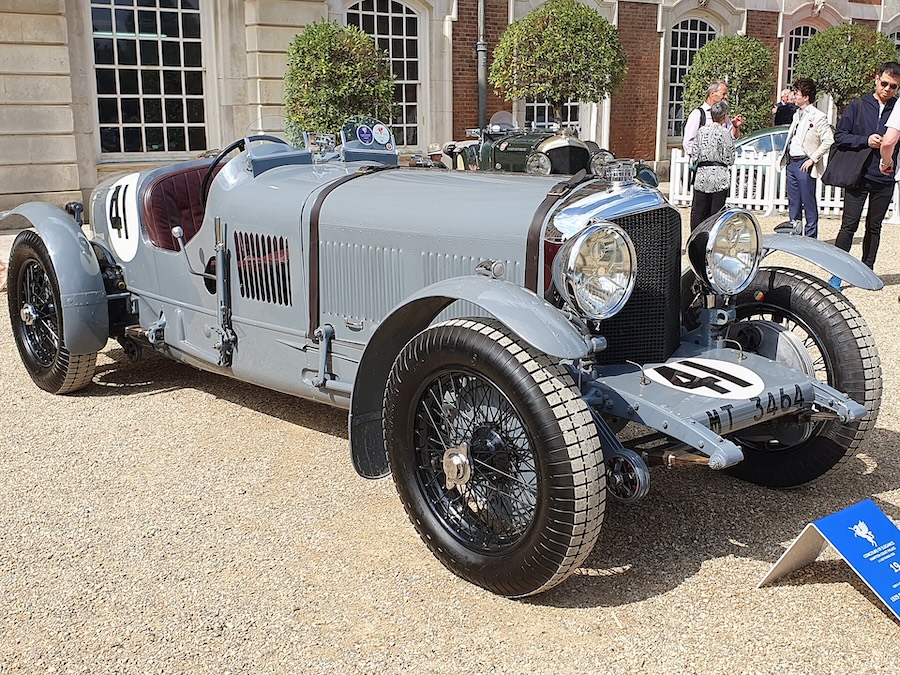
The car was a 6½ Litre Speed Six, chassis LB2332, originally fitted with engine LB2336 and registered MT 3464 on the 24 April 1929 in Bentley Motors name – Woold Barnato being the Managing director. The car was prepared for racing in Bentley Motors’ racing shop at Kingsbury.
The first event for the car was the 1929 Double Twelve Brooklands. The car was disqualified after removal
In 1929 it entered the 24 Hours of Le Mans race and because its engine capacity of 6+litres was the largest in the field it was assigned the race number of No.1. The car was driven by Woolf Barnato and Sir Henry ‘Tim’ Birkin.
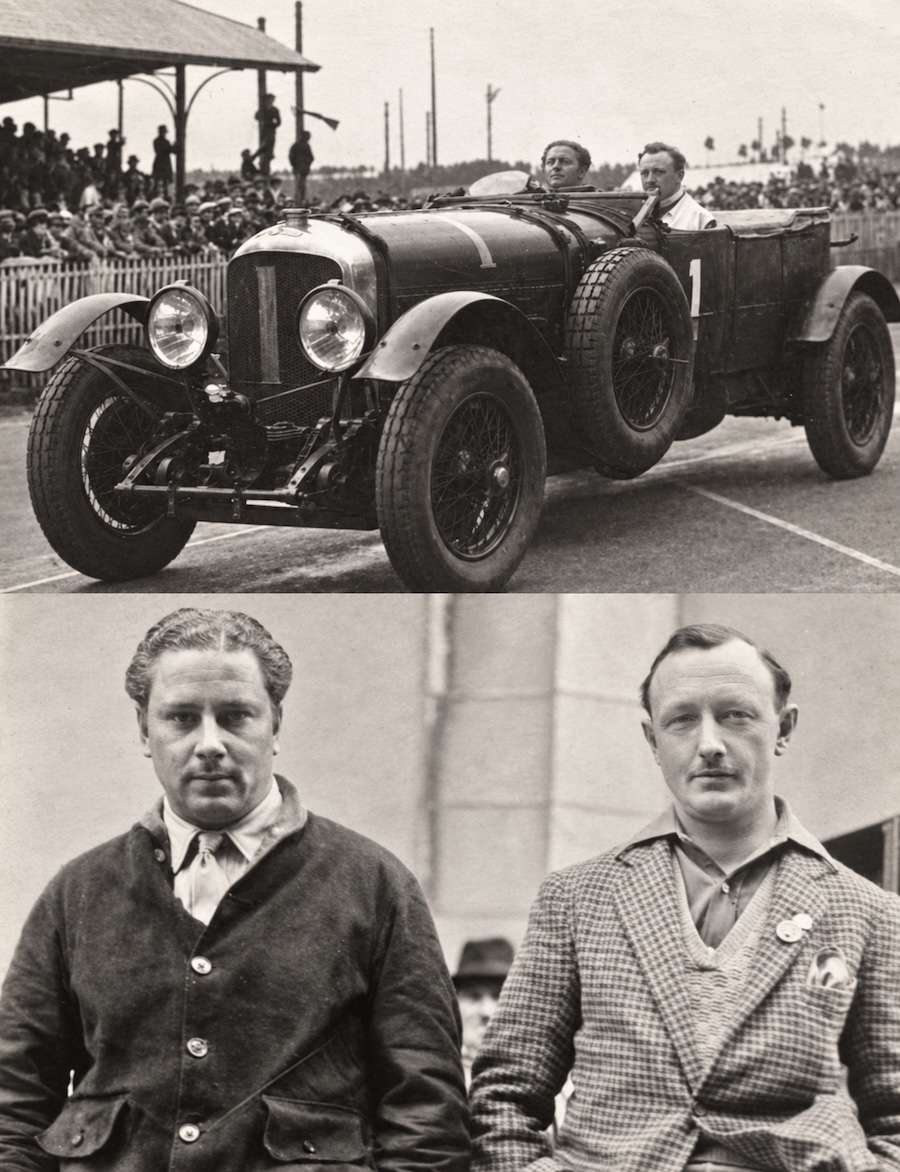
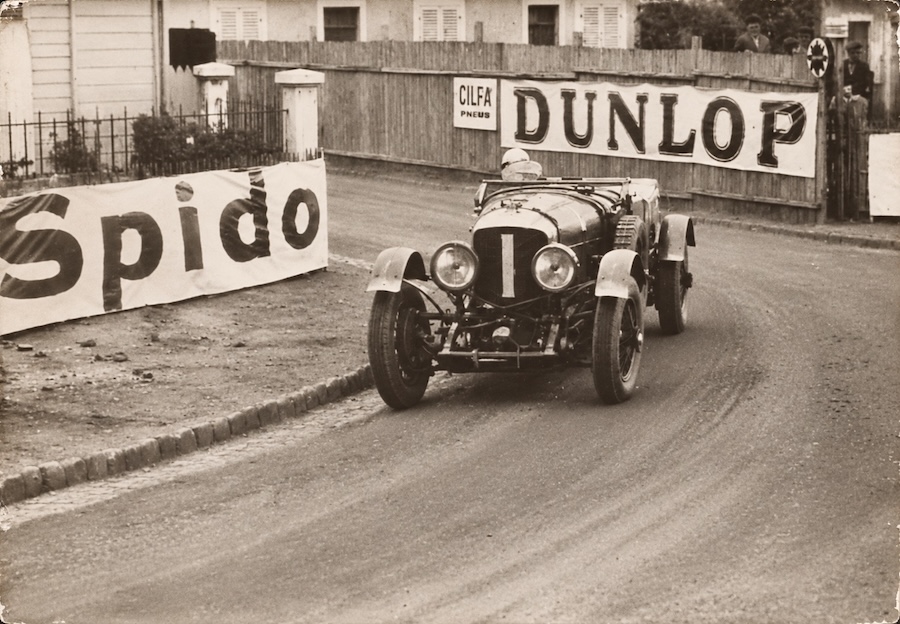
The pair won the race, leading a remarkable Bentley procession that occupied the first four finishing positions. It was Bentley’s third consecutive victory at Le Mans and Barnato’s second.
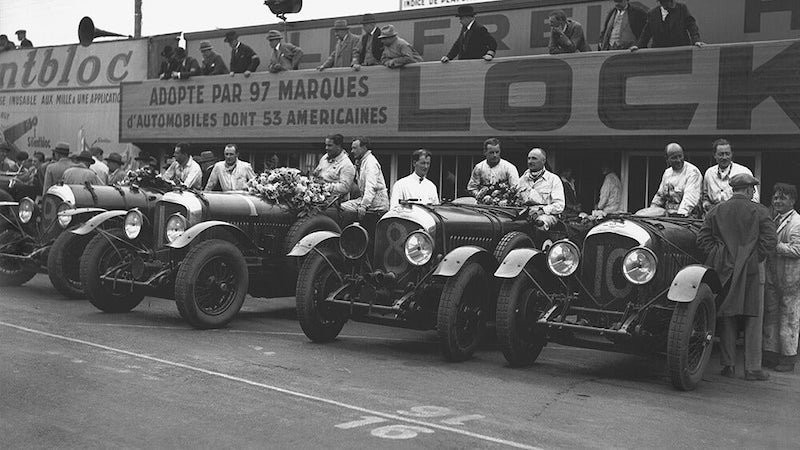
Further achievements that season included victory in the Brooklands Six-Hours race (Woolf Barnato and Clive Dunfee) and second place Irish Grand Prix (Glen Kinston) and another second place at Brooklands in an October 500 mile race (Clive Dunfee and Sammy Davis at an average speed exceeding 109 mph).
Rebuilt over the winter of 1929–30 Old Number One returned to Le Mans, now driven by Woolf Barnato and Glen Kidston. Interestingly, the car no longer carried competition number 1. For the 1930 race, it was assigned number 4. Nevertheless, its identity as Old Number One endured
Barnato and Kidston won the race, giving the car the distinction of being the only Bentley to win Le Mans outright in two successive years during the Cricklewood era.
The nickname had become something much more significant than a reference to an old competition number.
Barnato retained the car for his own use. It won the 1931 Brooklands 500 Miles race at more than 118 mph and remained a Speed Six through the 1932 British Empire Trophy. Between April and August 1932, Wally Hassan rebuilt it with new, stronger chassis side-members following cracking problems. The resulting configuration combined a 4 Litre-type chassis with an 8 Litre engine. Wally Hassan testified that he had been instructed to reuse as much of the existing 6½ Litre car as possible, including its wheels, axles, steering column, clutch and gearbox.
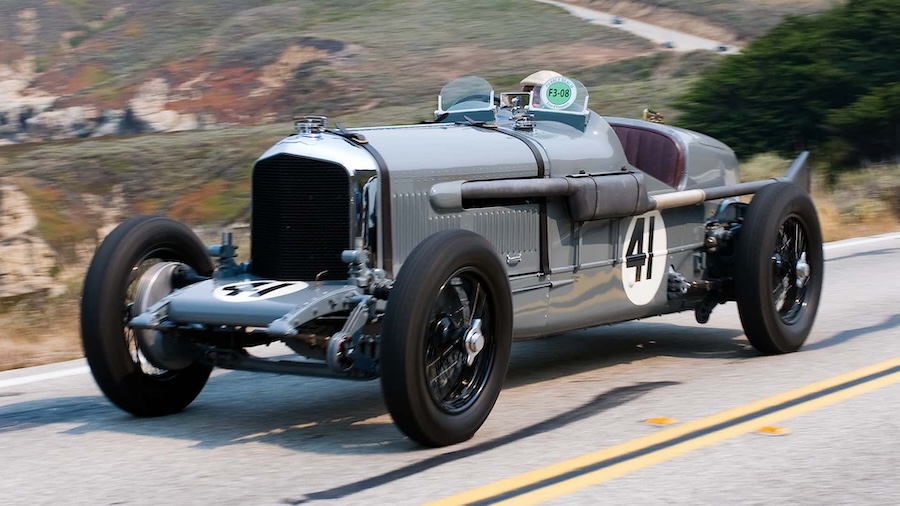
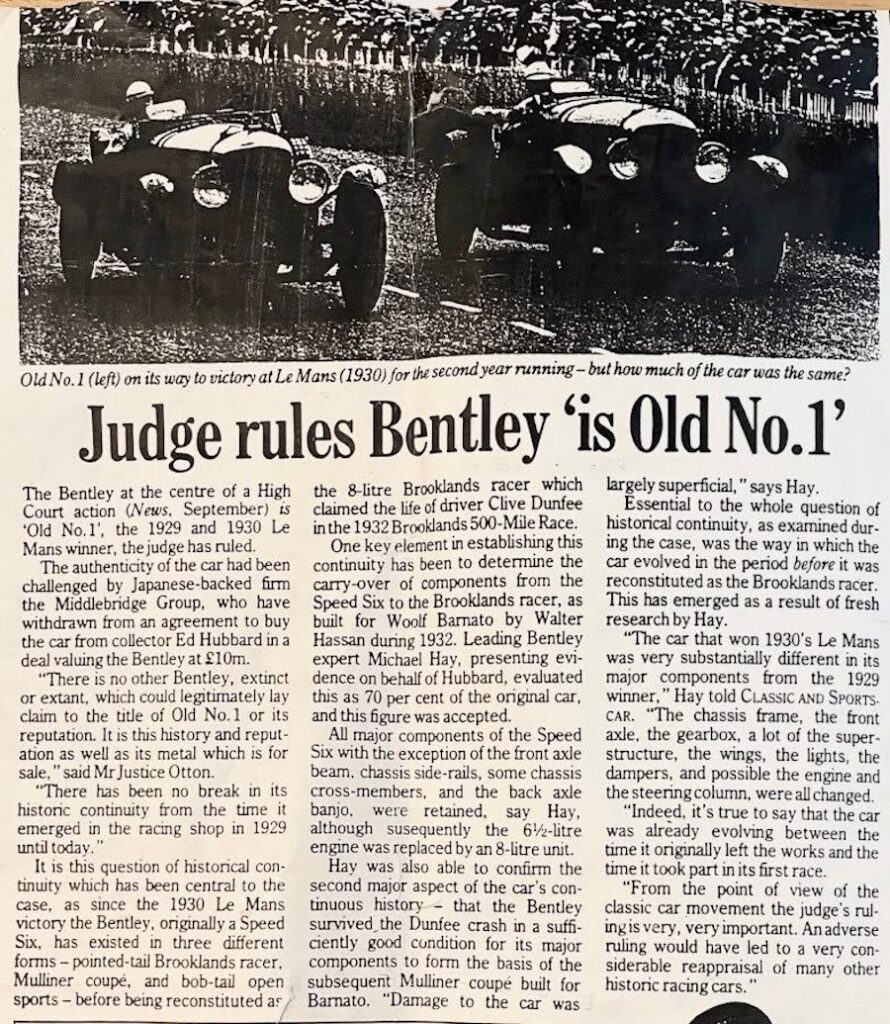
In the 1932 Brooklands 500 Miles race Clive Dunfee was behind the wheel of Old Number One when he got into difficulties high on the banking, overtaking a slower car. The big Bentley went over the top at 126 mph plus (lap times were consistently 126 mph). The car hit a fairly large tree and Dunfee was thrown out and killed instantly. Old Number One rolled several times down on the other side of the banking, before coming to rest on the approach road.
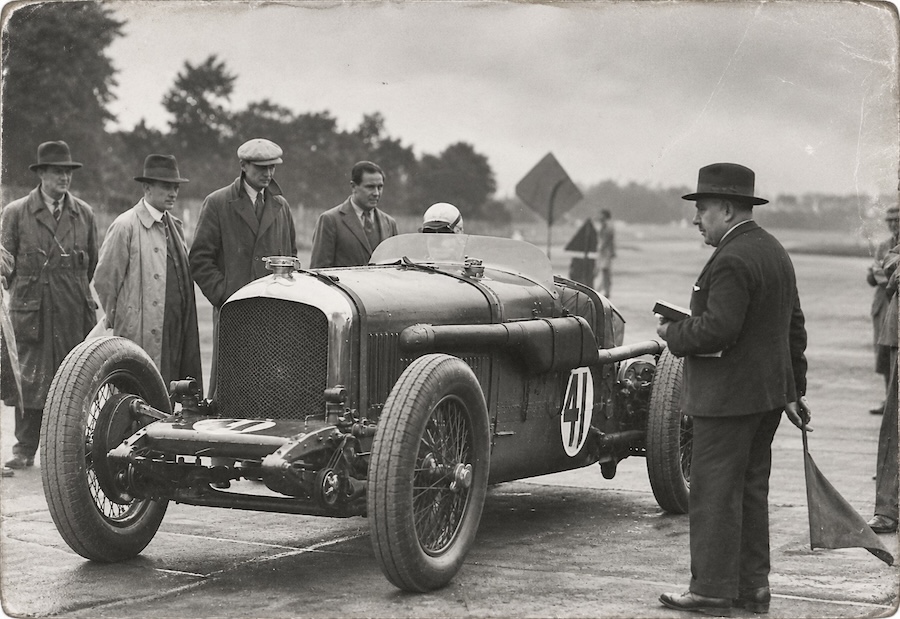
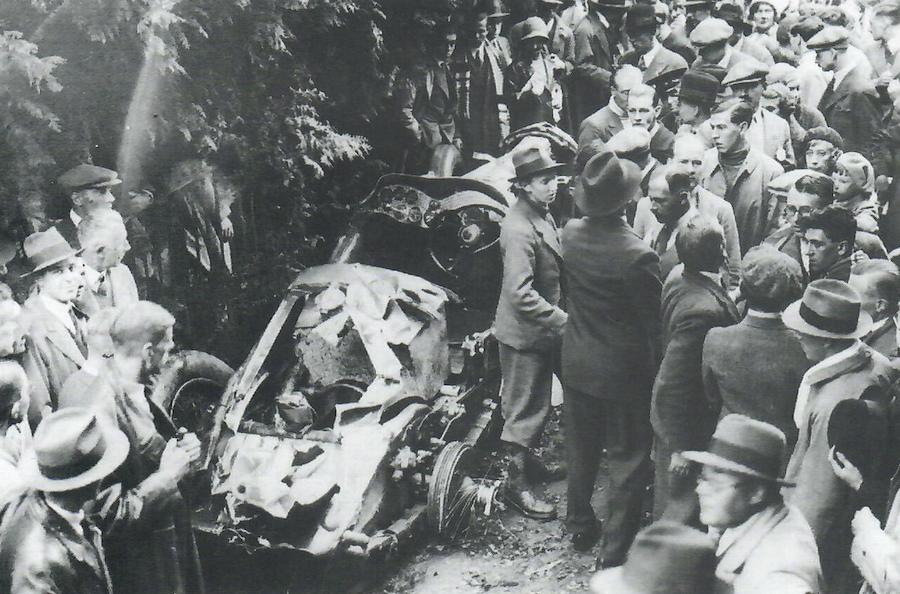
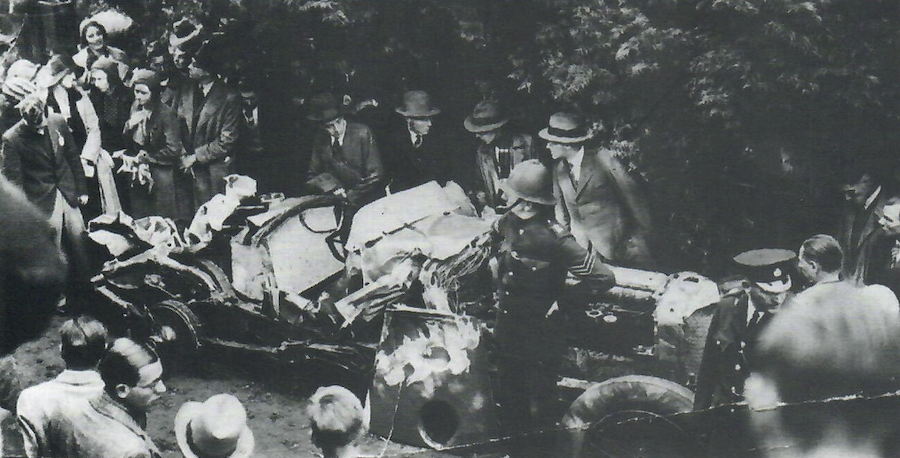
Wally Hassan rebuilt the car after the accident, fitting a road-going coupé body and further replacements made in 1933, and supplied by Bentley Motors. Diana Barnato-Walker remembered riding in the coupé and recalled her father’s enduring affection for the car despite its involvement in the fatal accident. Barnato even took it on his honeymoon in North America, covering some 10,000 miles.
Highly appropriately the car led Woolf Banato’s funeral procession in 1948, a duty it performed again for Barnato’s daughter Diana Barnato Walker’s funeral in 2008.
Hartley Whyte subsequently acquired the car through Jack Barclay. He remembered a maroon two-seat coupé, an 8 Litre engine, a 4 Litre chassis and Speed Six transmission components! He added a small rear bench seat.
The car changed hands several times between 1939 and 1955, before being acquired by Mike Quinney for approximately £3,250.
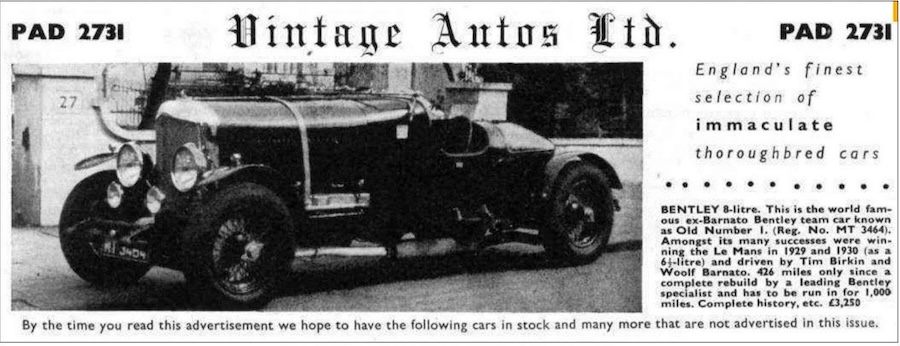
The car’s reappearance was reported in the Bentley Drivers Club Review in 1957. Quinney replaced the remains of its H.J. Mulliner coupé body with a simple open two-seater that was Silverstone and Snetterton in 1957–58.
Its altered chassis and replacement parts led Darell Berthon – an historian best known as an authority on early Bentley racing who served as the Secretary and later Executive Vice President of the Bentley Drivers Club – to question whether it was still Old Number One.
Quinney sold the Bentley to Mr Ward in 1960. Six years later, David Tunick bought the car and enjoyed it a lot, as did his son Stephen, until until being offered at Sotheby’s in London in December 1988; Old Number One attracted a £500,000 bid but remained unsold.
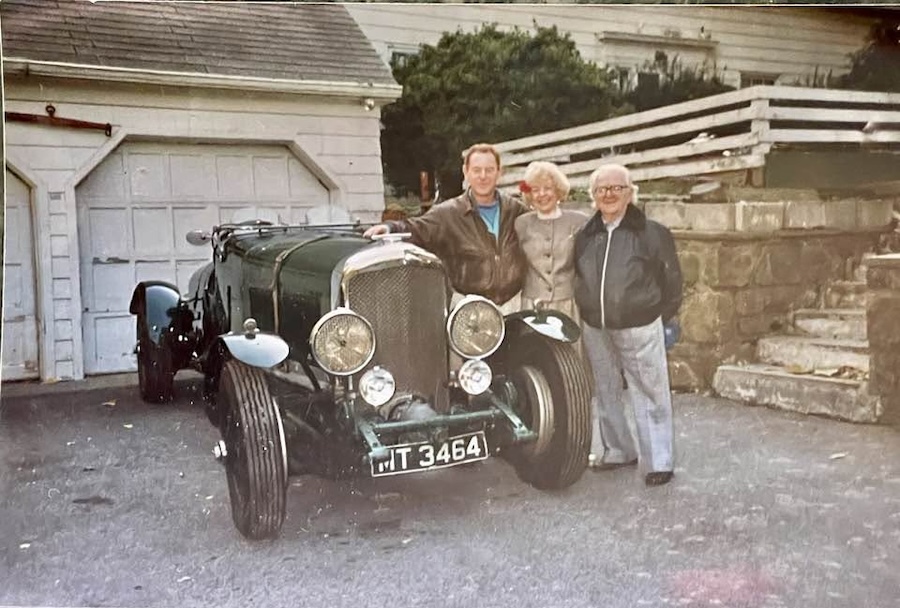
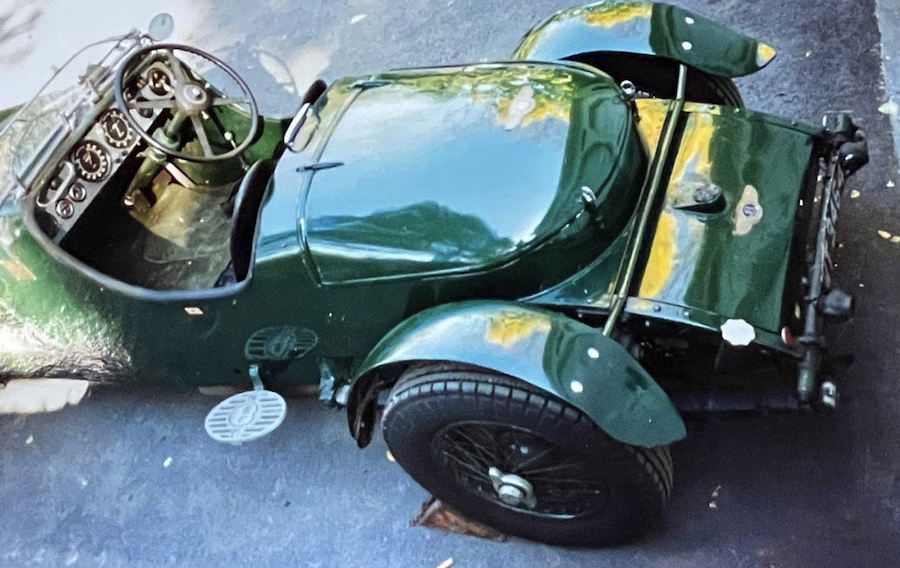
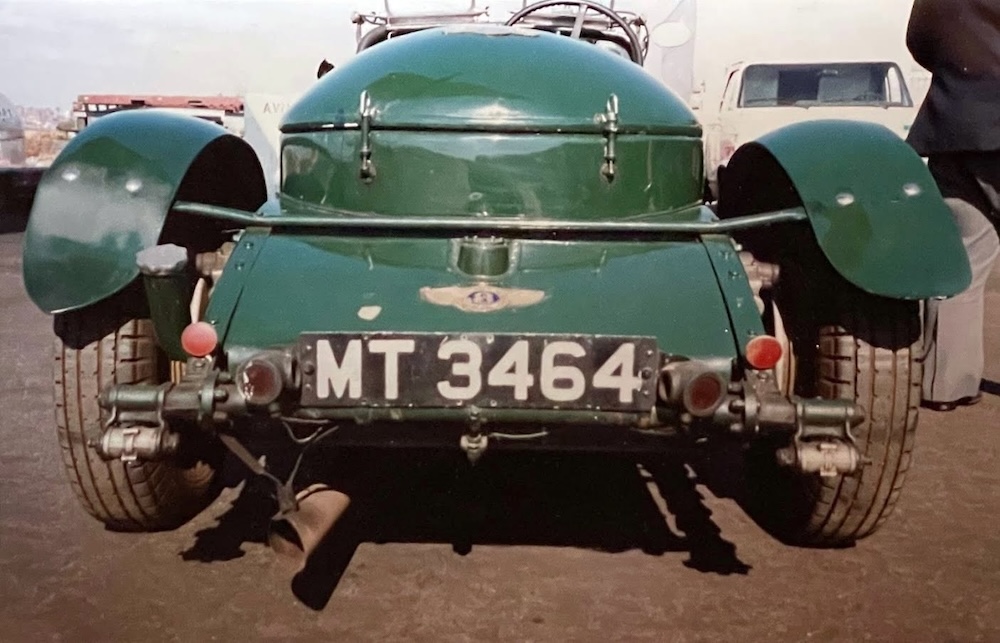
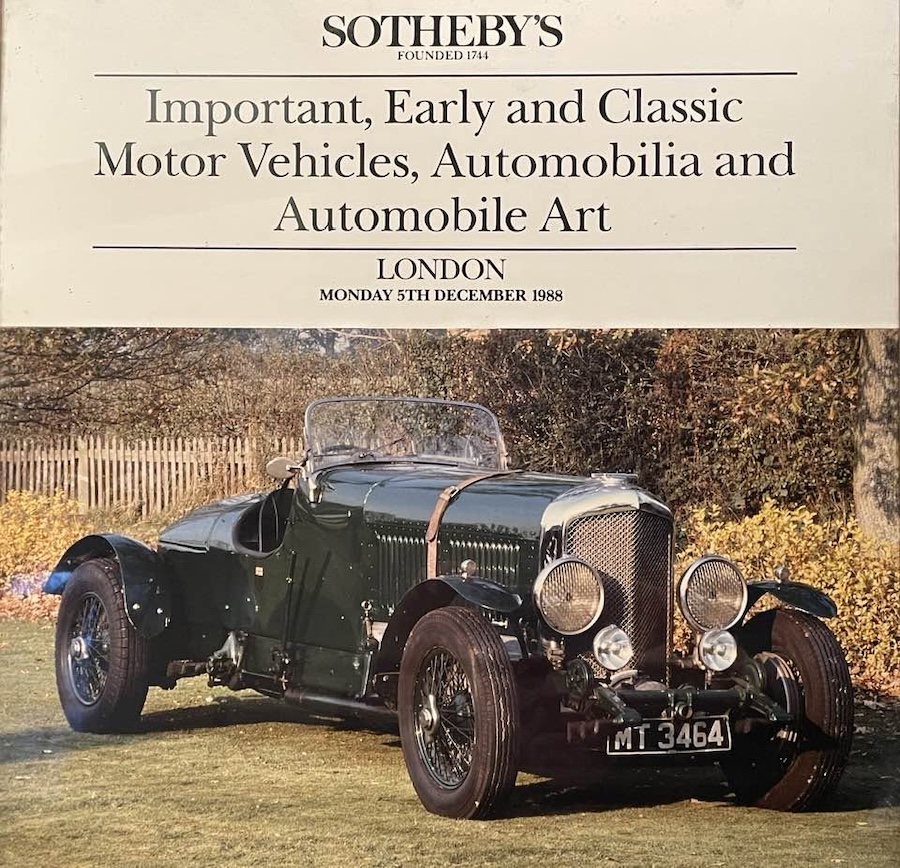
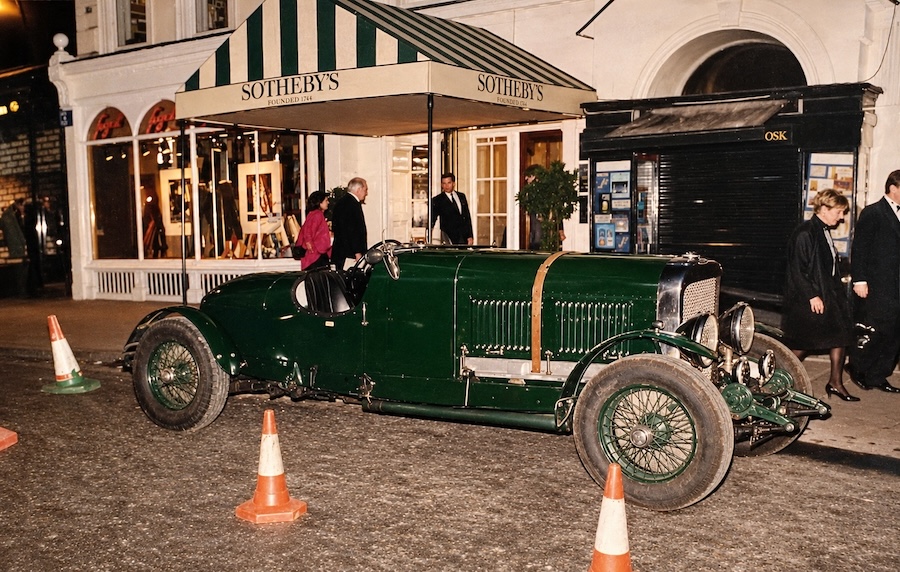
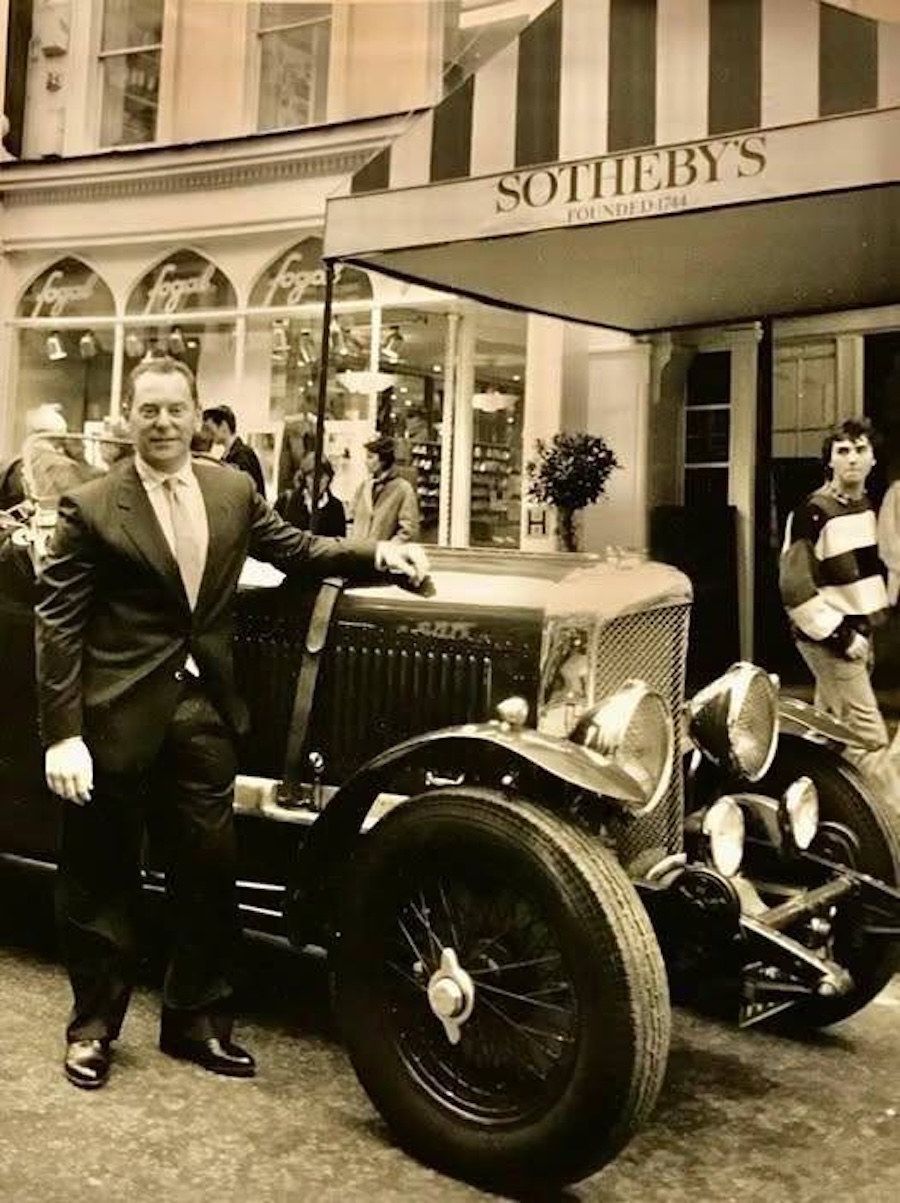
Two weeks after the auction Stephen Tunick sold the car to Stanley Mann… who sold it again months later to Ed Hubbard in a deal reportedly valuing it at about £750,000.
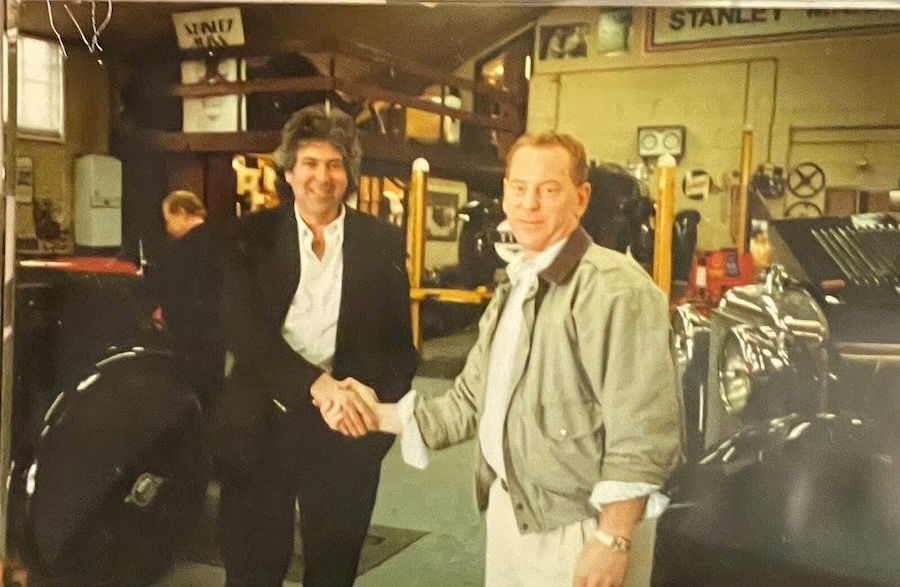
Hubbard initially sought to improve the car’s performance by fitting hydraulic brakes and a special aluminium rear axle banjo sourced from another Bentley. A new body was built using photographs of the car taken during the 1932 Brooklands race as a reference, together with a new bonnet, a shortened radiator and a cut-down replacement bulkhead.
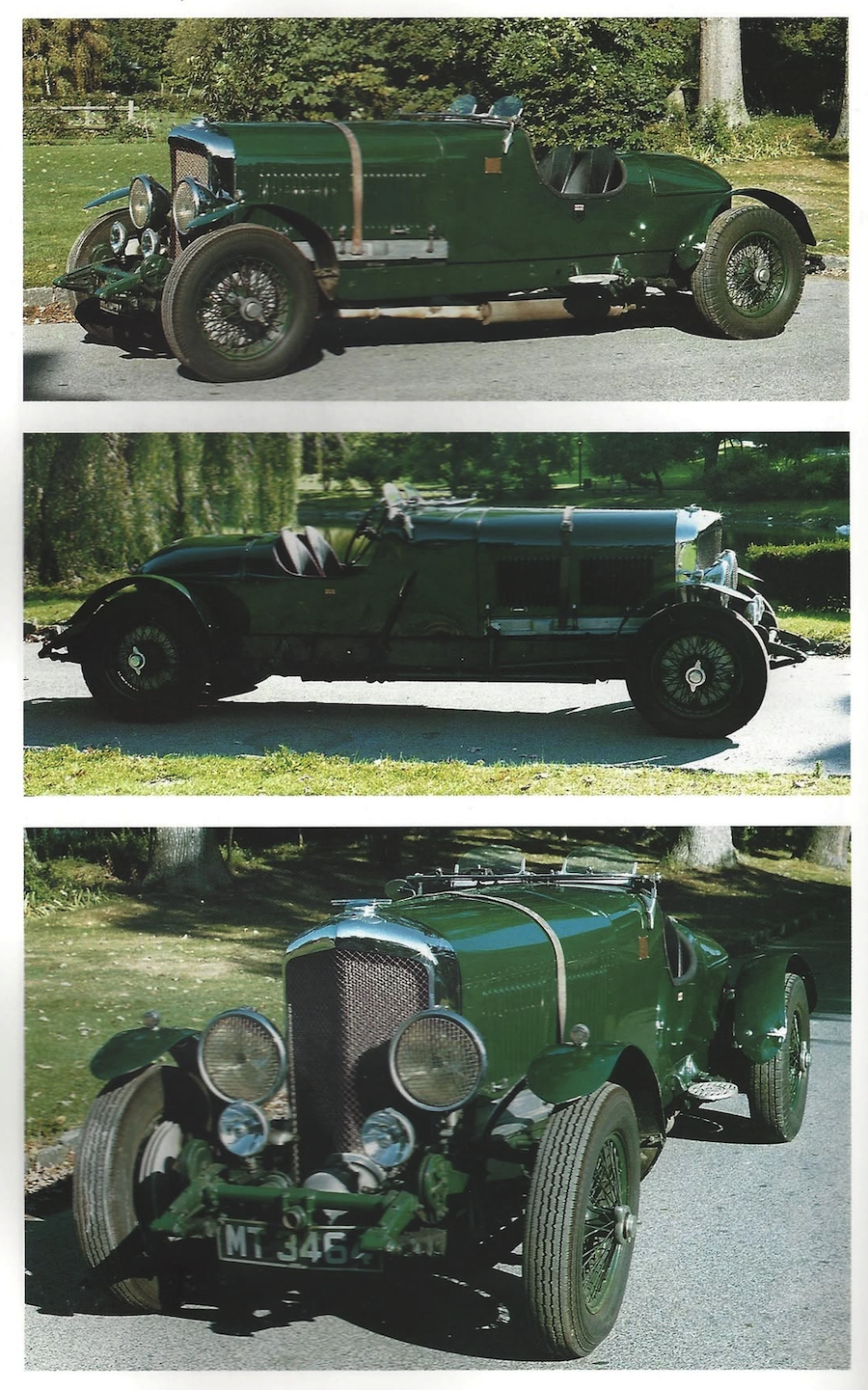
In 1989, Edward Hubbard expressed an interest in acquiring Middlebridge Scimitar, a short-lived British car manufacturer and engineering company founded in June 1987 following the acquisition of the production rights and tooling for the Reliant Scimitar GTE and GTC. Under the proposed agreement, Hubbard would receive all of Middlebridge’s assets, valued at £3.2 million, together with a further £6.8 million in cash. In exchange, ownership of Old Number One would pass to Middlebridge.
In other words, Old Number One was now valued at £10 million!
After agreeing a £10 million sale to Middlebridge Scimitar, Hubbard ordered the mechanical brakes and steel axle banjo reinstated. During the transaction, Middlebridge Scimitar backed out of the contract. They claimed the vehicle had been misrepresented, arguing that over Old Number One’s extensive 60-year life of racing, crashing, and modifications, virtually every major component – including the structural chassis frame, the engine, and the bodywork—had been broken, replaced, or upgraded over time.
For Middlebridge Scimitar it was no longer the authentic Old Number One but rather a collection of spare parts worth only a fraction of the price (around £250,000)
The dispute soon came before the courts. Hubbard v Middlebridge Scimitar Ltd (1990) became a notable High Court case concerning the identity and authenticity of historic racing cars. It offered a practical illustration of the philosophical ‘Ship of Theseus’ paradox.
Writing around AD 100, the Greek writer and philosopher Plutarch described how the Athenians preserved the thirty-oared ship in which Theseus, the legendary king of Athens famed for slaying the Minotaur – a creature half man and half bull – had returned to the city. As its wooden planks decayed, they replaced them with sound timber. This prompted a debate among philosophers: did the vessel remain the ship that Theseus had sailed, or had the gradual replacement of its timbers made it a different one?
The ‘Ship of Theseus’ paradox raises a question that would resonate centuries later in the world of historic motor cars. It provides a useful framework for understanding the issues surrounding Old Number One: could a racing car retain its identity through successive repairs, modifications and major rebuilds? Put another way, at what point, if any, does a restored object cease to be the original?
The court’s task was to determine whether those changes formed part of the continuous history of the same car or amounted to the creation of a different one.
Mr. Justice Otton presided over a highly detailed 12-day trial featuring extensive forensic history and eyewitness testimonies from legendary racing mechanics like Wally Hassan. The court ruled in favor of Edward Hubbard, concluding that the vehicle was indeed the authentic “Old Number One”. The judge accepted historical continuity and the owners’ intention to preserve the same vehicle, supported by registration records recording its changes. The judge established that:
– A vintage racing car can retain its unbroken historical identity despite evolutionary rebuilds, repairs, and part replacements.
– Because the modifications happened progressively throughout its documented racing career with the intent of keeping the same specific car active, its historic provenance remained intact.
Following Middlebridge Scimitar’s collapse under financial pressure, the £10 million transaction fell through. Barclays Bank, which had provided substantial financing for the purchase, took possession of the Bentley as security for the debt. The bank subsequently sold Old Number One to recover its funds, returning the car to private ownership.
Acquired by an American collector, Old Number One eventually crossed the Atlantic. Over the following years, it was loaned to specialist motoring institutions, including the World of Speed Museum in Wilsonville, Oregon (now closed since 2020), where it became a prominent attraction, giving visitors the opportunity to see the double Le Mans winner at close quarters.
Old Number One subsequently passed into another private collection. Although the car is not on permanent public display, its current owner regularly exhibits it at major historic motoring events.
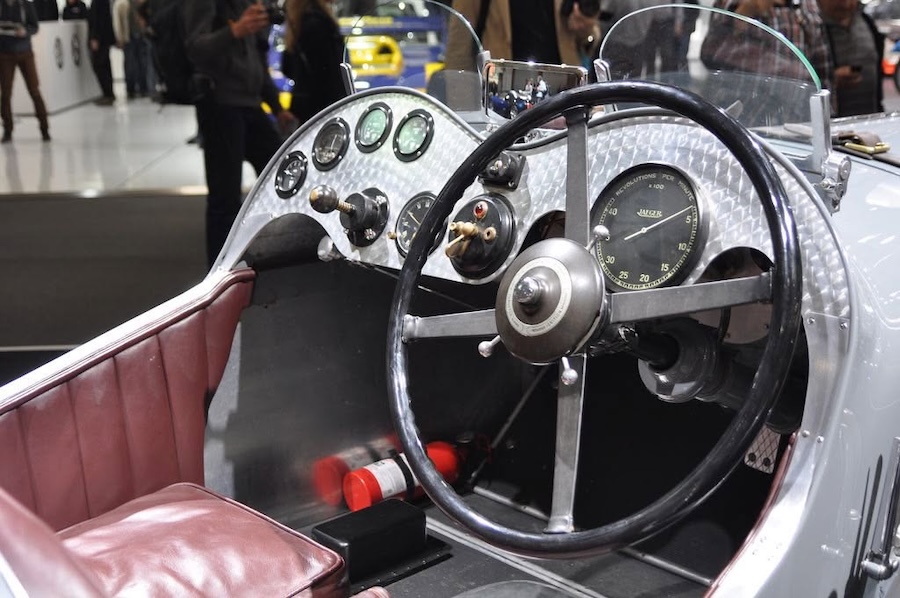
In its present configuration, Old Number One bears race number 41, a poignant reminder of its final competitive appearance at the BRDC 500 Miles Race at Brooklands in September 1932. As recounted earlier, it was during this race, whilst carrying that very number, that Clive Dunfee tragically lost his life when the Bentley plunged over the top of the circuit’s steeply banked track.